This column reflects the opinion of the writer. Learn about the differences between a news story and an opinion column.
Spin Control: New Pentagon reporting rules follow long military tradition
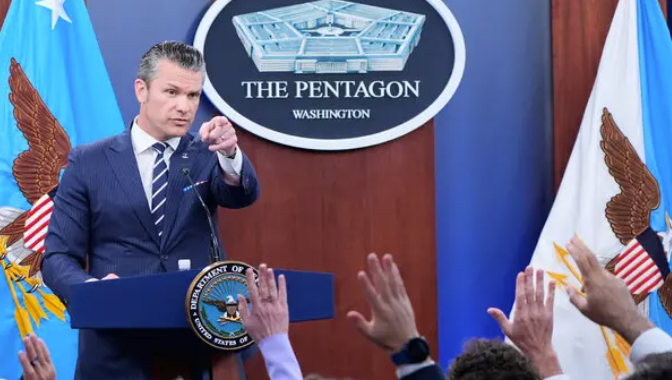
While it is concerning that the Pentagon is trying to require reporters to only report what the military officials want them to, it is not terribly surprising.
A recent report by the Washington Post says the Defense Department announced it can revoke a journalist’s Pentagon pass for writing about any information that wasn’t “approved for public release by an appropriate authorizing official before it is released, even if it is unclassified.”
The policy may be new. The general feeling, that reporters shouldn’t be writing things the military does not want them to write, is not.
The friction between the American press and the military has a long and somewhat colorful history, dating at least to the Civil War, when Gen. William Sherman blamed the press in general for every bad thing happening to the Union Army in the war – and some of the nation’s other woes as well. He threatened to have reporters chronicling his campaign through Georgia shot as spies.
While this apparently never happened, the threat probably was sufficient for many reporters to head for other campaigns and the press corps for Sherman’s march to the sea was smaller than most.
By comparison, the recent policy by the Department of Defense to pull press passes might seem like a kinder, gentler option. But it is in line with a feeling by some in the military that reporters, and through them the public, “should know what we want you to know, if and when we want you to know it.”
For many years while reporting in Spokane, part of my assignment was covering Fairchild Air Force Base and other aspects of the local military. There were times that I had to agree not to report certain things I was allowed to see, such as aspects of activities or maneuvers when accompanying the Washington Air National Guard to Saudi Arabia for Operation Desert Shield. The choice was to follow their rules and report the story or stay home and report nothing.
There were many bright, dedicated and conscientious people in all ranks. Even some who were not any of those things could be helpful for stories that they liked, such as the impact of the base on the local economy or military members receiving awards from the top Air Force brass or local business organizations for outstanding service.
When things went wrong, however, it was different.
I remember being on a military bus full of journalists in March 1987, the day after a KC-135 crashed near the base runway killing seven people. A colleague asked the young captain from the public affairs office what might have caused the crash. We suspected it was somehow connected to a new aerial display team being formed by the Strategic Air Command to show off a tanker and a B-52 bomber.
The newspaper had sent a reporter to the base a few weeks before to watch an early practice, noting the crews flying the planes had recently won top honors at an Air Force competition. It was a story the base brass loved.
“We don’t know the cause at this point, and when we do, we’re not going to tell you,” the captain said. “The cause will never be released.”
That was absolute nonsense, because after a formal investigation, the report could be obtained under the Freedom of Information Act.
Rather than wait for that report, which took three months, a group of reporters at the newspaper started digging and talking to experts on aerodynamics and airplane capabilities. We found people who questioned why a tanker was being used for aerial maneuvers and why Strategic Air Command needed a new aerial demonstration team when the Air Force already spent millions on the Thunderbirds. Someone showed us a copy of the tanker’s flight manual that clearly said it was not built for aerobatics. Others told us SAC may have not received proper clearance for putting together a new aerial demonstration team, and that when the maneuvers designed for the proposed air show were flown in a simulator at Boeing – which designed both planes – the tanker crashed.
The crash report confirmed what we had been told by experts, that the tanker likely flew into the turbulent air called a vortex, created by the B-52, prompting the crash. Congress later forbade the Air Force to use the nation’s large military planes without express permission.
Did we work a little harder, and with bigger chips on our shoulder, because that public affairs captain told us they would never tell us what happened? Probably. But we would not have sat back and waited for the report even if they had relied on the standard “No comment.”
We were just a few young reporters at a small regional paper and limited access to expert sources. The Pentagon is full of reporters who are among the nation’s best, most experienced and most deeply sourced.
It is unlikely they can be kept from revealing things the Pentagon or the secretary of defense don’t want revealed simply under the threat of losing a press pass. Surely the generals and the secretary know that if they get kicked out of the Pentagon, they will not stop reporting. They will just keep writing stories with the sources they have built up over the years.
Also in military news
Probably not connected, but the Pentagon is also delaying by several years the final cleanup of “forever chemicals” used in fire-fighting foam at many bases around the country, including Fairchild.
The Washington State Standard reported last week the deadlines were quietly changed, without a public announcement.