This column reflects the opinion of the writer. Learn about the differences between a news story and an opinion column.
Spin Control: Proposal would let Legislature decide how long it meets
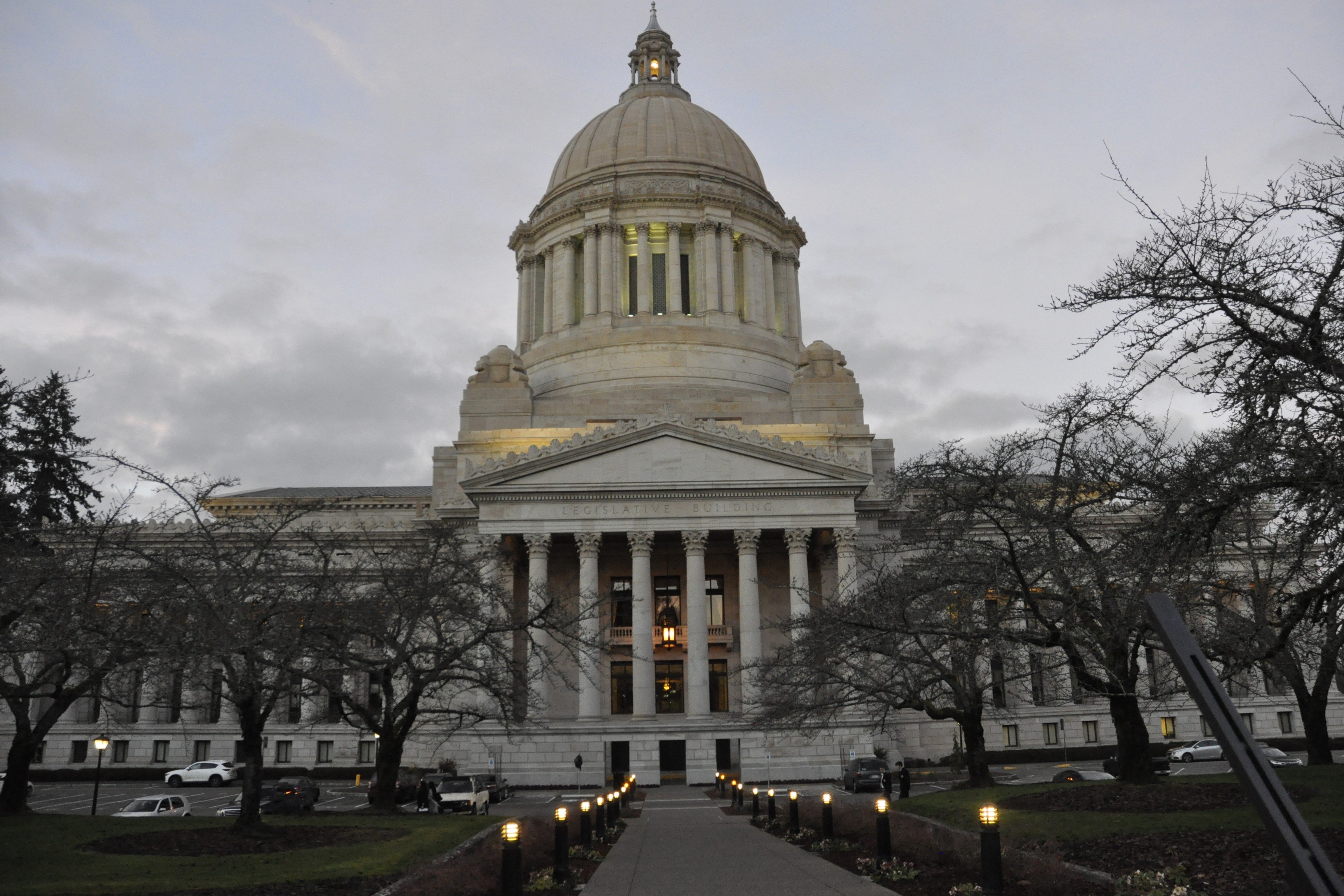
Over the course of its two annual sessions, the Washington Legislature has a chance to consider thousands of ideas.
Those ideas, embodied in bills, initiatives and constitutional amendments, stood at about 3,050 as of Friday.
Big ideas like how to spend billions of dollars and raise taxes. Small ideas like whether Washington needs an official state shark or official state cactus, and whether it should recognize Nov. 22 as Kimchi Day. Hundreds more in between.
Every idea seems like a good idea to someone. But with limited time, energy and attention spans, not every piece of legislation gets a hearing, let alone a chance to become law after a full debate and a favorable vote in both chambers. If this Legislature is typical, perhaps a fourth of all the legislation proposed since the start of 2025 will make the complete journey.
Some legislators think the issues are becoming too numerous and complicated in a growing Washington state to be handled in the currently allotted days, which are 105 in odd-numbered years when the two-year budget is written and approved while other problems are addressed, followed by 60 days in an even-numbered year when that budget might get tweaked and other issues tackled.
They are proposing that sessions have no time limits, and the Legislature decide for itself how many days it will meet and when it will end.
“Give us the authority to set our own schedule,” Rep. Brianna Thomas, the sponsor of House Joint Resolution 4210, said during last week’s hearing in the House State Government Committee. The West Seattle Democrat admitted she was trying to “improve my working conditions” with the proposal, but thought it might help ease any “retention problem” the Legislature may be having with members deciding not to seek re-election.
Such a change, however, is not simple. It would require amending the state Constitution, which is where the number of days for each year’s session is found. Amendments must clear both chambers with a two-thirds super majority, and majority approval of voters in the next general election.
Whether HJR 4210 has legs remains to be seen. During the hearing, reliably conservative types like anti-tax initiative backer Tim Eyman were opposed, while reliably liberal types like the Northwest Progressive Institute thought it a fine idea. Some thought it would lead to year-round sessions, although opinions were split as to whether that would be a good thing or a bad thing.
The committee has scheduled a vote on it next Tuesday, which is more than it has done for another constitutional amendment that would allow the state to redraw congressional district lines as a counterbalance to other states redrawing its congressional district lines.
But even the amendment to let the Legislature decide when – or even if – to stop can pass out of committee, the road ahead in a session that’s looking for ways to spend less seems doubtful.
Voters might also prove skeptical. Anyone who has paid even the slightest attention to the Legislature has learned that the only reason the honorables manage to pass a budget most years is because the threat of adjournment hangs over their collective heads. They talk in somewhat general terms about the budget for the first half of the session, get down to business when they have an updated forecast on the state’s likely tax revenue and pass the budget on the last day.
Without that last day set solidly in the Constitution, the Legislature could – and no doubt, would – debate, argue and amend the budget at least until June 30, which is the final day of the state’s fiscal year. Worse yet, it could follow the bad example of Congress, run past such a deadline and pass a series of short-term spending plans while arguments and maneuvering continue.
There is a precedent for changing the length of the session in the Constitution. When Washington became a state in 1889, the founders thought the Legislature could handle business with one 60-day session, every other year. If an emergency came up, it could hold a special session.
By the 1960s, there were special sessions almost every year, and in 1979 voters approved an amendment that created the current yearly schedule. Supporters sold it as a way to rein in the number of days the Legislature met, save money and promote better government.
But this latest amendment hardly seems like a serious effort, and more like one of those “messaging” bills the majority party likes to bring up as a way to air out an issue.
There’s nothing inherently wrong with letting colleagues and voters comment at hearings on ideas that will never pass the Legislature. But it does undercut Democrats’ stated reason for not holding hearings on two initiatives to the Legislature, one on parental rights on certain school matters, the other on girls’ sports. Before the session even started, Democratic leaders said they would not spend time on those initiatives, which don’t have the support to pass either chamber.
While it’s true the initiatives will go to the voters anyway, it seems a bit hypocritical to allow hearings on “messaging” bills only for your side’s messaging.
Hundreds of thousands of people signed those initiatives, so there is some interest in those topics. A meeting of people not connected to the Legislature who think it should hold unlimited sessions – which is what the Thomas’s amendment would allow – could probably be held in a phone booth. If you could find one.