This column reflects the opinion of the writer. Learn about the differences between a news story and an opinion column.
Spin Control: There are still plenty of pennies out there if you know where to look
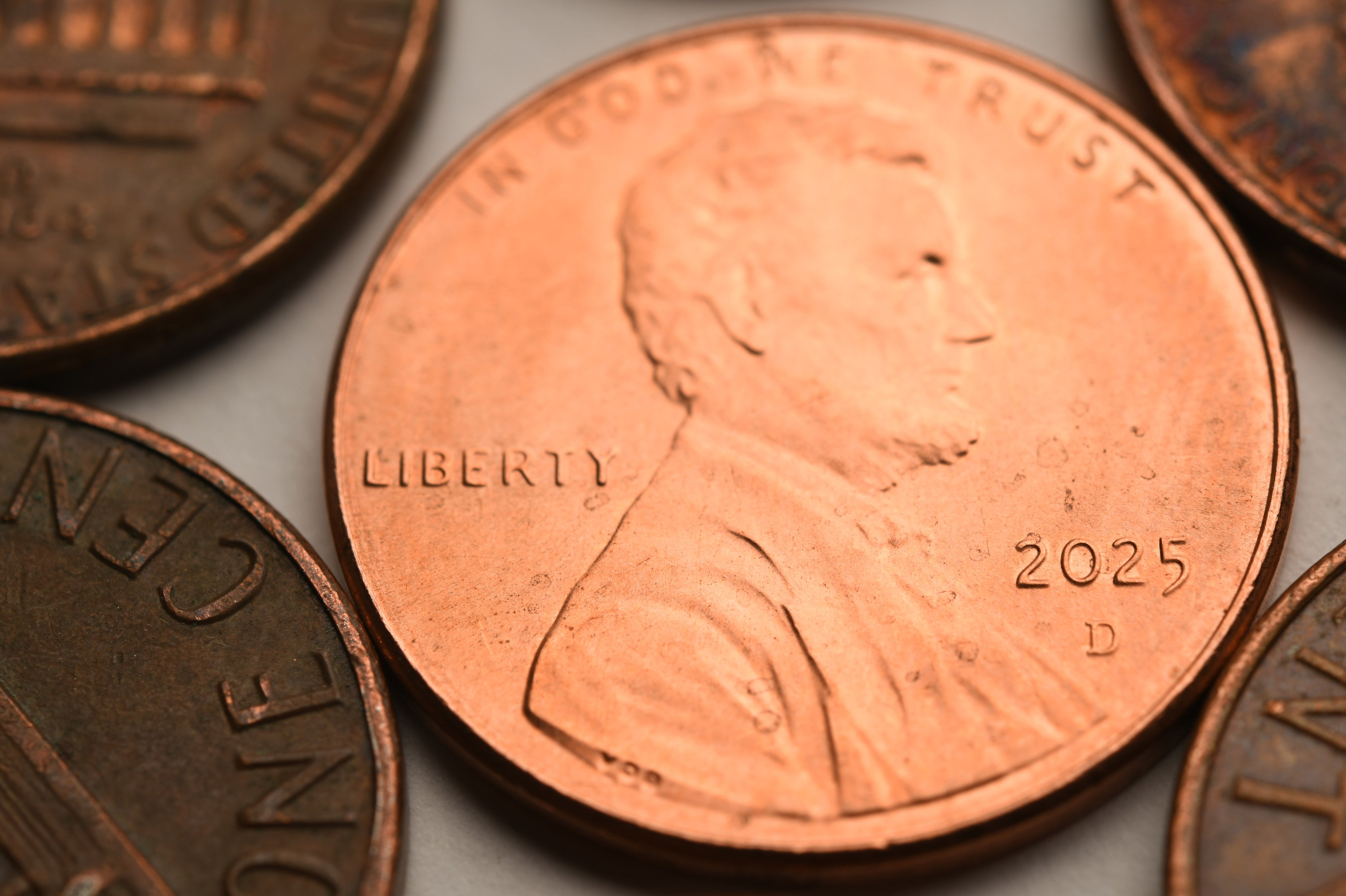
The decision by the Trump administration to stop minting pennies that cost more than 2½ times their face value to make might be one of the most logical of the first year of the president’s second term.
The efforts to figure out a way to do away with that second position behind the decimal point by rounding up or down on cash transactions, not so much.
Because while the U.S. Mint is no longer turning out pennies, there is no shortage of them in the country. The agency estimates there are at least 240 million pennies in “circulation” in the country. Problem is, many – perhaps even most – aren’t circulating.
I am guilty of this removal of pennies to a spot outside the lanes of American commerce. On a bookshelf in a spare bedroom is a large jar into which pennies have been dropped for so long that we aren’t quite sure when it started or where the jar came from. There are roughly 21 pounds of pennies, which I didn’t realize until I placed them on the bathroom scale for this column. Over the years they have been used for various things from penny-ante poker to teaching division and fractions to kids in grade school, but always dropped back in the jar when the game or lessons were over.
I don’t know how many pennies are in there, and pennies have different weights, based on when they were minted. Those made before late 1982 weigh just under 0.11 ounce, and those after about 0.09 ounce. A random sampling of the jar – a few handfuls grabbed out, dropped on the desktop and sorted by date – suggests about a third could be older than 1982 and two-thirds the newer models. So about 4,000 pennies in the jar.
They languish, like many of the nation’s pennies, forgotten deposits in jars, old purses, half-filled coin collection books and coffee cans. (Younger generations might be surprised to learn that before Starbucks and other roasters started marketing their wares in shiny 10.5-ounce sealed bags with bendable tabs, lots of coffee was bought in one and two-pound tins. Once emptied, they became a handy receptacle for all manner of things).
In the nation’s first 100 years, there was a strong commitment to a monetary system that calculated cost and value to the second decimal, possibly adhering to Ben Franklin’s advice that a penny saved is a penny earned. Before 1858, pennies were about three times as large as the current models, but that year Congress shrunk the one-cent piece to roughly its current size. The mint also turned out a 2-cent copper, twice as large, a 3-cent coin made of copper and nickel and a bit later a nickel 5-cent coin to replace the silver half-dime that was so small and thin – half the size of the current dime – that many were likely lost falling through hole pockets or down cracks and disappearing at unacceptable rates.
Coins have a value beyond money as part of the American idiom. Over time, a penny might be offered in exchange for someone’s thought. It might buy some entertainment at a penny arcade or some questionable reading material in a penny dreadful. Rain could be described as “pennies from heaven,” particularly if it fell at an opportune time on one’s crops. Bad pennies sometimes turned up, but those found unexpectedly could be deemed lucky, although traditions varied on how, and whether, they should be kept or given away.
In the days before debit cards were used for almost everything, a person would reach into a pocket at day’s end and grab the change collected over a day of casual purchases. To avoid coins being scattered all over the floor as garments were changed, they might all go into a dish. Eventually the quarters, dimes and nickels went back into a pocket, but pennies were set aside to avoid too much jingling while walking; they’d pile up and go to a larger holder.
Kids might be free to grab some pennies from the large holder for small purchases. In the 1960s, “penny candy” actually cost a penny at the five-and-dime. With five pennies, one could buy a pack of five baseball cards with a square of bubble gum. (My father once told me that when he was a boy, he got five pieces of gum with five cards for five cents, but those Depression kids always made things sound so ridiculously cheap, one had to wonder).
Pennies were often the gateway for young coin collectors. They would get a blue Whitman Coin Folder book with cardboard pages, a hole for each year and mint mark for a sequence of about 100 pennies. They would then sift through their parents’ piles of pennies to fill the missing spaces. Young attention spans being what they are, many of those blue books were abandoned in boxes or bookshelves, half full or less, when would-be numismatists learned it was very difficult to find something like a 1954 S or a 1943 steel penny.
Time and inflation slowly minimized pennies.
Pennies were copper for nearly 200 years, except for one year during World War II when copper was in such high demand they were made out of steel. By late 1982, the mint was losing money on that tenth of an ounce of copper and it switched to zinc with a copper cover.
Even with that change, by last year a penny cost about 3½ cents to make, so the mint stopped making them. While that seems like a good business decision, there was – and still is – a better business decision than rounding purchases up to the nearest multiple of 5. After all, just because we’re a nation of trillion-dollar deficits, shouldn’t some attention be paid to the precision of pennies?
The problem is there is no incentive to return pennies that pile up at home. Businesses don’t have to take large amounts in payment. Taking them to the bank will result in the teller counting them out while people grumble in line behind you. Take them to a coin-counting machine, and you may will likely pay a fee to redeem them, which means you lose money on your money.
The federal government should provide a little boost for people to return their languishing pennies to the nation’s monetary system. Banks, which in some places must limit pennies to merchants because they are in short supply, could offer $1.50 for every 100 pennies, which they could recirculate to meet demand. The mint could reimburse the bank. Instead of costing 3.7 to turn out a new penny, it would cost the government a half-cent to get an old one back in action – with no wear and tear on the machinery at the mint, no paying artists to come up with new designs, no rolling pennies into those paper rolls, no carrying big sacks of pennies to the armored car for delivery to the banks. It might take more than 50 cents, but capitalism can sort that out.
This could also head off the next coin flip the federal government is apparently considering, no longer minting nickels, which cost about three times their face value to make. Before long, the government will be talking about rounding everything up or down to the nearest whole digit. Someday, they may wipe out the decimal, and all coins will be nickel-and-dimed to death.