This column reflects the opinion of the writer. Learn about the differences between a news story and an opinion column.
50 years ago, Ronald Reagan addressed a split GOP in Spokane
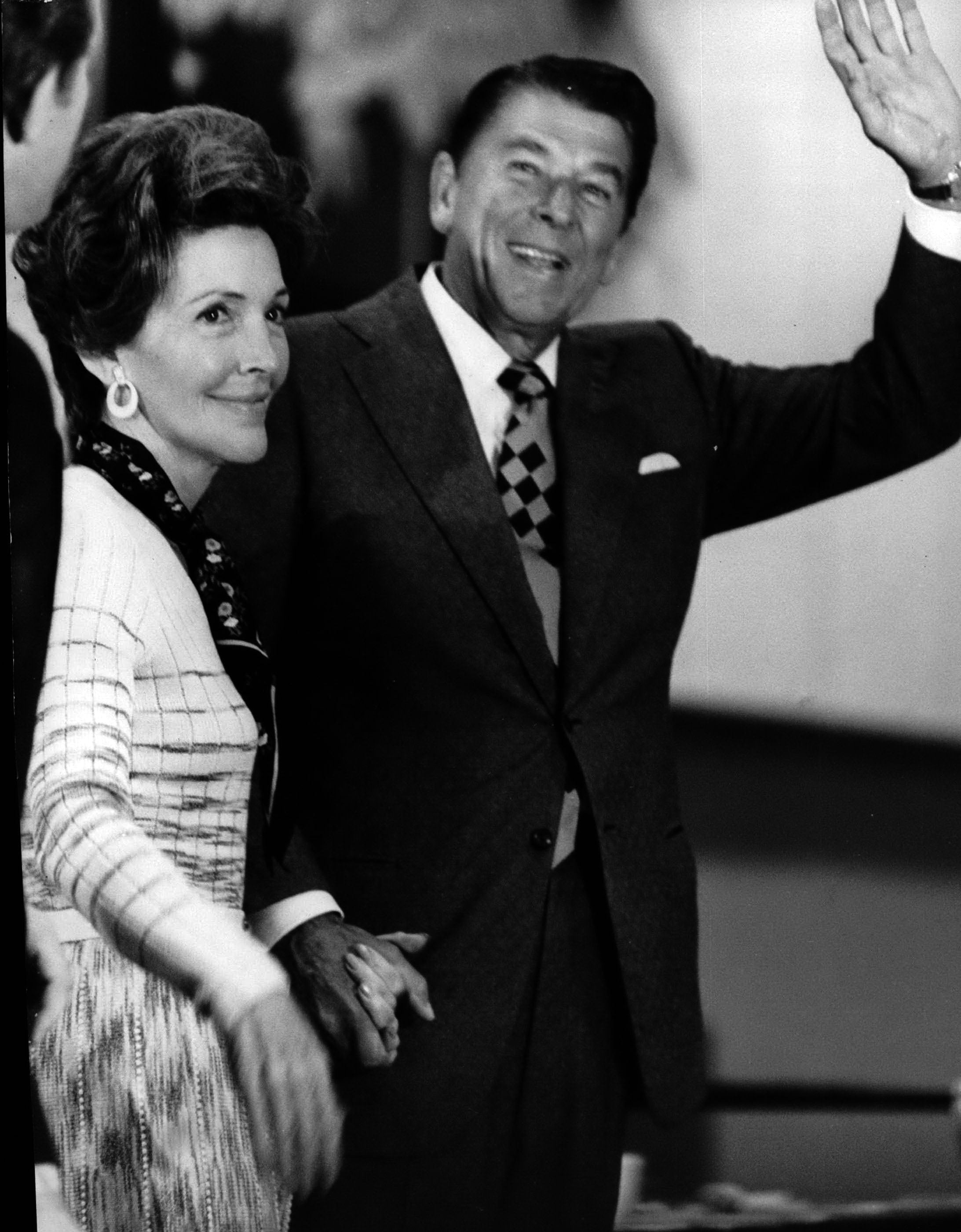
Ronald Reagan was riding a late surge in support for the Republican presidential nomination when his campaign plane landed in Spokane 50 years ago this weekend.
The former California governor was in the Lilac City to address the state Republican Convention and solidify support for the election of his delegates as his supporters prepared to clash with those of President Gerald Ford.
“Discord imperils GOP convention” the front-page headline of The Spokesman-Review warned the morning Reagan was scheduled to speak.
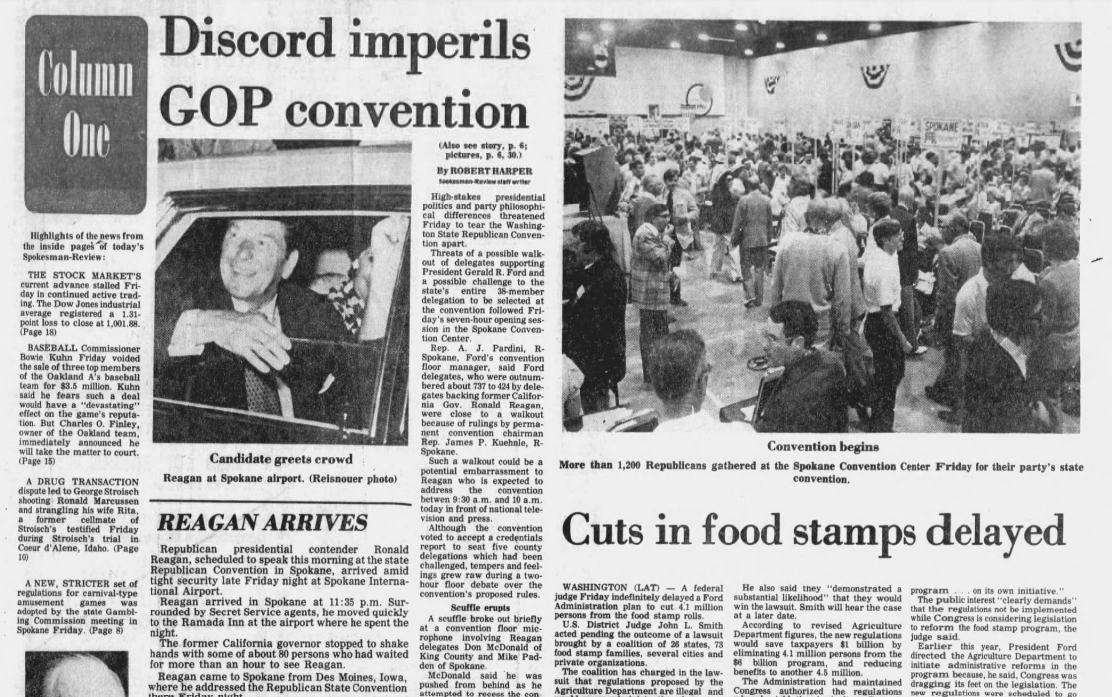
Ford was ahead in the overall race for delegates to the national convention being held later that summer, but Reagan was gaining ground. He was after as many of the 38 delegates from Washington as he could get at the meeting being held at the Spokane Convention Center, a holdover from Expo ’74.
The Ford supporters counted among their contingent some of the state’s more recognizable GOP officials, including then-Gov. Daniel Evans and then-Attorney General Slade Gorton and then-U.S. Rep. Joel Pritchard. State Rep. A.J. Pardini of Spokane was a Ford campaign official.
But the Reagan supporters, as a result of strong organization at the spring precinct caucuses and county conventions, had an edge of nearly 2-to-1 as some 1,200 Republicans gathered in Spokane on Father’s Day weekend. Among their first actions was naming a pro-Reagan convention chairman, state Rep. James Kuehnle, of Spokane, who rebuffed most attempts to amend the convention rules that had been drafted by the Reagan supporters.
As the first morning dragged on, Mike Padden, who was one of the Reagan campaign leaders for Spokane, tried to thwart attempts by Don McDonald, a Ford delegate from King County, to continue making delaying motions.
“I went over and got in line for the microphone,” Padden recalled recently. When McDonald made a motion to break for lunch, Kuehnle said McDonald could go for lunch if he wanted but the rest of the delegates were staying in session. At that point, there was some shoving in the line – participants disagreed who started what the newspaper called “a scuffle – and both Padden and McDonald were ejected.
“I got thrown out but snuck back in,” Padden said, adding that McDonald didn’t come back.
The wrangling continued into the evening and Ford delegates were threatening a walkout. Padden couldn’t go to the airport to greet Reagan and his wife Nancy when they arrived – with the national press corps in tow – shortly before midnight. But he managed to get his girlfriend Laura Derr a spot in the airport welcoming committee. “She got to shake his hand,” he said.
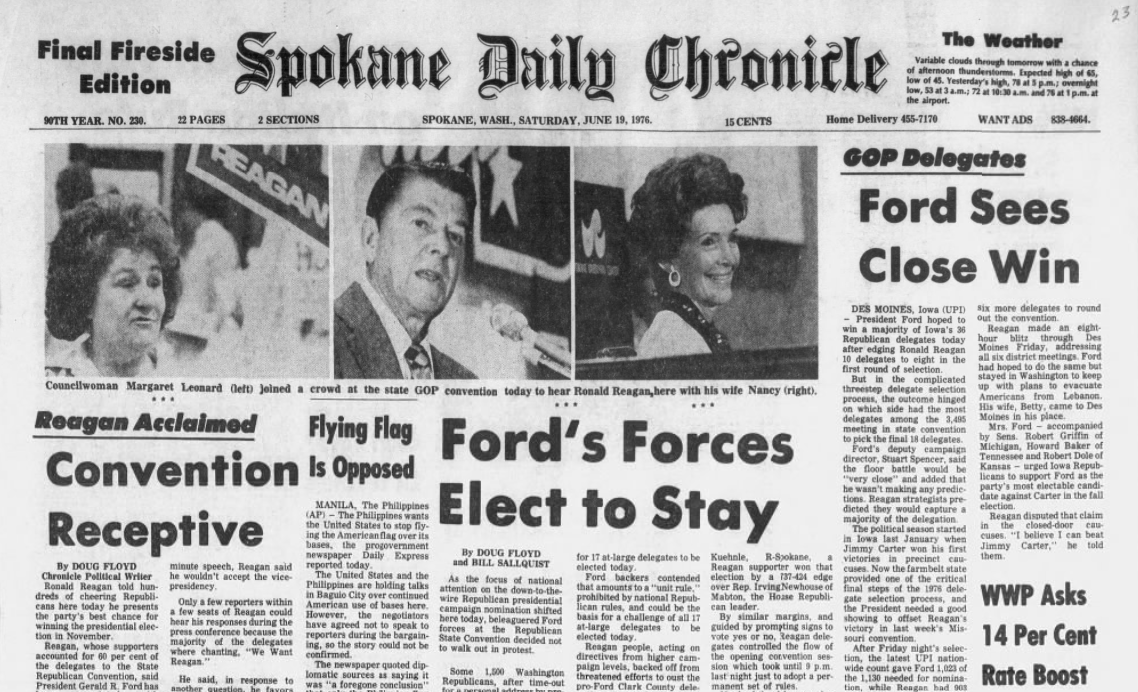
Not all the delegates were at odds. Mayor Dave Rodgers, a Ford delegate, posed with Spokane City Councilwoman Margaret Leonard, a Reagan delegate, for a front-page picture in The Spokesman-Review the morning Reagan was scheduled to speak.
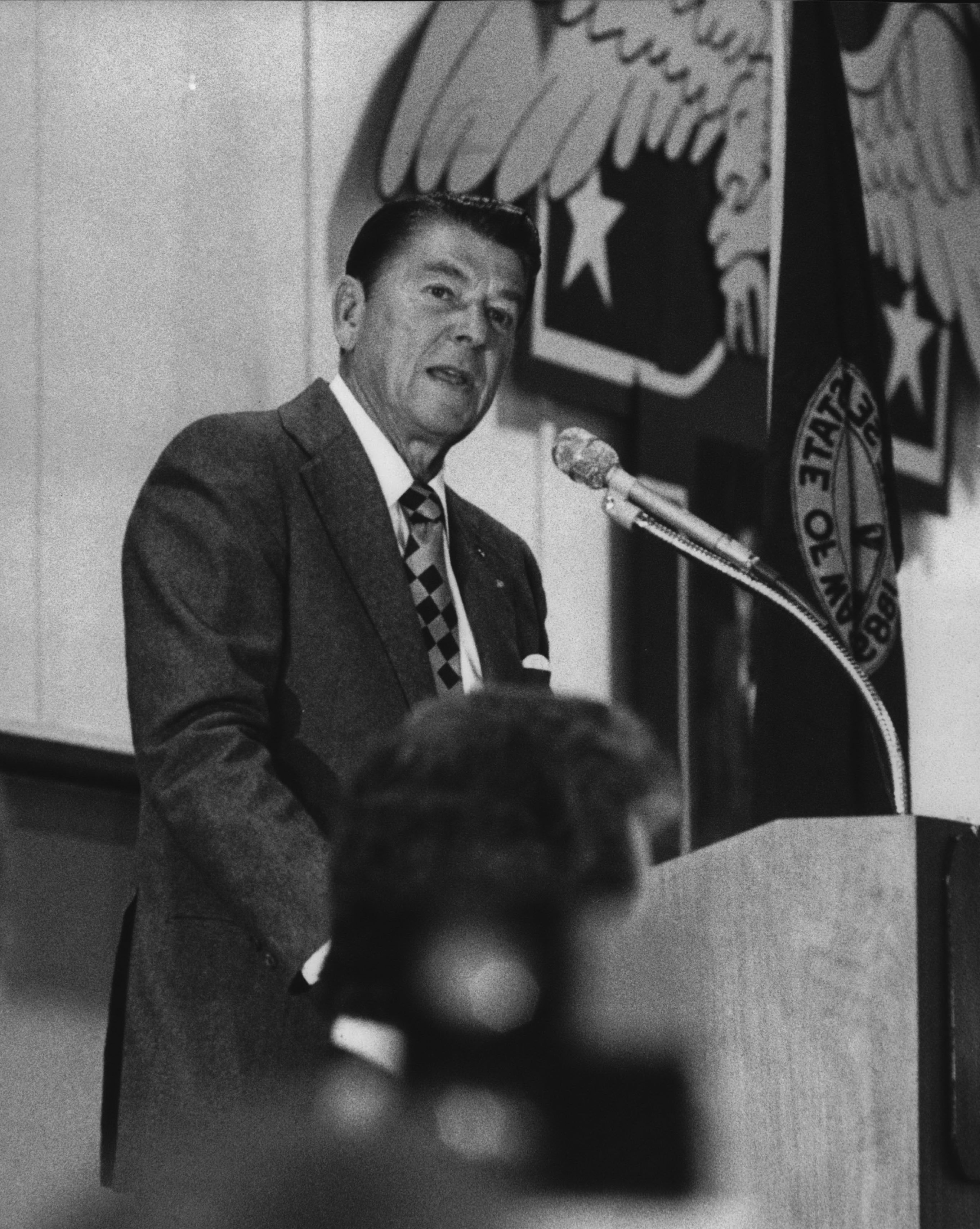
That morning, before the national convention delegates were elected for the state’s eight congressional district and at-large positions, Reagan gave what by then was a familiar stump speech to the delegates. He said Ford’s time as president and before that a quarter century in the U.S. House made him too closely tied to Washington, D.C. and the federal government.
“I don’t believe Washington is the answer. I believe Washington is the problem,” the Spokane Chronicle quoted him as saying in that afternoon’s edition.
Padden also recalled that Reagan called for retaining control of the Panama Canal, as well as delivering one of Padden’s favorite lines: “The closest thing to eternal life on Earth is a government program.”
Both Spokane newspapers offered separate stories of the speech and the convention wrangling, along with multiple photos of the convention goers. OJ Parsons, columnist for The Spokesman-Review’s Life & Leisure section, as the features section was then called, interviewed Nancy Reagan about life on the campaign trail.
After Reagan spoke, most Ford delegates opted against a walkout, and the convention got down to its main business of electing delegates to the national convention. Of the 38 available, Reagan got 31 and Ford 7. But the Reagan delegates rejected an effort to include Gov. Dan Evans in the national delegation, a significant slight because a party’s governor is usually a shoo-in for such a slot.
Padden was offered a chance to be a national delegate but declined.
“I was basically a poor, recent college graduate,” he said. It would cost about $3,000 to attend the national convention, which was money he didn’t have. Instead, he accepted the offer to be a member of the Electoral College if state voters backed the GOP candidate.
The convention marked what some would see as the beginning of a significant rift between the more conservative and moderate wings of the state Republican Party, which has ebbed and flowed in the succeeding decades.
Evans was not seeking a fourth term as governor that year but was elected to the U.S. Senate in 1983. Gorton won another term as attorney general and in 1980 captured a U.S. Senate seat. Pritchard was re-elected to his Congressional seat and later served as lieutenant governor. John Spellman, the Republican nominee for governor in 1976, who spoke to the convention the day before Reagan, lost that election to Dixy Lee Ray, but came back to win the seat in 1980.
Reagan came close but never caught up to Ford in the delegate chase that year, but stayed in the race until the convention opened in Kansas City. Ford went on to lose to former Georgia Gov. Jimmy Carter.
Four years later, it was Reagan who arrived at the GOP national convention with the delegates needed for the nomination and went on to beat Carter for the first of his two terms. 1984 was the last time Washington went for a Republican in a presidential election.
Because a majority of Washington voters backed Ford in the 1976 election, Padden went to Olympia for the meeting of the Electoral College that December. When it came time to cast his ballot, he voted for Reagan instead of Ford. That vote carries an asterisk in most tallies of the 1976 Electoral College count.
It allowed Padden to say he was just four years ahead of the times, although it also prompted a state law requiring electors to vote for their party’s nominee.
When he was introduced to Reagan years later, someone mentioned it was he who cast that Electoral College vote in 1976. Padden recently recalled Reagan replying, “We sure gave it a run.”
Padden was elected to the state House of Representatives in 1980, and served 15 years until he resigned to take a position as a Spokane County District Court judge in 1995. He was elected to the state Senate in 2011 and served until January of 2025.
And the girlfriend who he arranged to meet Reagan’s plane that night in mid June? They got married the next year. Laura Padden is currently the mayor of Spokane Valley.