This column reflects the opinion of the writer. Learn about the differences between a news story and an opinion column.
Longest legislative debate ever? Probably not on the Income tax on millionaires
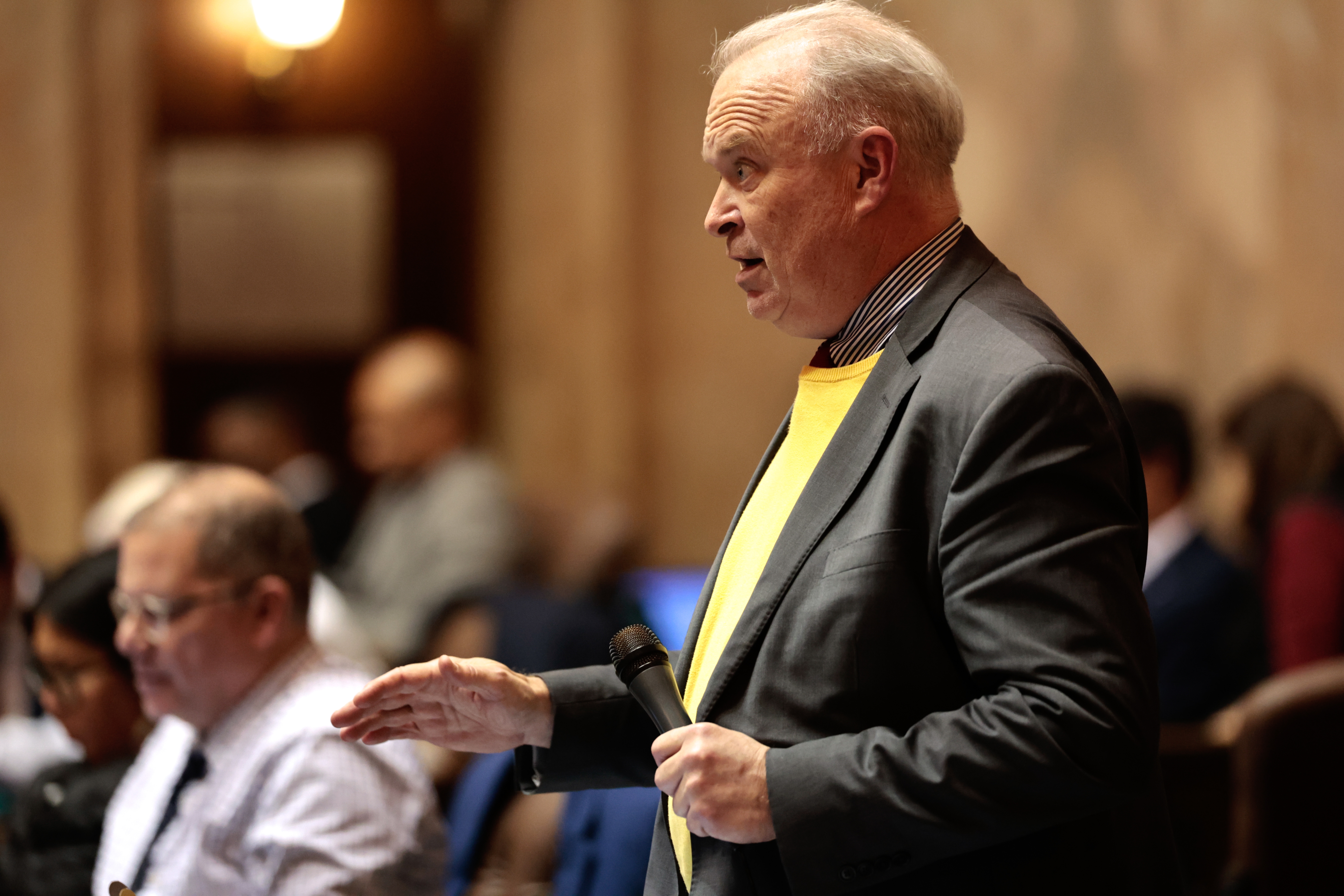
As debate dragged through the night and into the morning last week on the proposed income tax on people earning more than $1 million a year, descriptions of the length began to crop up. But with qualifiers.
Longest in history. Longest in recent history. Longest in memory. Longest in recent memory.
The latter three are particularly variable because they depend on how recent and who’s remembering rather than a written record.
David Ammons, the former Associated Press Olympia correspondent whose tenure at the Capitol goes back to 1972, said he can’t remember anything longer than the millionaires tax debate. So that’s one yardstick albeit just slightly longer than a half-century.
But the two-volume “History of the Washington Legislature” by Don Brazier, which covers 1854 to 1982, indicates it probably was not the longest legislative debate over a single issue.
According to Brazier, there were many long and contentious debates across that 148-year period, including such controversies as a possible income tax, budgets, legislative pay and the need for yearly sessions. The record, however, apparently was held by the 1961 House debate over HB 197. It would have required a public vote when a public utility district wanted to move into territory served by a private utility and take over some of the existing utility’s facilities through condemnation.
It was part of the war between public power and private utilities, including Spokane-based Washington Water Power Co., that had been waged for decades. The 1961 debate stretched over four days, during which almost no other business was conducted in the chamber.
According to news reports at the time by Jack E. Fischer, The Spokesman-Review’s Olympia correspondent, supporters had the votes to pass it when debate began on Feb. 21. But opponents had filed more than 370 amendments. Opponents also contested many things that are usually waived, such as requiring roll call votes on all motions rather than accepting a voice vote. Opponents also would leave the chamber before voting, causing a pause while they were found and returned to the floor.
The vote counts were close, with some Democrats joining all the Republicans in opposition, but enough of the majority Democrats were for it to suggest it would eventually pass.
During the first day, one opponent so enraged a supporter of the bill that the latter invited him to go “outside to settle our differences.” At 7 p.m. that day, opponents moved to adjourn and when Speaker John O’Brien – who was against the bill – agreed, the commotion got so loud in the chamber that O’Brien broke his gavel trying to restore order.
The next day legislators debated seven hours then recessed briefly for a commemoration of Washington’s birthday. When they returned, Rep. Dan Evans, the minority leader, moved to adjourn again, which prompted what Fischer described as a lengthy discussion and debate which continued late into the evening.
Debate on the bill restarted at 3 p.m. on the third day amid allegations that private utility companies had spread money around during the election and were continuing to do so. Legislators got a break for dinner and continued until 12:35 a.m. before adjourning.
On the morning of the fourth day, Gov. Al Rossellini called O’Brien and Evans into his office to see if there was a way to break the logjam. There wasn’t. Debate began again at 1:30 p.m.
A supporter of public power proposed an amendment that would bar campaign contributions from both public and private utilities during the condemnation votes. It passed.
Rep. Margaret Hurley of Spokane – a Democrat who supported the bill, and was identified in print by her married name of Mrs. Joseph E. Hurley like all married female legislators – caused a stir by claiming someone had “rifled” through her desk over night and her notes on the bill had disappeared.
Then a Republican legislator said he was going to switch his vote to opposing the bill, which prompted supporters to agree to kill it by moving to move it back to a committee for further consideration.
The total number of hours spent on debate isn’t listed in Brazier’s history, and news accounts of the day didn’t report it. Based on the descriptions, it would probably have totaled more than the 24 hours, although the Millionaire’s Tax debate, which continued over night and into another day may have set a record for the longest continuous debate for a bill that actually passed.