This column reflects the opinion of the writer. Learn about the differences between a news story and an opinion column.
Spin Control: Despite controversy, Cesar Chavez Day still part of state law
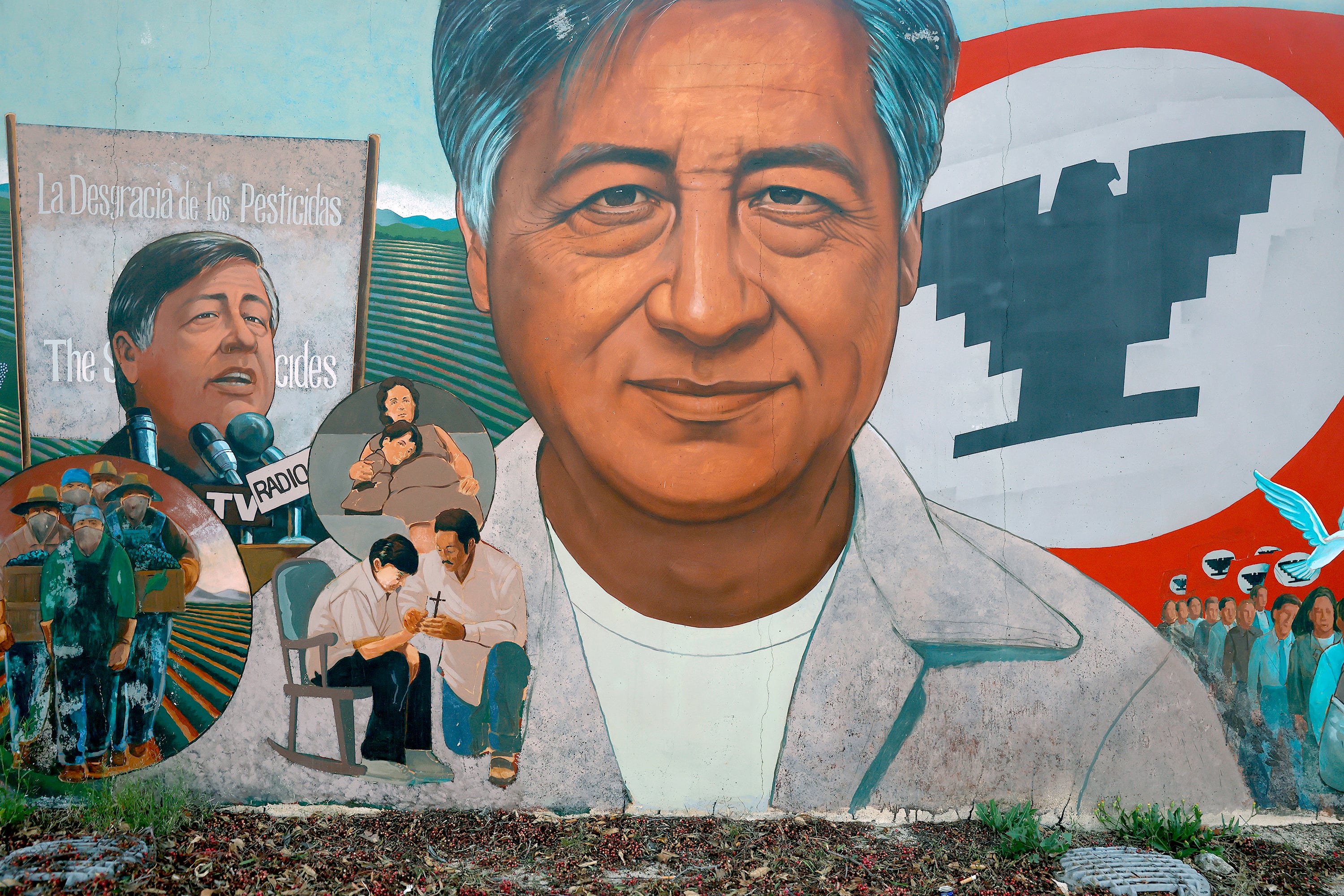
The revelations that longtime labor organizer and farmworker rights advocate Cesar Chavez allegedly was also a long-time abuser of women and girls presents Washington state with a statutory conundrum.
Under state law, March 31 is Cesar Chavez Day. It’s one of 20 days singled out for special recognition, either for a person or a group that legislators decided to honor because, at least at the time, it seemed like a good idea. People who admire that person can celebrate them on that day.
In urging final passage of the bill in 2018, Sen. Rebecca Saldaña, the prime sponsor of one such proposal, described Chavez as a “person of deep faith” who was imperfect but someone who followed in the footsteps of Gandhi on nonviolence.
Before an earlier vote in the House, then-Rep. Javier Valdez said he never heard of Chavez until he took a Hispanic studies class in college. A day recognizing the late labor leader would help future generations of young Hispanic children be inspired by someone who looks like them, Valdez said.
No one spoke against Cesar Chavez Day when it received final passage in the House or Senate on bipartisan votes. Last week, lawmakers were looking for ways to separate the man from the cause of workers’ rights.
Cesar Chavez Day and those other 19 days exist in a section of the Revised Code of Washington set aside for explaining how the state deals with official state and federal holidays like Christmas, Thanksgiving, July Fourth, Memorial Day and so on.
In a subsection of another section the state officially sets aside a day of special recognition for Korean Americans (Jan. 13), former prisoners of war (April 9), Vietnam veterans (March 30), Korean war veterans (July 27) and Pearl Harbor (Dec. 7). Indian rights activist Billy Frank Jr., Mother Joseph and Dolores Huerta, who worked for decades with Chavez, each have their days.
Last year, the state granted that special state recognition to the Muslim holy days of Eid al-Fitr and Aid al-Adha. This year, perhaps in response, a proposal made the rounds to recognize more days of significance to more religions, including Christmas Eve, Easter Sunday, Good Friday, Hanukkah, Passover, Rosh Hashanah and Yom Kippur, along with Diwali and Bandi Chhor Divas, which are marked by Hindus.
Those didn’t get final approval, nor did a proposal for Kimchi Day on Nov. 22, but it’s not unusual for a proposal to need multiple attempts to make the ever-expanding list.
Cesar Chavez Day, first proposed in 2015, didn’t make it through both chambers and on the governor’s conference table for an official signing ceremony until 2018.
Last week, Saldaña and Valdez were among members of the Latino Democratic Caucus that announced they were “devastated” by a New York Times investigation that turned up allegations of sexual abuse against women and girls by Chavez. They commended Dolores Huerta, Chavez’s longtime associate in the farm workers movement, and others who have come forward.
The caucus said it will not celebrate on March 31, but will honor Huerta on her day, April 10. The caucus “will work alongside colleagues in both chambers to define how Washington will formally honor the farmworker movement going forward.”
Chavez is not the only figure on the special recognition list whose star has fallen. The state sets aside Oct. 12 for Columbus, who didn’t actually discover – let alone set foot in – America and made a mess out of the islands he was put in charge of; and Sept. 4 for Marcus Whitman, the pioneer preacher whose relations with Native Americans can best be described as questionable.
The legacies of Columbus and Whitman have been re-evaluated over the decades. Columbus Day used to be a full state holiday, so getting just a day of recognition knocks it down several pegs and the state has made the day after Thanksgiving a full holiday for Native American Heritage Day, possibly as a way to make up for what Columbus and the Pilgrims helped set in motion for the continent’s original inhabitants. Keeping a day of recognition is more of a nod to Italian-Americans whose relatives came centuries after him.
Whitman keeping his day of recognition might be seen as consolation for having his statue replaced with a new one of Billy Frank Jr., as one of the state’s offerings to Statuary Hall in the U.S. Capitol.
But Chavez’s fall from grace was so sudden that state officials could do little but get as far away as fast as possible from any connection to him. Along with the denunciations of the Latino Democratic Caucus, Gov. Bob Ferguson issued a statement saying he won’t be honoring Chavez with a proclamation this month.
“The Legislature must examine the facts, center survivors’ voices and determine how best to move forward responsibly,” Saldaña said in a separate statement last week. “This is a moment to reject false glorification, reflect honestly and recommit to the principle that power must always be exercised with responsibility, humility and accountability.
But the Legislature, which went home 10 days ago, can’t do anything until 2027, so Cesar Chavez Day remains on the books.
That might be a lesson that lawmakers can apply the next time someone asks them to set aside a day to honor someone. Legislators rarely come up with such ideas on their own – they usually come from school children or a group of constituents back in the district, and lawmakers are always eager to oblige.
Once passed by the Legislature and signed by the governor, such recognition is hard to undo, especially during the majority of the year when the Legislature isn’t around to correct a mistake.
They might offer to support a request to the governor for a proclamation honoring that honorable. Failing that, they can always issue a press release extolling the virtues of the person in question.
It’s all just words. People who want to celebrate or commemorate are going to do that anyway. A proclamation or a press release has about as much practical effect as adding another “special recognition” to a section in state law. But they can be easily tossed in the trash down the road when the person so honored turns out to be dishonorable.