Straw bale in the city
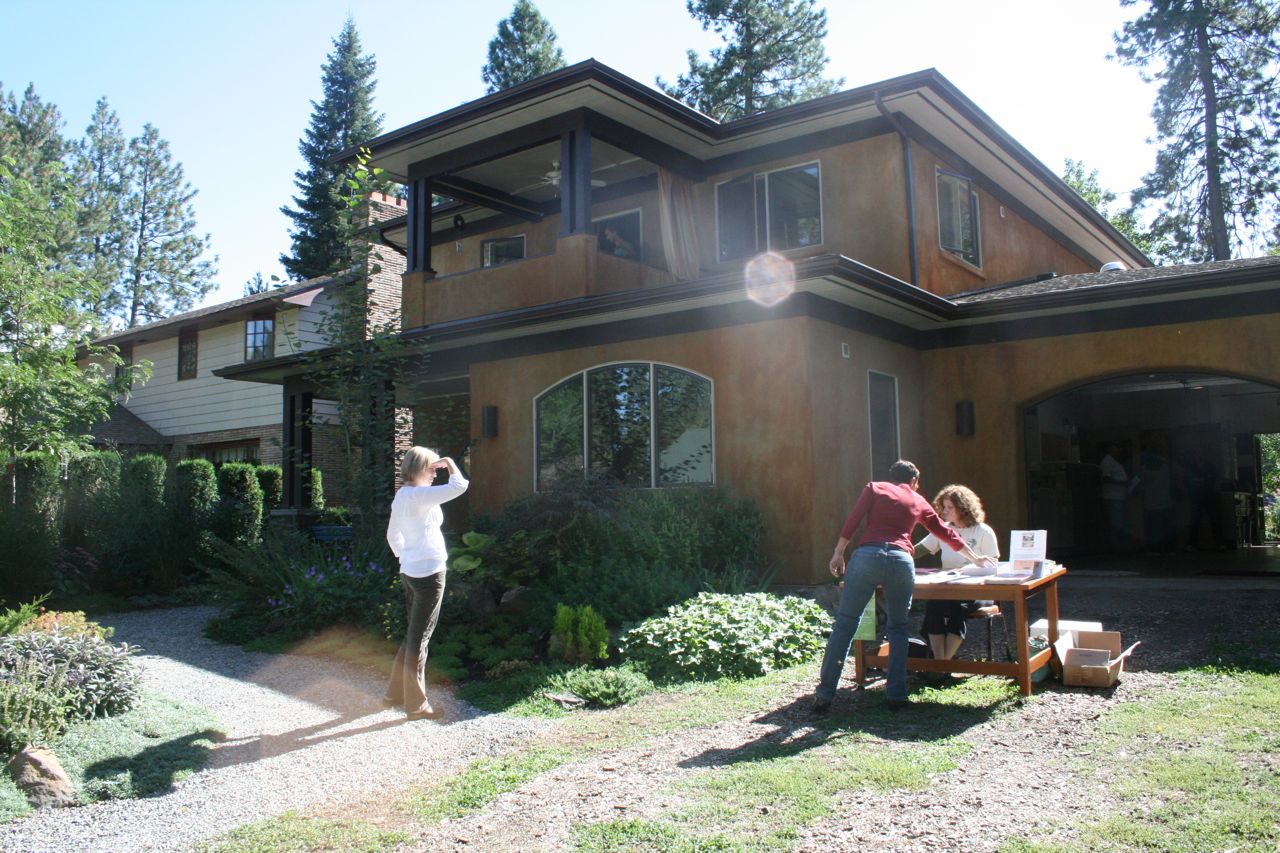
The slideshow that corresponds with this post is refusing to appear here. I’m trying to fix the problem. In the meantime, you can see the rest of the photos here .
On Sunday, I shared photos of Jim Sheehan’s solar-powered house after Sustainable September ‘s Green + Solar Home and Landscape Tour.
Today, I bring you some images of a straw-bale house that was also part of the event.
The house sits in a neighborhood of Craftsman-style houses on the west side of Manito Park and is owned by Frieda Morgenstern and John Brinton. Spokane’s Kelly Lerner, who specializes in straw-bale design and green remodels of older homes, was the architect.
(By the way, if you’re looking for ways to bring your house into harmony with nature, check out Lerner’s book . Her ideas range from quick tips you could complete in an afternoon to long-term projects that will conserve energy and resources over time. It’s on my bookshelf.)
The home’s foursquare style is meant to fit in with the other homes in the neighborhood … to an extent.
“It is orange, after all,” Morgenstern said, laughing.
Morgenstern and Brinton had lived next door to the property for years. When it went up for sale, they bought it and revisited a dream Morgenstern had had since the 1960s to build a straw-bale house.
In straw-bale construction, straw (a waste product from harvesting crops), is baled tightly and then stacked and used as insulation or as a load-bearing element. Straw-bale houses have an R value that’s higher than conventional homes (various studies have put straw bale R values between 26 and 55, according to different reports on the Web).
Straw bales are also naturally fire resistant. For a story I wrote for Inland Northwest Homes & Lifestyles magazine in 2007, Lerner told me the walls of a typical home take 20 minutes to burn, while straw-bale walls last two hours in a fire.
Not only that, straw-bale homes look natural. The walls are thick (20 inches thick, to accomodate the straw bales) and smooth and the edges around window sills are curvy.
“This house is so incredibly maternal and comforting,” Morgenstern said.
She says she chokes up when people ask her what she likes about living in the house.
“This house is a constant joy. We even enjoy cleaning it,” Morgenstern said.
They also enjoy sharing it with strangers so others can see the home’s beauty and learn about the benefits of straw bale.
“Look at that man tapping the wall and petting it,” she said, nudging me. “I love that. All that wonderful energy stays with us.”
Morgenstern admits she also likes to hear the oohs and ahhs when guests see her jaw-dropping front and backyard landscaping. In the two years since they moved in, Morgenstern has cultivated a lush, drought-tolerant garden of fruits, vegetables and flowers. The backyard feels like a wonderland of secret seating areas and whimsical walkways—the kind of place where a child could spend the day searching for fairies and hosting tea parties for gnomes.
“You could literally go out in your backyard and have a vacation,” a tour attendee told Morgenstern, who was beaming.
* This story was originally published as a post from the marketing blog "DwellWellNW." Read all stories from this blog