This column reflects the opinion of the writer. Learn about the differences between a news story and an opinion column.
Get ready for the Fourth with a special edition of the Independence Day Trivia Quiz
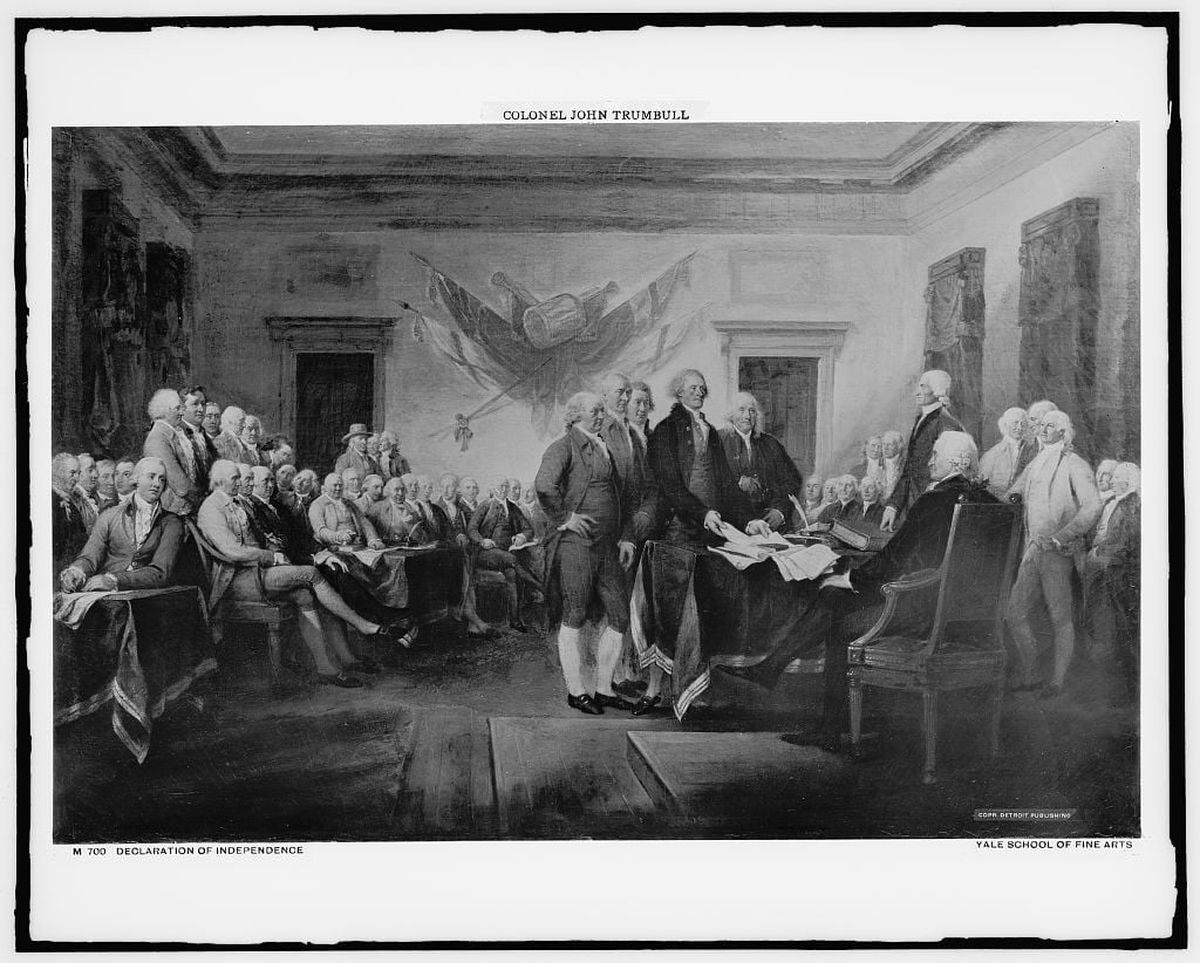
So you think you’re a true, red-white-and-blue patriot who is all set to celebrate the big Fourth of July on Saturday. You’ve got 250 different versions of “The Star Spangled Banner” to play on a loop at the barbecue and have swapped your Mariners cap for a tri-corner hat.
Then the annual Spin Control Fourth of July Trivia Quiz is just for you. Most years, we offer 13 questions, one for each original colony. This year, because of the big anniversary, we’re offering 50 questions, one for each state. Answers are on page 15 of this section. Only a Tory would cheat.
Go Fourth to Celebrate
1. When you celebrate the event with fireworks, you’re taking part in a practice that originated in what country?
A. England
B. Italy
C. China
D. Japan
2. What food is mass consumed at an annual July 4th contest in New Jersey?
A. Pizza
B. Hot Dogs
C. Donuts
D. Hamburgers
3. Which Southern city did not celebrate July 4th for more than 80 years after the Civil War?
A. Richmond
B. Atlanta
C. Charleston
D. Vicksburg
4. Who was the first president to celebrate July 4 in the White House?
A. George Washington
B. John Adams
C. Thomas Jefferson
D. James Monroe
5. How did the Liberty Bell get its final crack?
A. Celebrating the anniversary of the Declaration in 1777
B. Celebrating the end of the war in 1783
C. Marking George Washington’s 104th birthday in 1846
D. Celebrating the surrender at Appomattox in 1865
Colonial history
6. The first British colony in North America was:
A. Massachusetts
B. Virginia
C. New York
D. Maryland
7. Of the 13 British colonies that declared their independence in 1776, the newest one was:
A. North Carolina
B. Maryland
C. New Jersey
D. Georgia
8. Which of the following was not one of the original 13 colonies?
A. New Hampshire
B. Delaware
C. Maine
D. South Carolina
9. What was the name of the group that protested the British tax on tea by throwing crates of it in Boston Harbor?
A. Sons of Liberty
B. Sons of Freedom
C. Sons of America
D. Sons of Anarchy
10. At the time independence was declared, the most populous city in the colonies was:
A. New York
B. Philadelphia
C. Boston
D. Savannah
Grand Old Flags
11. How many stars are on the bottom two rows of the current 50-star American flag (no fair checking the flag in your closet)?
A. 9
B. 10
C. 11
D. 12
12. Betsy Ross probably didn’t design the American flag all by herself, but she is generally credited with what design feature?
A. Putting the blue field in the upper left
B. Starting with a red stripe at the top
C. Using five-point stars
D. Putting a ’76 in the blue field
13. Before the 13 stars and blue field were put in the left corner of the flag, what occupied that space on some flags along with the stars and stripes?
A. A blue field with one large white star
B. A blue field with a lightning bolt
C. Shackles with a broken chain
D. A small version of the British Union Jack
14. What Revolutionary War era flag sparked controversy when it was flown at the vacation home of Supreme Court Justice Samuel Alito?
A. The Bennington flag with the stars arched over the numeral 76.
B. The Pine Tree flag with the slogan “An Appeal to Heaven”
C. The Gadsden flag, with the coiled snake and “Don’t Tread on Me” slogan
D. The “Join or Die” flag with a segmented snake and abbreviations of the colonies
15. How many stars and stripes were on the flag over Fort McHenry that inspired the words for “The Star-Spangled Banner.”
A. 13 stars, 13 stripes
B. 13 stars, 15 stripes
C. 15 stars, 13 stripes
D. 15 stars, 15 stripes
16. How many stars are on the American flag that was in use for the most years?
A. 13
B. 20
C. 48
D. 50
The leadup to the Declaration
17. What was the main reason the British Parliament raised taxes on the colonies before the revolution started?
A. To raise money for a new London Bridge after the old one fell down
B. To build a new palace for the king
C. To help pay off the debts from the French and Indian War
D. They were just greedy
18. Who said “Give me liberty or give me death”?
A. Patrick Henry
B. Paul Revere
C. Nathan Hale
D. Thomas Paine
19. Who wrote the pamphlet “Common Sense,” which urged independence from Great Britain in early 1776?
A. Patrick Henry
B. Paul Revere
C. Nathan Hale
D. Thomas Paine
The Declaration
20. Who was the primary author of the Declaration of Independence?
A. John Adams
B. Thomas Jefferson
C. Ben Franklin
D. George Washington
21. What exactly happened on July 4, 1776?
A. The Continental Congress began debating independence from Great Britain
B. The Continental Congress voted to declare independence from Great Britain
C. The Continental Congress approved the words formally declaring independence from Great Britain
D. All members of the Continental Congress signed the Declaration of Independence
22. How many people signed the Declaration of Independence?
A. 29
B. 37
C. 44
D. 56
23. Which of the following phrases is not in the Declaration of Independence?
A. We the people of the United States
B. The laws of Nature and Nature’s God
C. All men are created equal
D. Governments long established should not be changed for light or transient causes
24. Who was the president of the Second Continental Congress?
A. George Washington
B. John Hancock
C. Thomas Jefferson
D. Ben Franklin
25. The Declaration contains a list of grievances against the king as a reason for independence. Which of the following is not a listed grievance?
A. He required some people to be sent to England for trials
B. He taxed them without their consent
C. He declared slavery illegal
D. He stirred up the Indians against the colonists
26. Which king was that, by the way?
A. George I
B. George II
C. George III
D. George IV
27. The Declaration ends with delegates pledging “our Lives, our Fortunes and” what?
A. Our properties
B. Our liberties
C. Our descendants’ futures
D. Our sacred honor
The war
28. Fighting had started before independence was declared. Which of the following battles took place after the Declaration was signed?
A. The Battle of Lexington
B. The Battle of Bunker Hill
C. The First Battle of Ticonderoga
D. The Battle of Cowpens
29. Paul Revere and others were warned that the British troops were coming to Lexington when lights were hung in:
A. The old North Church
B. The old South Church
C. The old East Church
D. St. Patrick’s Church
30. The British augmented their native troops with mercenaries from what country?
A. Germany
B. Spain
C. Denmark
D. Russia
31. George Washington and the Continental Army spent the harsh winter of 1777-78 at Valley Forge, which is in what state?
A. New York
B. Pennsylvania
C. Virginia
D. Delaware
32. To protect his soldiers, Washington had them inoculated against what disease?
A. Measles
B. Smallpox
C. Cholera
D. Typhus
33. As the British were about to capture Philadelphia, the Continental Congress fled to what city?
A. New York
B. Boston
C. Baltimore
D. Richmond
34. Yorktown, the last major battle of the American Revolution, was fought in what state?
A. New York
B. Pennsylvania
C. Virginia
D. Delaware
35. Where was the treaty signed that ended the war?
A. Paris
B. London
C. Philadelphia
D. Boston
A new country
36. Before the Constitution was ratified, what was the guiding legal framework for the United States?
A. Magna Carta
B. Articles of Confederation
C. Declaration of Independence
D. Mayflower Compact
37. Where was the Constitutional Convention held?
A. New York
B. Boston
C. Philadelphia
D. Richmond
38. Who was elected president of the Constitutional Convention?
A. George Washington
B. John Adams
C. John Hancock
D. Thomas Jefferson
39. Delegates to the Constitutional Convention wrestled with many topics, among them how to count slaves in the apportioning of representatives to Congress. What was the final decision?
A. Slaves were counted like everyone else
B. Slaves weren’t counted at all for population purposes
C. Slaves were counted as half a free person
D. Slaves were counted as three-fifths of a free person.
40. Who was the main author of the Constitution?
A. Thomas Jefferson
B. James Madison
C. James Monroe
D. George Washington
41. What is the name of the essays written to explain and support the Constitution?
A. The Government Papers
B. The Constitution Papers
C. The Democratic Papers
D. The Federalist Papers
Founding Fathers
42. Which of the following presidents signed the Declaration of Independence?
A. George Washington
B. John Adams
C. James Monroe
D. James Madison
43. What was George Washington’s political party?
A. Federalist
B. Democratic Republican
C. Whig
D. He didn’t have one
44. Who was the last U.S. president to fight in the American Revolution?
A. George Washington
B. James Madison
C. John Quincy Adams
D. Andrew Jackson
45. Who was the nation’s first post master general?
A. Ben Franklin
B. Alexander Hamilton
C. James Madison
D. John Hancock
46. John Adams was Washington’s vice president and Thomas Jefferson was Adams’s vice president. Who was Jefferson’s vice president?
A. James Madison
B. Aaron Burr
C. James Monroe
D. Alexander Hamilton
47. What was the first state to join the union after the original 13?
A. Tennessee
B. Vermont
C. Alabama
D. Kentucky
48. How many presidents died on July 4th?
A. 1
B. 2
C. 3
D. 4
49. How many presidents were born on July 4?
A. 1
B. 2
C. 3
D. 4
50. According to the Old Farmer’s Almanac, what crop is supposed to be “knee high by the Fourth of July”?
A. Barley
B. Wheat
C. Alfalfa
D. Corn