Idaho police group drops McKenzie endorsement in SupCourt race, over lawsuits against cops
Here’s my full story from spokesman.com :
BOISE – A law enforcement group has withdrawn its endorsement of state Sen. Curt McKenzie’s bid for the Idaho Supreme Court after he twice represented criminal suspects who unsuccessfully sued police officers for using excessive force.
Both cases were dismissed by the U.S. District Court in Boise in the past month; McKenzie has filed for reconsideration in one of them.
“We realize his law office is in the business of practicing law, and we completely respect that,” said Bryan Lovell, Idaho president of the Fraternal Order of Police. “But it was whether or not we could put our name behind someone that is bringing civil litigation against police officers that we feel is unnecessary. If it’s necessary, then that’s a different question. But we felt that at least these two cases were unnecessary, and could have been avoided.”
The highest-profile of the two cases was Michael Lance Davis’ $110 million lawsuit against Canyon County Sheriff’s Deputy Christopher McCormick. A federal jury quickly dismissed the case Aug. 5.
Davis, now 34, charged that the officer used excessive force in his arrest after six months as a fugitive from drug and domestic violence charges. Davis, who was shot in the stomach, was unarmed, but was holding a laser pointer that looked like a gun.
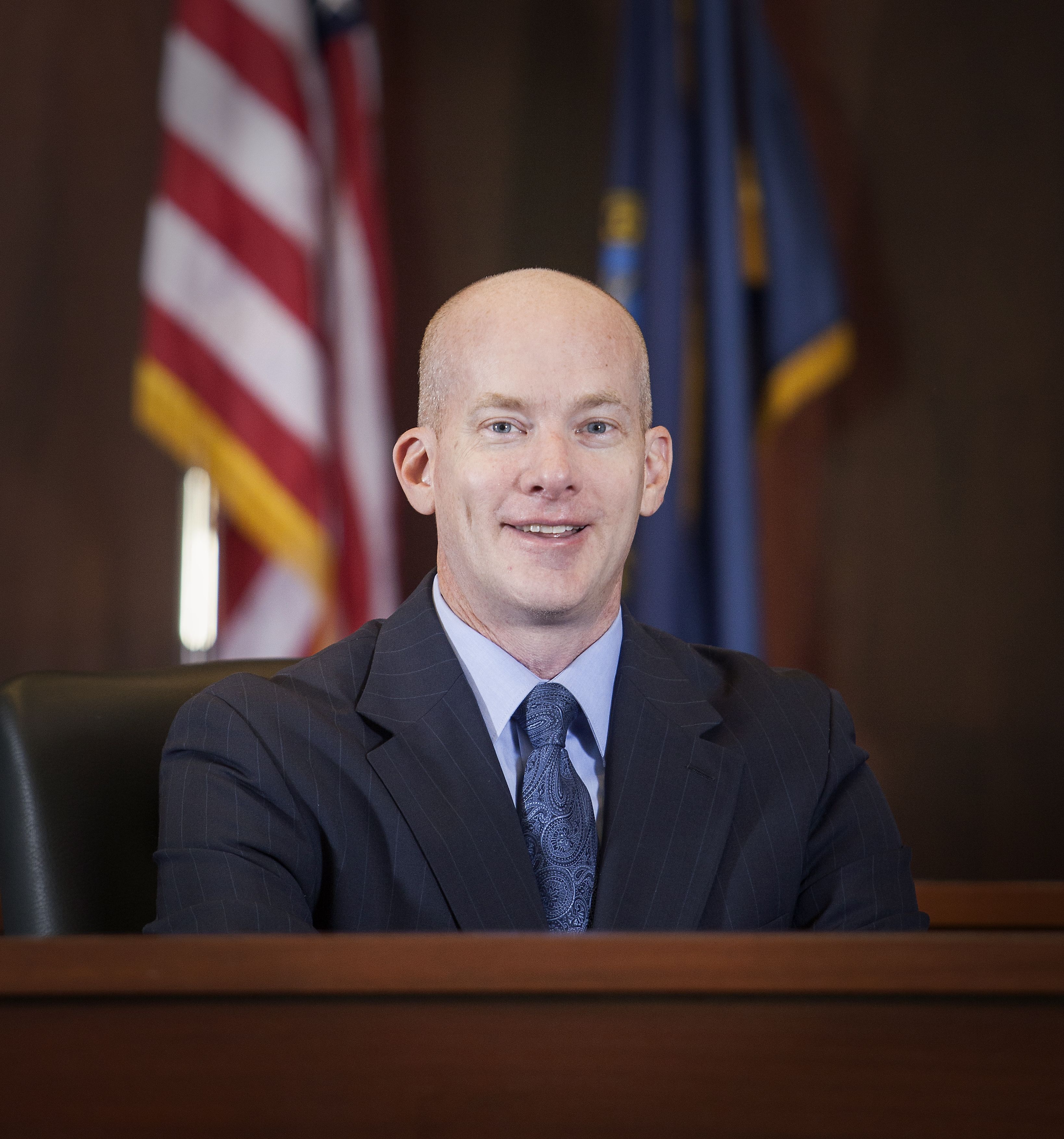 McKenzie said, “It was a civil rights case that had been reviewed by the federal court, and found that there was enough evidence to justify it going to a jury. And it’s difficult for people in that position to get counsel, but I think everyone deserves the protection of the Constitution, and that includes in civil rights litigation, where the issue is whether or not a constitutional right was violated.”
Davis initially filed the federal lawsuit on his own, and asked the court to appoint him an attorney, but the court declined; there’s no blanket right to a court-appointed attorney in civil cases. U.S. Magistrate Judge Ronald Bush, in a 2014 order, advised Davis to “attempt to procure his own counsel on a contingency fee or other basis, if at all possible.”
McKenzie said, “I don’t want to discuss the fee arrangement that I had with him, but I reviewed the case, I spoke with him, I looked at the decision of the judge and made a decision that he deserved some representation.”
McKenzie, a 7 th -term state senator, has a private law practice that includes criminal defense work, representation of inmates at the Parole Commission, civil litigation, wills, estate planning and some small-business counseling, but he’s currently focused on his race for the Idaho Supreme Court, in which he faces Rupert attorney Robyn Brody in a runoff in November.
McKenzie took Davis’ case in October of 2015, well before he decided to run for the high court.
There were conflicting stories in the case. Davis said in his lawsuit that his hands were at his sides when he was shot from a distance of 5 feet. But police said in court documents that he was holding what appeared to be a small, shiny handgun, and shouted at officers to shoot him, then pointed the object at the officers and said he was going to shoot them.
The officers had been called out to apprehend Davis, after being warned that he “had told sources that he was considering suicide by cop” and might be high on methamphetamine.
In a taped interview with officers from his hospital bed after surgery for the gunshot wound, Davis said he wanted to die rather than go back to prison, and that he intended to make the laser pointer look like a gun so he’d be shot. However, on McKenzie’s motion, that interview, in which Davis was heavily sedated, wasn’t presented to jurors.
Mike Kane, who represented the officer, said he didn’t expect McKenzie to take the case. “Let’s just say I was surprised,” Kane said. “I didn’t see a case. I didn’t see a valid claim. I mean, the jury was out an hour and 15 minutes.”
McKenzie said, “It’s a difficult case. I wouldn’t have taken it if I didn’t think that there was evidence that justified him going to a jury and prevailing. The issue was, he was shot through the stomach, he was unarmed, but the issue was whether he had something in his hand that police mistakenly thought was a weapon.”
Davis has a long criminal record and was wanted on multiple charges include skipping bail and aggravated domestic battery with strangulation at the time of his arrest. As a result of the shooting, he suffered permanent internal injuries and disfigurement, and said he suffers from mental anguish, nightmares and anxiety attacks; he’s in prison for at least the next 15 years.
McKenzie said, “It went to the jury, and I respect the jury’s decision.”
The other case involved an excessive-force lawsuit filed by Shannon Noah Martin against Nampa Police Officer Deny Burns, which U.S. District Judge Lynn Winmill summarily dismissed on July 25; McKenzie has filed for reconsideration. Martin, who has a physical disability, charged that the officer used excessive force when arresting him on three misdemeanor charges; he suffered a broken scapula.
“The issue was: Was the force reasonable in the arrest?” McKenzie said. “I looked at the facts, I thought this was an issue that it appeared that excessive force was used during the arrest. So that’s why I brought that case.”
McKenzie said he won a civil case several years ago involving a minor who was molested by a school resource officer.
McKenzie attended the annual state meeting of the Fraternal Order of Police last week to answer the group’s questions. “I contacted them because I had understood that there were concerns about it, and I wanted to speak directly to the members,” he said.
He said he talked about work he’d done with the group over the years in the Legislature, including handling key pieces of legislation they were concerned about, such as a 2007 law allowing peace officers and detention officers to continue receiving their regular pay while on temporary disability. “That was a hard bill to get through,” McKenzie said. He also carried the bill that established the Internet Crimes Against Children program; and legislation to keep officers’ home addresses confidential in publicly available legal documents.
“So I’ve worked with them on a number of issues. I was disappointed that long history and relationship didn’t weigh more,” he said. “But at the same time, I understand their concerns about public perception and the climate that we’re in.”
The Fraternal Order of Police is Idaho’s largest law enforcement organization, with nearly 1,800 members. Lovell, a sergeant with the Bonneville County Sheriff’s office in Idaho Falls, said the group voted last week to withdraw the endorsement; now, it won’t endorse anyone in the race.
He said civil litigation puts stress on officers and their families. “In other parts of the country, cops are getting prosecuted criminally and sued civilly and they’re doing their jobs,” Lovell said. Even when they’re later cleared, he said, damage often has been done to their families and careers. “We just didn’t feel like that was something we should be supporting.”
McKenzie said, “I think they see it in the context of shootings nationwide. But I look at it as, there’s no one who is below the protections of the Constitution, and the right forum to resolve these issues is the judicial system and by a jury of our peers.”
Four candidates ran in May for the high court seat in Idaho that’s opening with the retirement of current Chief Justice Jim Jones. None got a majority, but Brody, who took 30.3 percent of the vote, and McKenzie, who took 27.7 percent, were the top two finishers, putting them in a runoff in the November general election.
* This story was originally published as a post from the blog "Eye On Boise." Read all stories from this blog