Photos document wildfire benefit to habitat over time
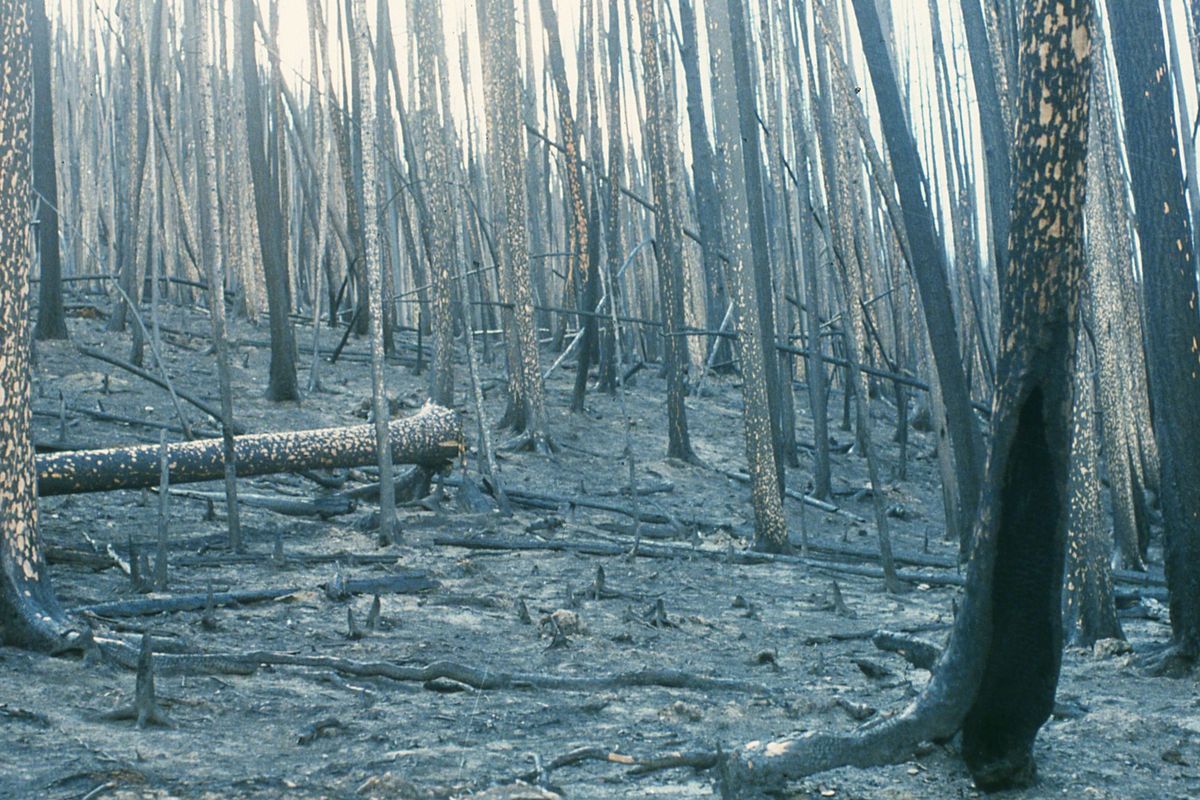
WILDFIRES — Now that most of the smoke has cleared and, in some cases, people are rebuilding their homes and their lives, it’s easier to train thoughts on the eventual benefits of the 2015 wildfires that occurred in wild areas.
Elk hunters, for example, should start seeing the benefits in a year or two as overgrown timbered areas are revitalized with better forage and habitat diversity from the Wenaha-Tucannon Wilderness north through the Pend Oreille Valley.
A good retrospective on the wildfires from an ecologist’s perspective was recently published by the Great Falls Tribune , including the photo sequences shown above.
Fire sometimes burns homes and merchantable timber and kills people. Phillips doesn’t sugarcoat those cold, hard facts.
A healthy forest thrives on fire, said Dawn LaFleur of Glacier National Park. “We view fire as part of the natural landscape.”
Raspberries, thimbleberries, serviceberries, bear grass and willows were sprouting two weekes after the flames of the Reynolds Creek fire burned more than 4,000 acres the park starting July 21.
Root systems of some plants survived the fire, LaFleur said. In other cases, the fire stimulated fire-dependent seeds in soil.
A similar quick return of native plants was documented after the 1988 fires in Yellowstone National Park.
“The main message for the layperson is the forests in Yellowstone recovered naturally and are growing really rapidly and they are very productive,” said Monica Turner, a professor of ecology at the University of Madison-Wisconsin who’s been studying the aftermath of the fires for 27 years.
Wayne Phillips also has monitored post-fire regeneration in Yellowstone National Park and the Little Belt Mountains in Lewis and Clark National Forest, where he worked as a forest ecologist before his retirement in 1997.
Over time, green-needled conifer trees tend to muscle out aspen, but in the first few years following a fire, aspen thrive.
“So if you want aspen, you have to have periodic fire,” Phillips said.
“You can’t generalize too much because fire effects depend on so many factors,” Phillips said. “Every fire is different. Not only every fire, but every day of every fire is different.”
Those factors include the plant community in place before the fire and how the fire burned, intensely in the crowns of the trees or creeping through the understory.
But he’s amazed by how plants bounce back after some fires.
Wildflowers are among the plants that show up first, he said.
“These wildflowers, say, ‘Yea!,’” Phillips says of how wildflowers react to fire. “It’s beautiful.”
* This story was originally published as a post from the blog "Outdoors Blog." Read all stories from this blog