Jacob Thorpe: Favorite stories of 2015
The last 365 days have been eventful for the Washington State Cougars, and subsequently, for their beat writer. While the games are what most people will remember from the 2015 season of Cougar athletics, the stories that stand out to me are mostly the ones that gave readers some insight into the machinations and personalities of the teams.
These are my favorite stories, listed in chronological order.
1. Josh Hawkinson steps up, along with Cougars

It wasn’t supposed to happen that quickly for Josh Hawkinson. The prevailing theory was that he would need at least a couple more years to develop.
But there he was, just 13-years-old and beating his old man at one-on-one on the hoop in front of their house.
“He got mad about that,” the younger, taller Hawkinson said. “The first time I blocked his shot, that was a big milestone.”
You’ll have to forgive his father, Nels, for wanting a few more years of dominance over his offspring. After all, when you’re 6-foot-7 and a former college basketball player yourself, it’s fair to expect that you will teach your kid to drive before he schools you on the court.
But that’s just how Hawkinson works: ahead of schedule.
The year began for me, like it does for many sportswriters, in the middle of basketball season. At that time we were just starting to understand what the Cougars had in Josh Hawkinson, an under-recruited forward out of Shoreline, who followed an invisible freshman season with a dominant sophomore campaign.
In this story I attempted to explain how a player who few outside the WSU basketball program had heard of turned into a double-double machine while still only a sophomore.
2. Washington State’s seniors played a huge role in stabilizing program

DaVonte Lacy had the opportunity to leave Washington State for a perennial NCAA tournament contender last spring, and he thought about taking it.
Lacy, like any competitive college basketball player, had long imagined the glory of playing on one of the country’s best teams and had reason to think he was good enough to play on one.
Instead, he toiled through three injury-filled seasons playing on teams of little national relevance with an NCAA tournament berth never in sight.
The WSU basketball program had a fun first season under Ernie Kent, and the team’s surprising success in Pac-12 games was due in large part to the emergence of seniors Dexter Kernich-Drew and Jordan Railey late in their careers. But it would not have been possible if DaVonté Lacy, the program’s bright light for three years, had taken the opportunity to play for a premier program.
3. Cougars lag way behind in the baseball facilities race

It’s about a 10-minute journey each way, slowly adding up to a couple extra transit hours per week to the players’ already full schedules. Cougar baseball players have always taken the trek, which used to be just one more quirky, old-school thing the players did that may have been distinct to Washington State, but wasn’t uniquely burdensome.
But in the age of television money, WSU’s daily constitutional is less of a throwback and more of a nuisance, a reminder that where other programs have luxurious clubhouses near their ballparks, the Cougars have a long walk back to the locker room in Bohler Gym.
And so solving that problem falls to baseball coach Donnie Marbut, who says he is disappointed the WSU athletic department isn’t doing more to support his efforts to build a $6.5 million clubhouse, and as a result is trying to raise the funds himself.
Sometimes the most rewarding stories to write are not the profiles about a person and what makes them tick, but the explainers that provide a look inside an aspect of a team. In this case, I chronicled the decline of WSU’s baseball facilities, which were the envy of its peers during the program’s heyday, but which are now significantly more spartan than those of its Northwest rivals.
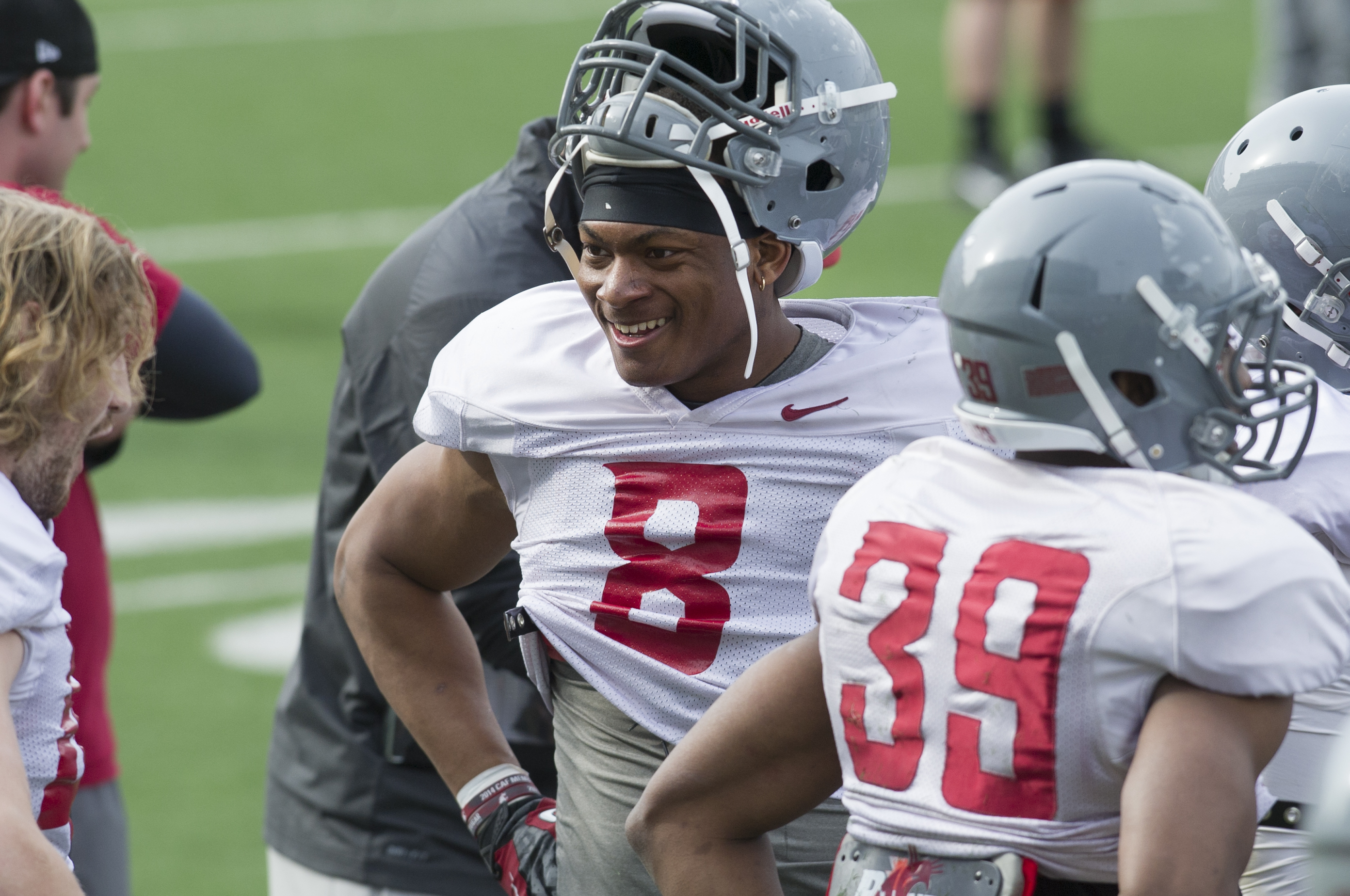
The story of how Jeremiah Allison overcame meager circumstances to become a community pillar is not a chronicle of his life, but rather an account of the adults who shaped him.
That the Washington State linebacker gives – by helping to build homes through Habitat for Humanity, by teaching kids to read on his day off, by playing dominos at the senior center – is due to the enormous efforts of his mentors.
Above all others was his mother, who kept Allison and two siblings on the college track while constantly struggling, occasionally unsuccessfully, to keep a roof over the family’s head.
It’s the story of Paul Knox, the head coach at Dorsey High in Los Angeles, whom Allison refers to as “Papa.” He has helped many of his players reach the NFL and demanded that all of them return to the inner city to give back to their community.
And Dennis Simmons, the person most responsible for bringing Allison to Pullman, where he is now such a fixture in community projects that he is routinely nominated for national service awards given to athletes. Simmons kept him on the same path set out for him by his mother and high school coach.
When covering a school like WSU, all of the athletes are inspiring to a certain degree. Natural talent can take you far in sports, but earning a scholarship to a Pac-12 school requires an extraordinary amount of hard work and dedication to one’s craft. And then once the athlete is in college, even more hard work and dedication is required to juggle the demands of being a college athlete and a student.
Those who do it successfully are pretty cool. But every now and then one comes across a player whose path to success is so impressive, you simply have to write about it. Allison, more than any player I’ve covered, has overcome humble beginnings to become someone who simply seems destined to become a very influential person someday. Read the above story to find out why.
5. Shalom Luani goes from FIFA hero to Cougar safety
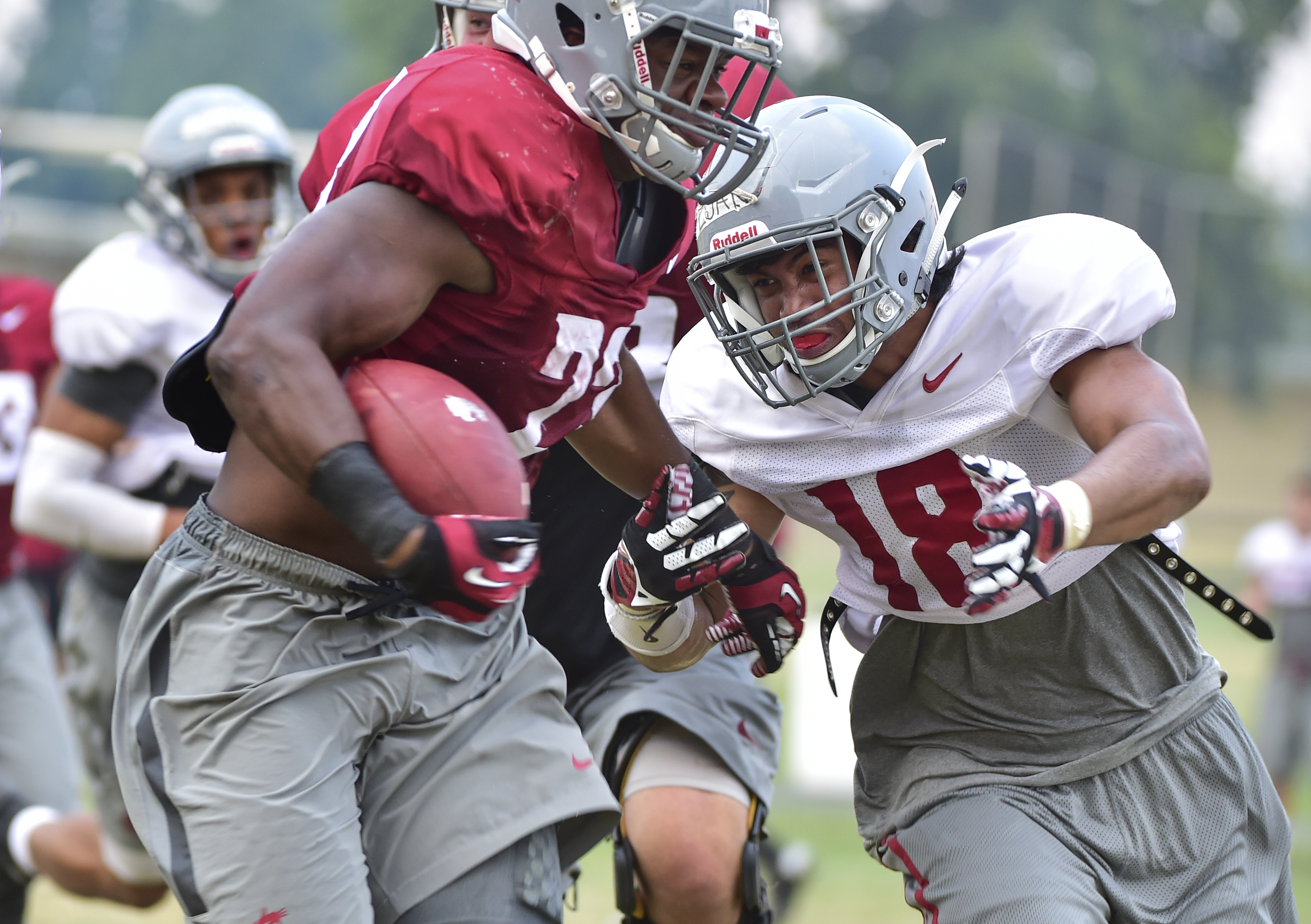
Shalom Luani was the youngest player on the worst team in the world when he made a goal that lifted American Samoa from the cellar of international soccer.
Four years later, at Washington State, the Cougars hope he can similarly affect a fledgling defensive backfield.
This wasn’t necessarily my most deeply reported article of 2015, but it was certainly one of the most fun to research.
6. Joe Dahl anchors what should be one of Cougars’ best offensive lines
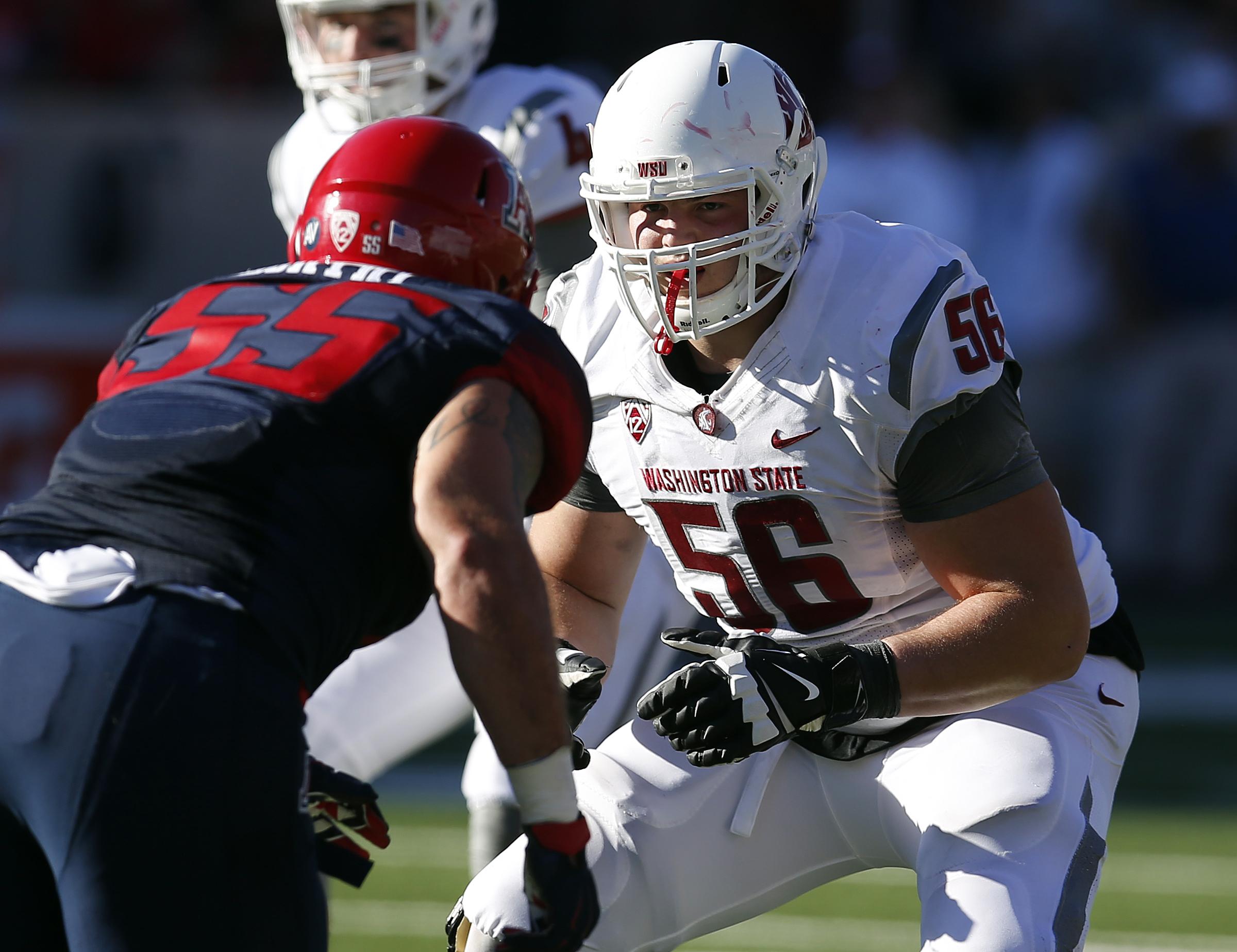
Dahl is the all-league kid from Spokane’s University High who has started every game he has been eligible to play for WSU, and will likely be the next Cougar to represent his alma mater in the NFL.
Truly, Dahl crosses every box on the sports marketers’ checklist, a player who can touch all the emotional nerves of fans and whose local-boy-made-good bio is the prototype of a salable college football player.
And to think, the first act of his college football career was to spurn the Cougars.
Rags to riches stories are always full of rich anecdotes and unique paths, and when writing about Joe Dahl, a local boy who spurned his hometown team only to return and become a star left tackle for the Cougars, the story essentially writes itself.
7. American Samoans making big impact at WSU

Though home to just over 55,000 people, American Samoa has produced roughly 30 NFL players, and a boy born on the island is more than 50 times more likely to someday play in the NFL than an American non-Samoan.
“I think we’re built to play the game,” Vaeao said. “We love sports. Kids back home, it’s like football is everything. We eat football, sleep football, everything. Growing up you look up to the players that were before you, and seeing them go to college, and you realize if you continue playing football it might take you somewhere else. It will help your village, your family, everything.”
To achieve football success beyond high school, the American Samoans have to leave an idyllic island home steeped in a culture that values the ideas of family, civility and strict adherence to tradition. Those that leave must make a new life among people who speak differently, eat differently and act very strangely.
My personal favorite, this story took awhile to come together, but in my opinion it was worth it. The players who come to the United States from American Samoa to play football face daunting cultural barriers, and they must do so with the knowledge that it will likely be years before they see their families and homes again. WSU, with defensive line coach Joe Salave’a and the family atmosphere he cultivates, has become a destination for such players, and it was a rewarding experience to find out why.