Amber's Legacy: The history behind, and of Amber alerts
Thirty years ago today, a young girl disappeared not far from her home in Arlington, Texas. Her tragic story would result in a nationwide network of missing child alert systems that would be named for her.
Jan. 13, 1996
Nine-year-old Amber Hagerman is riding her bike with her brother near her home in Arlington, Texas. She decides to ride over to the parking lot of a nearby abandoned grocery store where other kids had set up a ramp. Her brother returns home.
Minutes later, a kidnapper throws Amber into his pickup and drives away. A neighbor hears Amber’s screams, calls police and provides officers with a description of the suspect and the vehicle.
Teams of law enforcement officers comb the area with no results.
Jan. 17, 1996
A man walking his dog finds Amber’s nude body, face down in a drainage ditch 4 miles from her home. Her throat had been cut. At first, her parents refuse to accept the police reports, telling reporters camped outside their home that she’s still alive. But that’s not the case.
Amber’s killer is never found.
Jan. 27, 1996
An Arlington local radio listener, Diane Simone, writes a letter to KDMX-FM suggesting the Emergency Alert System be used to get the word out on child abductions, the same way severe weather alerts are spread.
This starts the ball rolling for the creation of what would come to be called America’s Missing: Broadcast Emergency Response – the Amber Alert.
1996
March 28
Texas Rep. Martin Frost introduces the Amber Hagerman Child Protection Act in the U.S. House of Representatives. The bill, aimed at strengthening penalties for sexual abuse of a child, languishes in committee but is tacked on as an amendment to a defense appropriation bill in 1997.
October
The Dallas/Fort Worth Association of Radio Managers teams up with law enforcement agencies in northern Texas to conduct a trial run of the new Amber Alert system.
1997, July 5
The Amber Alert system is activated for the first time. The child is later found drowned in a creek.
1998, Nov. 10

Rae Leigh Bradbury in 2002
Eight-week-old Rae Leigh Bradbury is abducted from her Arlington, Texas, apartment by her babysitter. The next day, officials issue an Amber Alert. Within 90 minutes, a motorist spots the kidnapper’s vehicle on Interstate 20. Rae Leigh becomes the first child to be recovered via an Amber Alert.
2000, Oct. 24
The U.S. House of Representatives passes House Resolution 605, urging communities around the nation to adopt the Amber plan.
2002
February
The Federal Communications Commission endorses the Amber system.
Aug. 1
Two children are abducted at gunpoint in Lancaster, California They are recovered after an animal control officer reports a vehicle matching the description in the Amber Alert.
Aug. 12
Texas Gov. Rick Perry establishes the Texas Amber Alert Network. By the next month, 26 states have established Amber Alert systems.
Oct. 1
America Online begins allowing users to sign up to receive Amber Alerts via computer, cell phone or pager. The system works via ZIP code.
Dec. 2
The first Amber Alert system in Canada is established in Alberta.
2003
April 10
Congress passes the PROTECT Act, which strengthens the ability of law enforcement officials to deal with violent crimes against children. One of its provisions: Support, coordination and standardization of the statewide Amber systems. President George W. Bush signs the bill into law on April 30.
Aug. 3
The nation’s first Amber training conference is held in Dallas.
2005
Feb. 17
Hawaii becomes the 50th state to establish an Amber alert plan.
May 11
The Dept. of Justice and the wireless industry establish a system in which users can receive geo-graphically oriented Amber alerts on their mobile devices.
2006
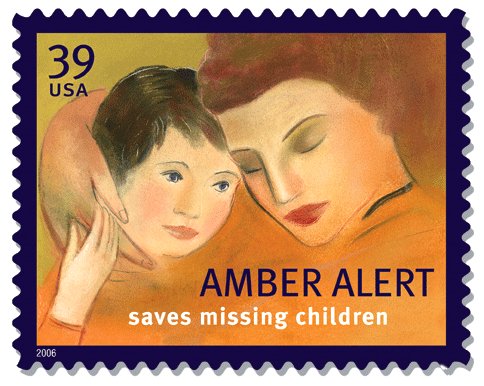
USPS
The U.S. Postal Service issues an Amber Alert postage stamp.
May 25
The National Center for Missing and Exploited Children, the Department of Justice and the Wireless Foundation team up with the Ad Council for a public service media campaign to encourage the public to sign up to receive Amber Alerts.

Lifetime
Sept. 4
A made-for-TV movie, “Amber’s Story” — starring Elizabeth Röhm — is broadcast on Lifetime.
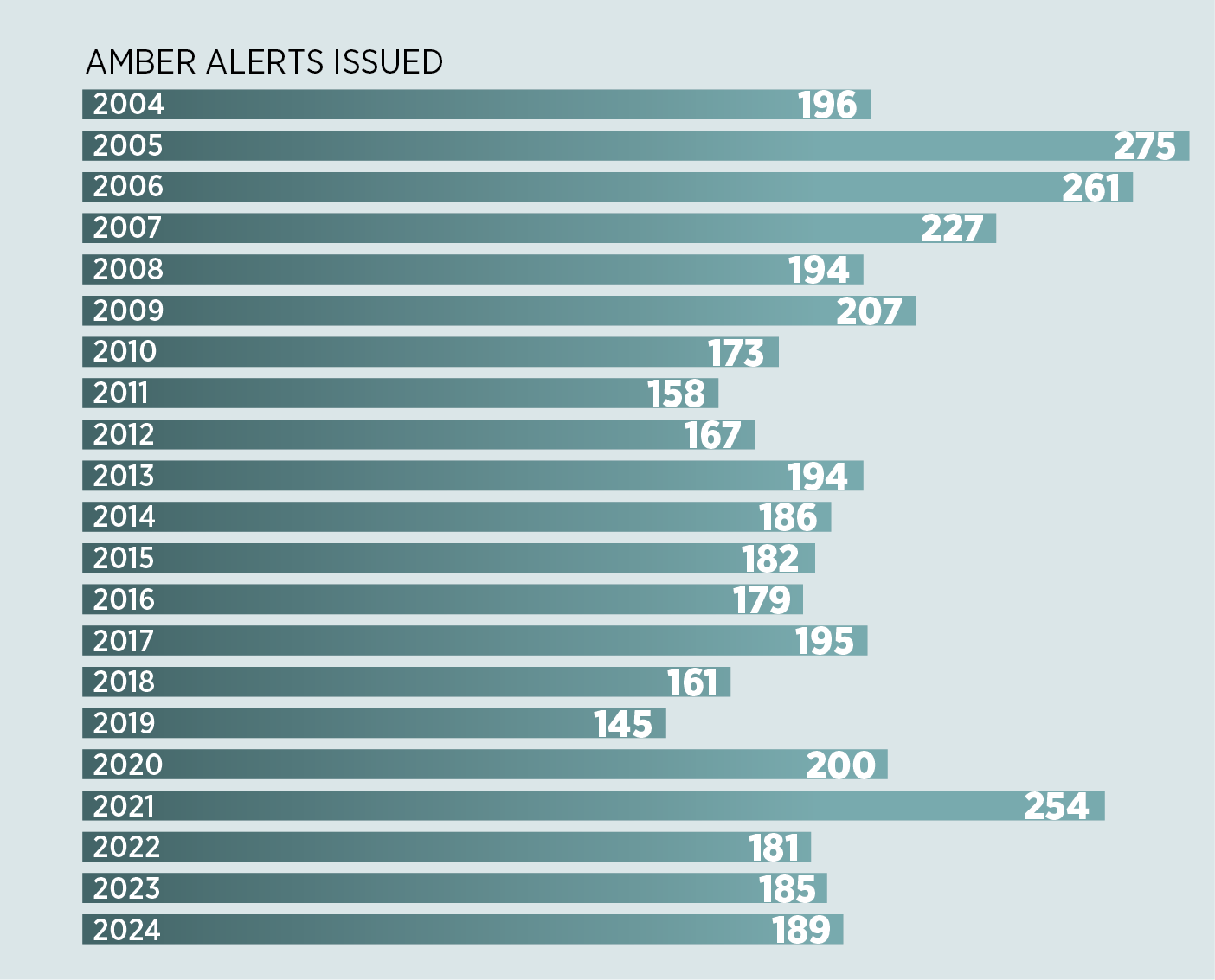
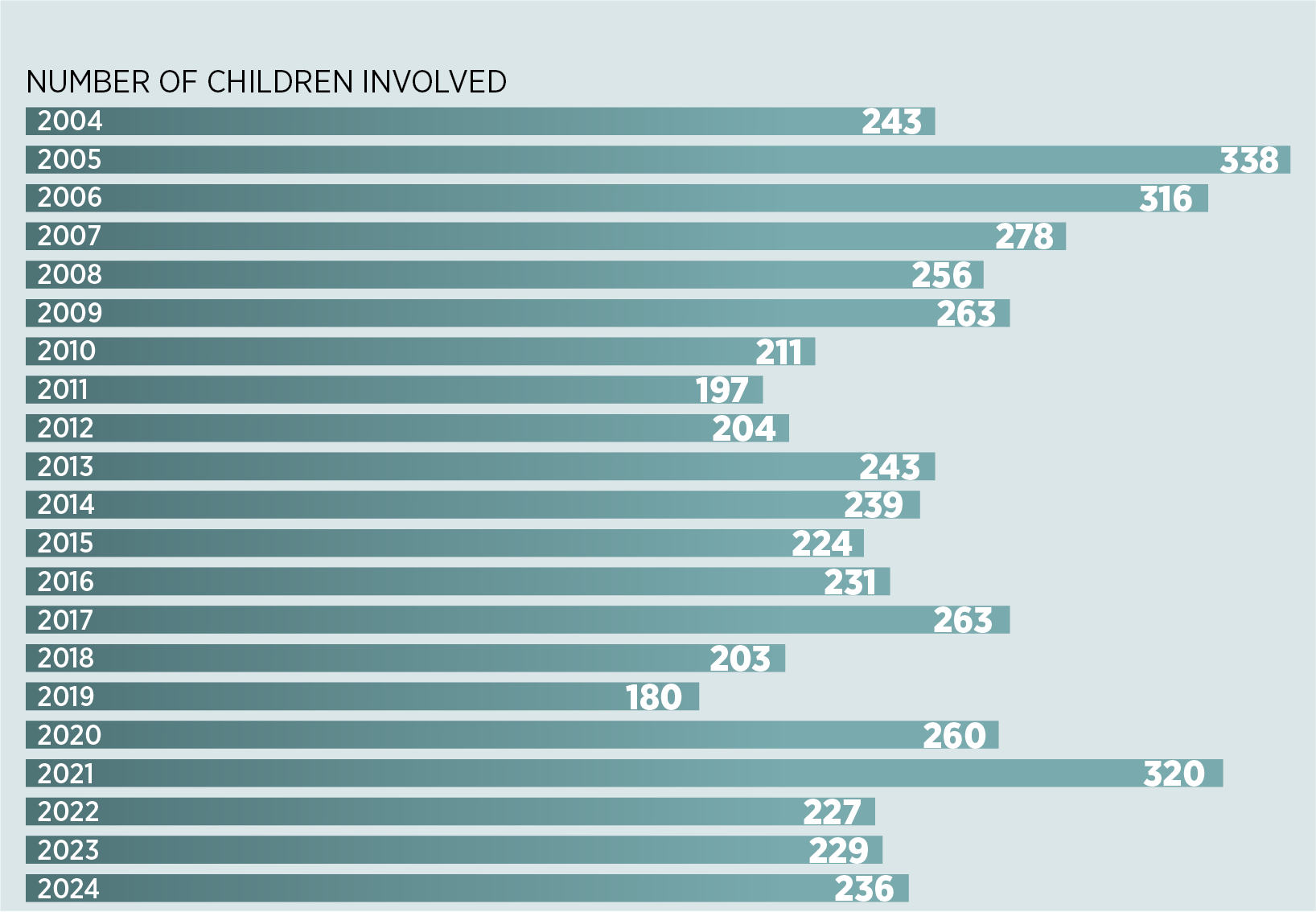
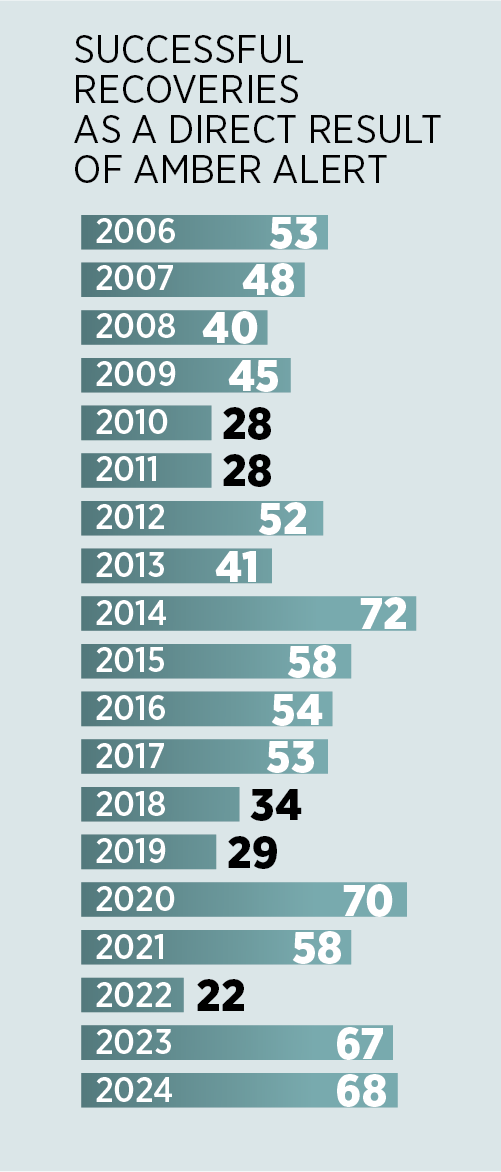
The Impact of Amber Alerts
Since its inception, the Amber system has seen failed attempts, hoaxes and at least one internet hacking incident. Children have been saved, however, thanks to Amber Alerts.