
A Meeting in Space: Gemini 6 and 7
On Dec. 15, 1965 — 60 years ago Monday — two crews of NASA astronauts met for the first time in Earth orbit.
Trouble was: That hadn’t been the original plan. NASA had turned yet another disappointing failure into an historic success.
Oct. 25, 1965

The original plan for NASA’S Gemini 6 mission: practice techniques for orbital rendezvous by linking up in Earth orbit with a robotic target vehicle launched just hours before.
The wheels came off just six minutes after launch of the Agena target spacecraft. As it separated from the Atlas launch vehicle, all telemetry was lost. Range safety officers announced they were now tracking multiple targets. The rocket had exploded.
The Gemini 6 mission was scrubbed and the two-man crew climbed out of their spacecraft. A new plan drawn up: Instead, Gemini 6 would meet up in space with Gemini 7, scheduled to launch that December.
Dec. 4

Gemini 7 was planned as a test of endurance for both equipment and personnel. Frank Borman and Jim Lovell were scheduled for 14 days in orbit.
The new plan called for Gemini 6 – renamed Gemini 6A – to chase down Gemini 7 and spend several orbits flying close by. The two ships would not be able to physically dock, however. The kind of hardware needed for something like that was still being developed.
Gemini 7 launched as scheduled on Dec. 4, 1965, into an orbit
about 170 miles above the Earth.
Dec. 12

Eight days later, veteran Mercury astronaut Wally Schirra and Thomas Stafford again climbed aboard their Gemini spacecraft.
As the countdown reached zero, however, the Titan rocket beneath them came to life and... then, one-
and-a-half seconds later, shut down.
Rather than hit the ejection seat controls, Schirra kept his cool, which preserved the spacecraft.
The fault turned out to be a plastic dust cover carelessly left by a technician at the assembly plant. Plans were made to try yet again, three days later, to get Gemini 6A off the ground.
Dec. 15
Finally — thankfully — Gemini 6A blasted off from Cape Canaveral.
Via a series of engine activations – called “burns” – Gemini 6A gradually caught up with the orbiting Gemini 7, matching its velocity and altitude.
After three hours and 15 minutes, Gemini 6 spotted Gemini 7 on radar. After five hours, Gemini 6 had a visual on its sister ship.

Dec. 15
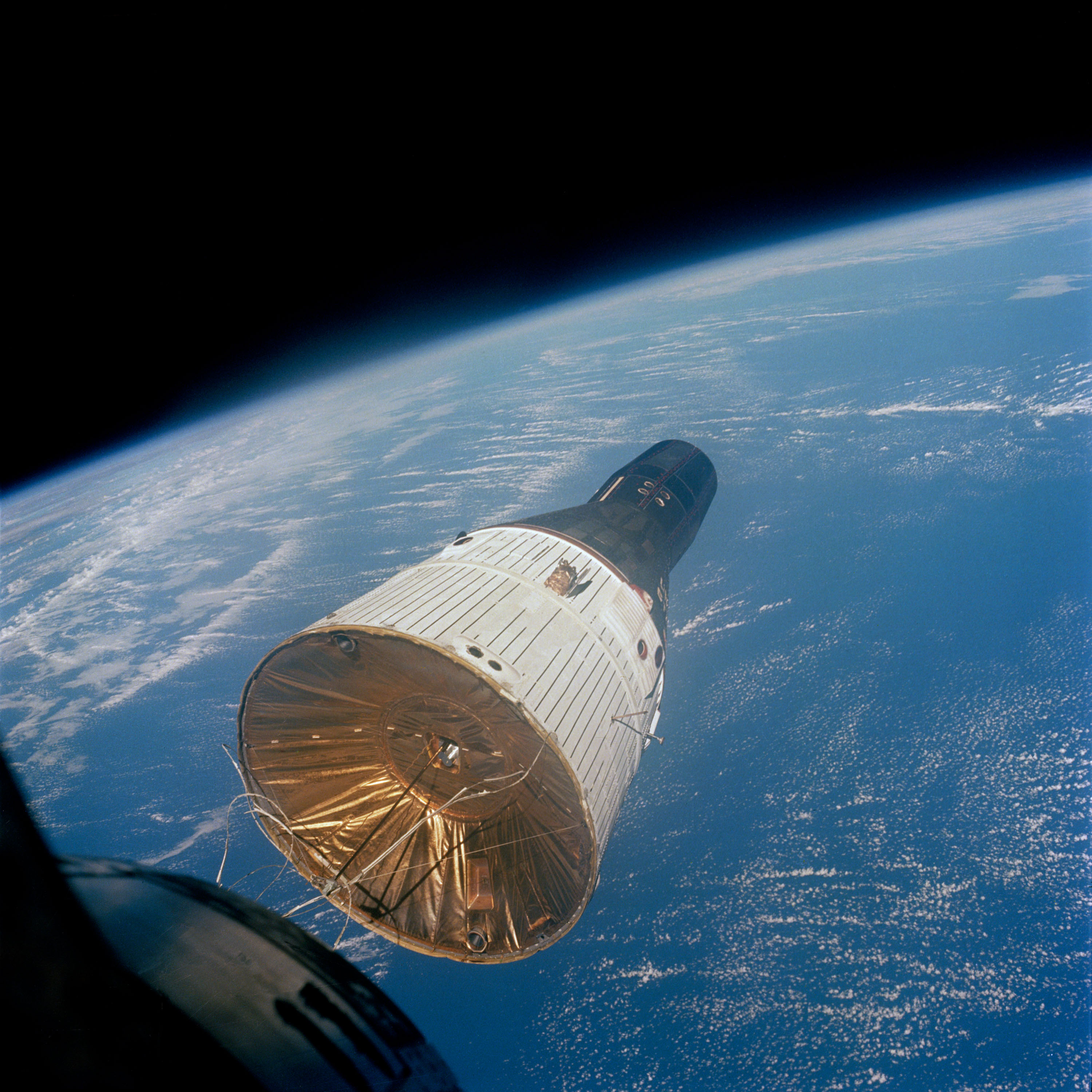
Gemini 6A had expended so little of its fuel in the chase that Schirra had plenty for a fly-around visual inspection of Gemini 7. For five hours, the two spaceships flew very close – at times, no more than a foot apart.
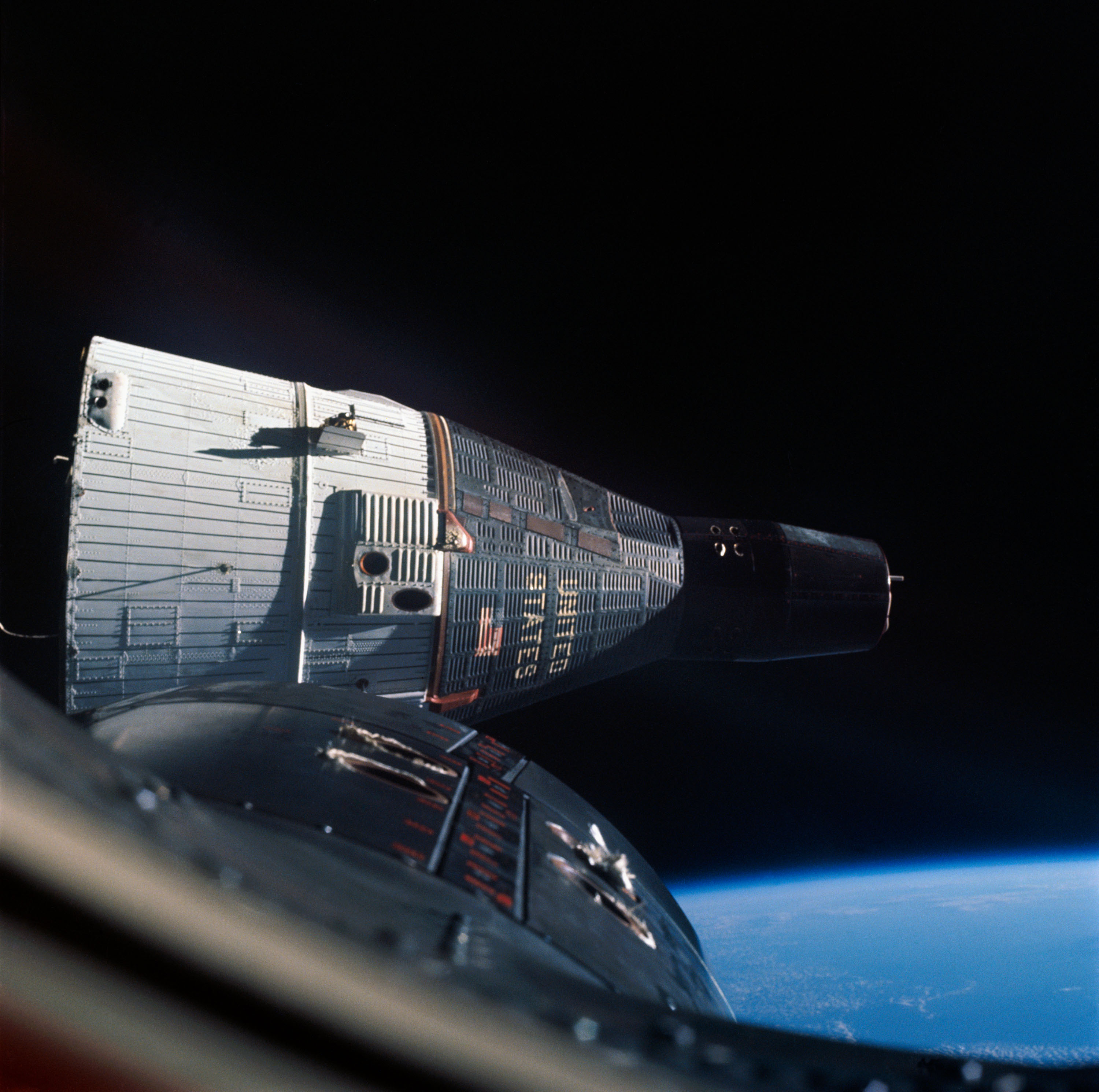
After such an eventful day, the astronauts were ready for a sleep period. Schirra backed Gemini 6A off from Gemini 7 by about 10 miles or so, to keep the two ships from accidentally colliding as they slept.
Dec. 16
After an uneventful night drifting near each other in Earth orbit, Schirra and Stafford said goodbye to their colleagues in the other ship and fired the thrusters that would bring Gemini 6A home.
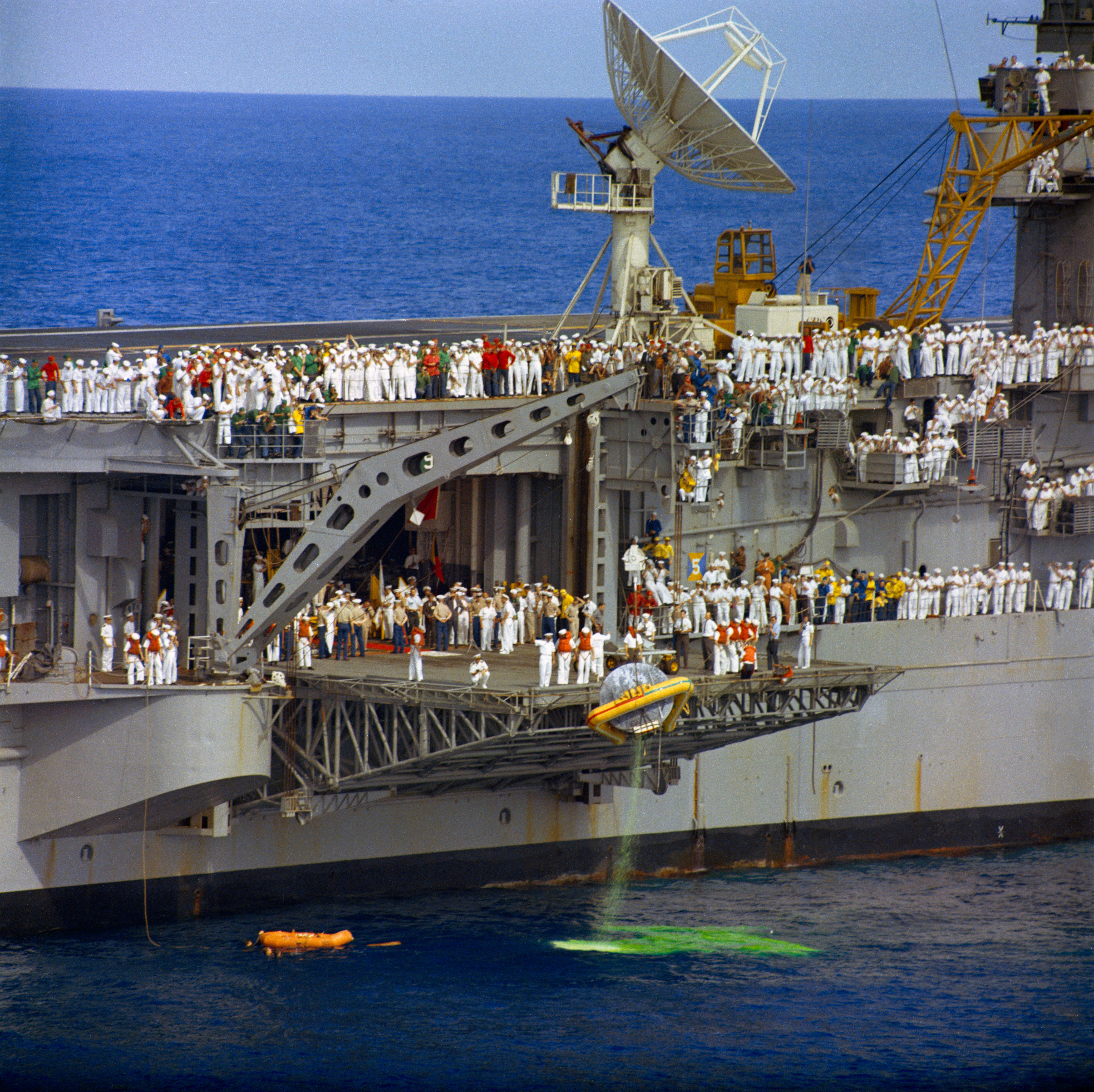
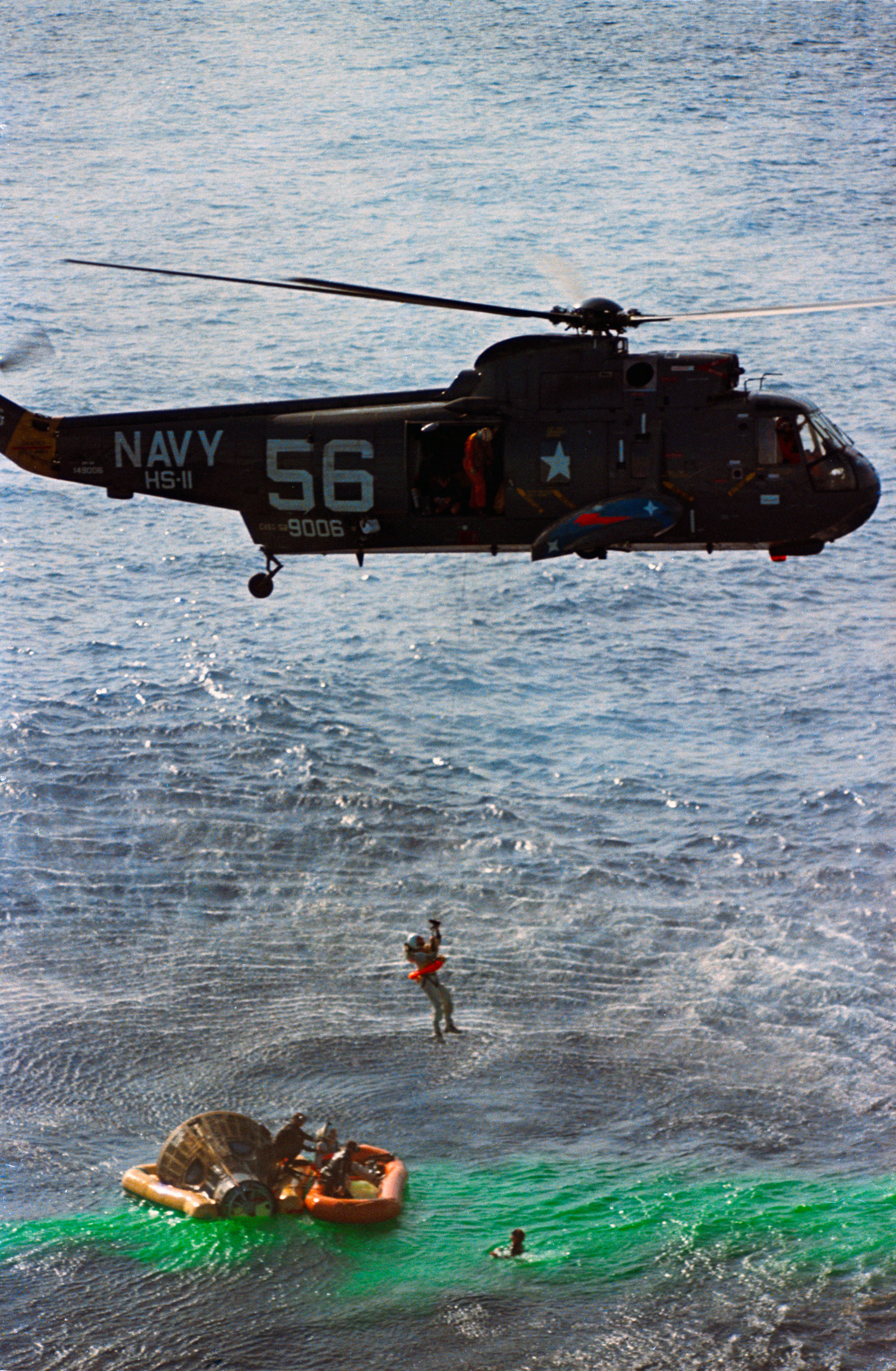
The spacecraft landed only 11 miles from its target in the Atlantic ocean. It was the first NASA splashdown televised live, thanks to a new mobile satellite link developed by AT&T and installed on the deck of the aircraft carrier USS Wasp.
Dec. 18
The crew of Gemini 7 had run out of things to do in orbit. They pulled out reading material: Borman pored over “Roughing It” by Mark Twain while Lovell dove into Walter D. Edmonds’ “Drums Along the Mohawk.”
Fourteen days after launch and two days after the landing of Gemini 6A, Gemini 7 also splashed down in the Atlantic. It, too, was met by the USS Wasp.
Despite their ordeal, the astronauts remained positive. Because they had spent so much time together in space, they should get married, they said.