Hurricane Katrina & New Orleans
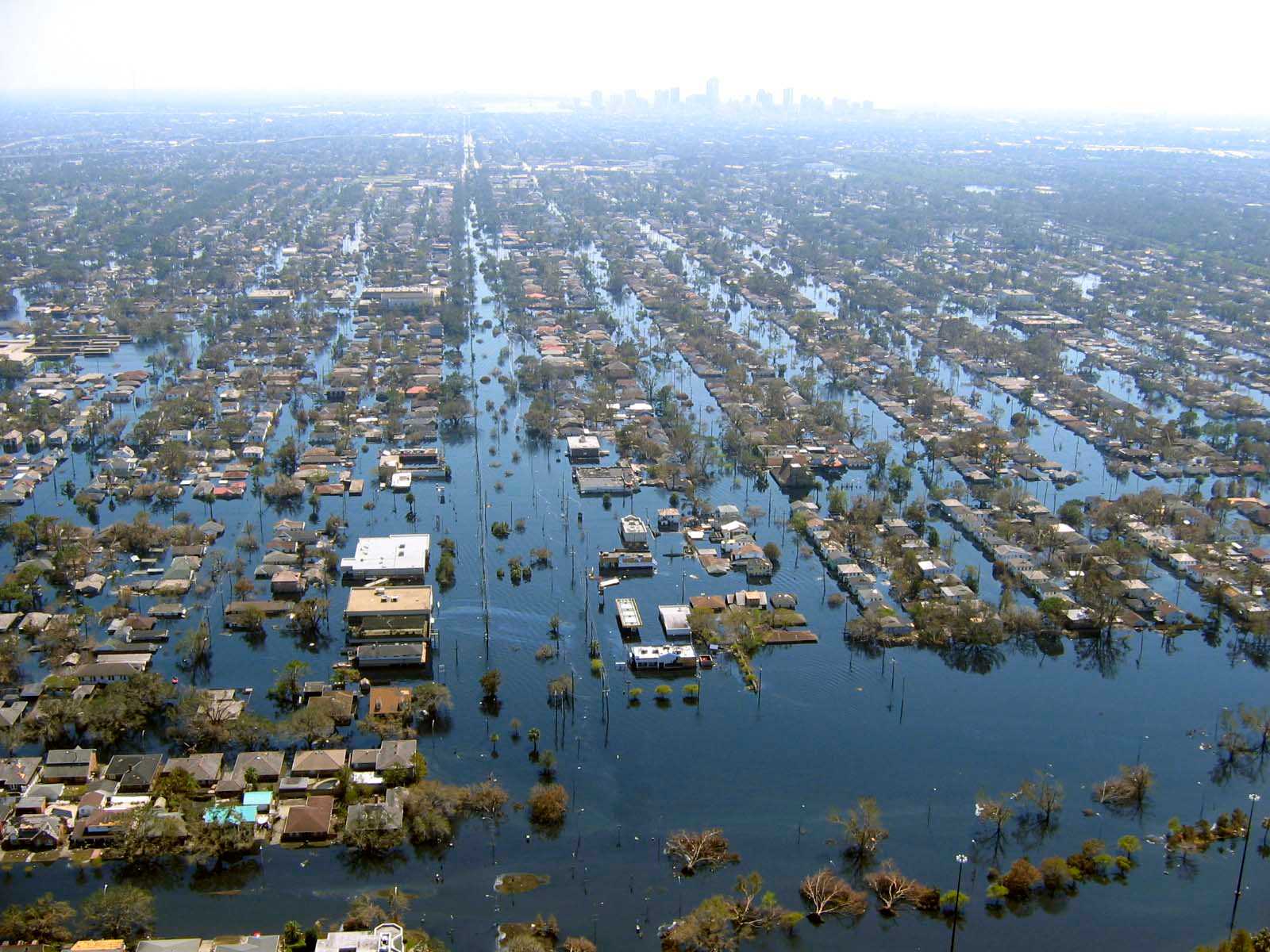
That’s a picture of downtown New Orleans, shortly after Hurricane Katrina. See the Superdome stadium, there in the center? More than 25,000 people took refuge there during the storm. See all the water? Katrina left about 80% of New Orleans under water — up to 20 feet of it in places.
Katrina made landfall in Louisiana on Aug. 29, 2005 — 20 years ago Friday.
An Enormous Impact In A Highly-Populated City
The gorgeous city of New Orleans is essentially built on a swamp. It’s surrounded by water and while half of the city is above sea level, the city’s average elevation is six feet below sea level.
Starting in 1965, the Army Corps of Engineers had begun building a system of levees and seawalls to keep the city from flooding in case of a hurricane. The work was to be completed within 13 years, but four decades later, the city’s flood protection was only between 60% and 90% complete, with an estimated completion date of 2015.
The levees were designed to protect New Orleans against a Category 3 hurricane. It was considered no feasible to plan for a stronger storm than that. Experts had feared water could lap over the tops of some of the levees. But no one foresaw a situation in which half the levees and flood walls would be overwhelmed — and, in some cases, completely washed away.
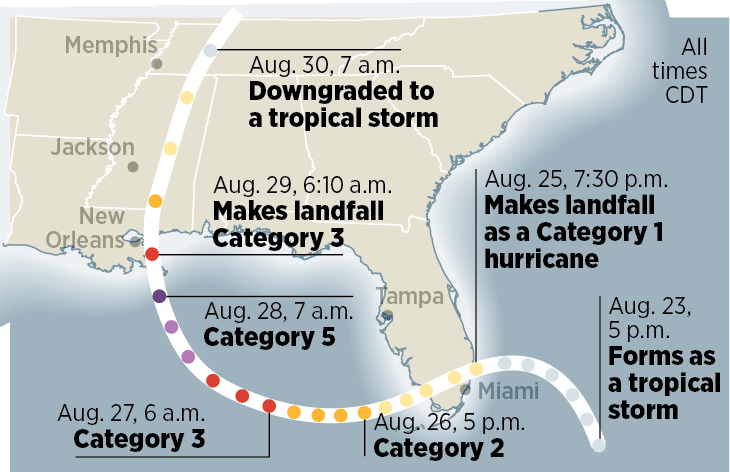
Yet, that’s what happened on Aug. 29, 2005, when Hurricane Katrina made landfall just to the southeast of New Orleans. The storm had struck south Florida four days before as a Category 1 storm, but then quickly strengthened over the warm waters of the Gulf of Mexico.
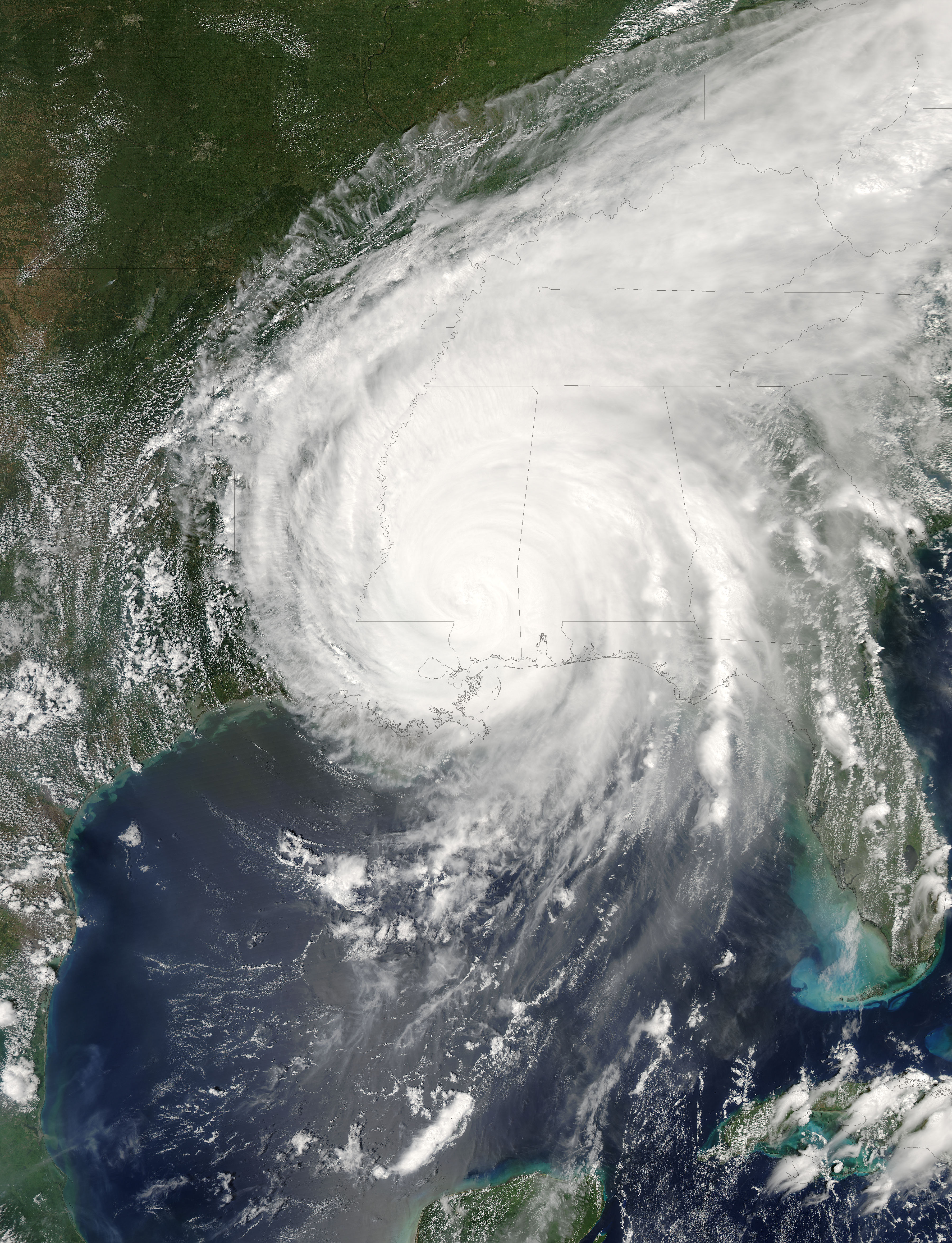
Katrina made landfall early on Aug. 29, 2005, with winds in excess of 125 mph and a storm surge of 12 to 14 feet. Photo sourced from NASA Earth Observatory.
As the storm approached, evacuation warnings were issued. Many residents evacuated, but many more had no access to transportation, nor did they have a safe place to go. More than 25,000 residents took shelter in the Louisiana Superdome and another 25,000 crowded into the city’s convention center.
When the storm hit, though, it knocked out power to the Superdome and ripped two holes in its roof. Another 15,000 waded through flooded streets only to find food and supplies there depleted and the National Guard turning away more refugees.
About 5,000 residents were trucked to the Astrodome in Houston, where they found only 2,000 cots were available. It was Sept. 4 — six days after the storm made landfall — before the Superdome was cleared and evacuees moved elsewhere.
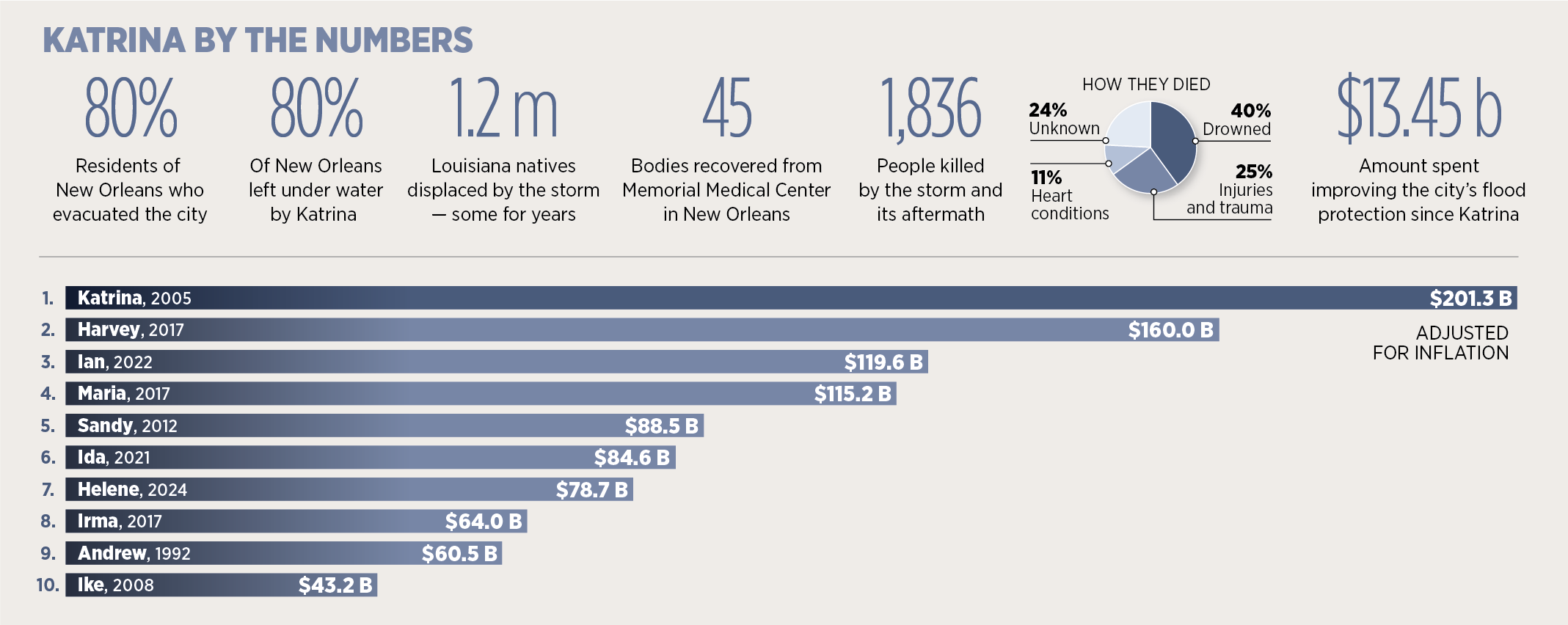
The National Guard entered New Orleans’ Memorial Medical Center to retrieve the bodies of what they believed to be 11 patients who had died there, only to find 45 dead. A doctor and two nurses were accused of euthanizing patients who had were critically ill and considered too weak to survive evacuation. No charges were ever bought.
Officials were blamed for not having issued mandatory evacuation orders earlier and for not rushing relief efforts after the disaster.
The levees had been breached in 15 places, which left most of the city flooded for weeks. Oil spills from 44 separate facilities in the region caused 7 million gallons of oil leaked into the environment. More than 1,800 homes in Chalmette and Meraux, Louisiana, were ruined by oil.
More than a million area residents were displaced for weeks or months. FEMA brought in trailers and paid for hotel rooms for thousands of refugees. As of March 2010, there were still 260 families living in FEMA trailers in Louisiana and Mississippi.
NOAA
Much of New Orleans lacked the resources to get out of Katrina’s way.
Up to 112,000 of the city’s nearly 500,000 residents had no access to a car. The U.S. Coast Guard rescued 34,000 people from the city’s flooded neighborhoods. A million residents were displaced by the storm.
FEMA
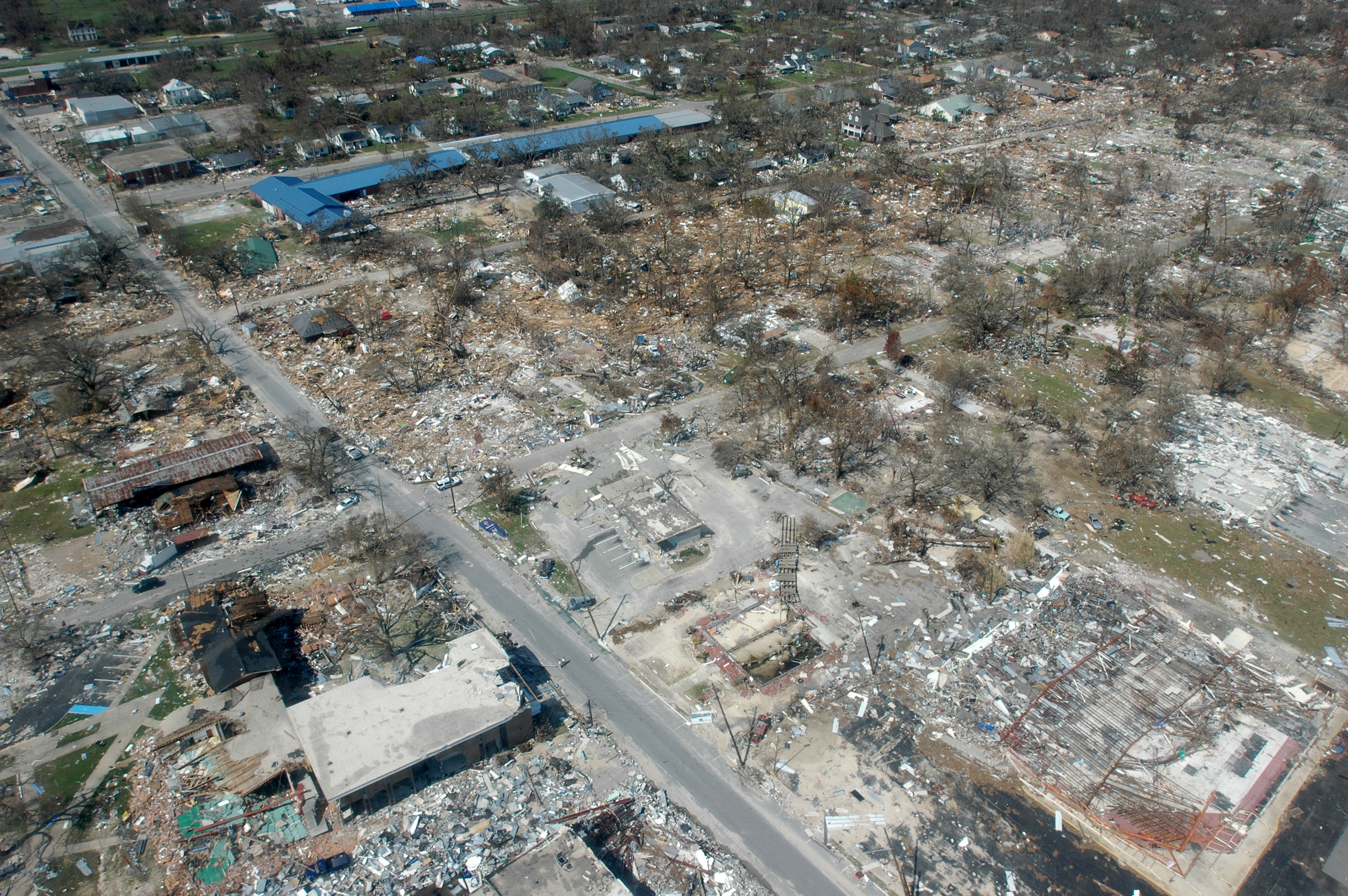
Because they rotate counterclockwise, hurricanes tend to hit hardest to the northeast of where they make landfall. Mississippi — Gulfport is shown here — was hit by up to 10 inches of rain and 11 tornadoes, leaving 238 residents dead. All 82 counties in the state were declared disaster areas.
The Costliest Storm in U.S. History
While Katrina was the fourth-most intense Atlantic hurricane to make landfall in the U.S., it’s by far the costliest in terms of property damage and economic impact to the region.
The city of New Orleans lost about half of its population in the first year after Katrina. Its population in the 2020 census was just over 390,000, or about 80% of its level before Katrina.