Live Aid: The Day The World Came Together
On July 13, 1985 — 40 years ago today — an estimated 1.9 billion people — nearly 40% of the world’s population, at the time — watched a massive concert staged in both London and Philadelphia and linked by one of the first live international satellite hookups to raise money to provide aid to famine-stricken Ethiopia.
'The Day The World Came Together'
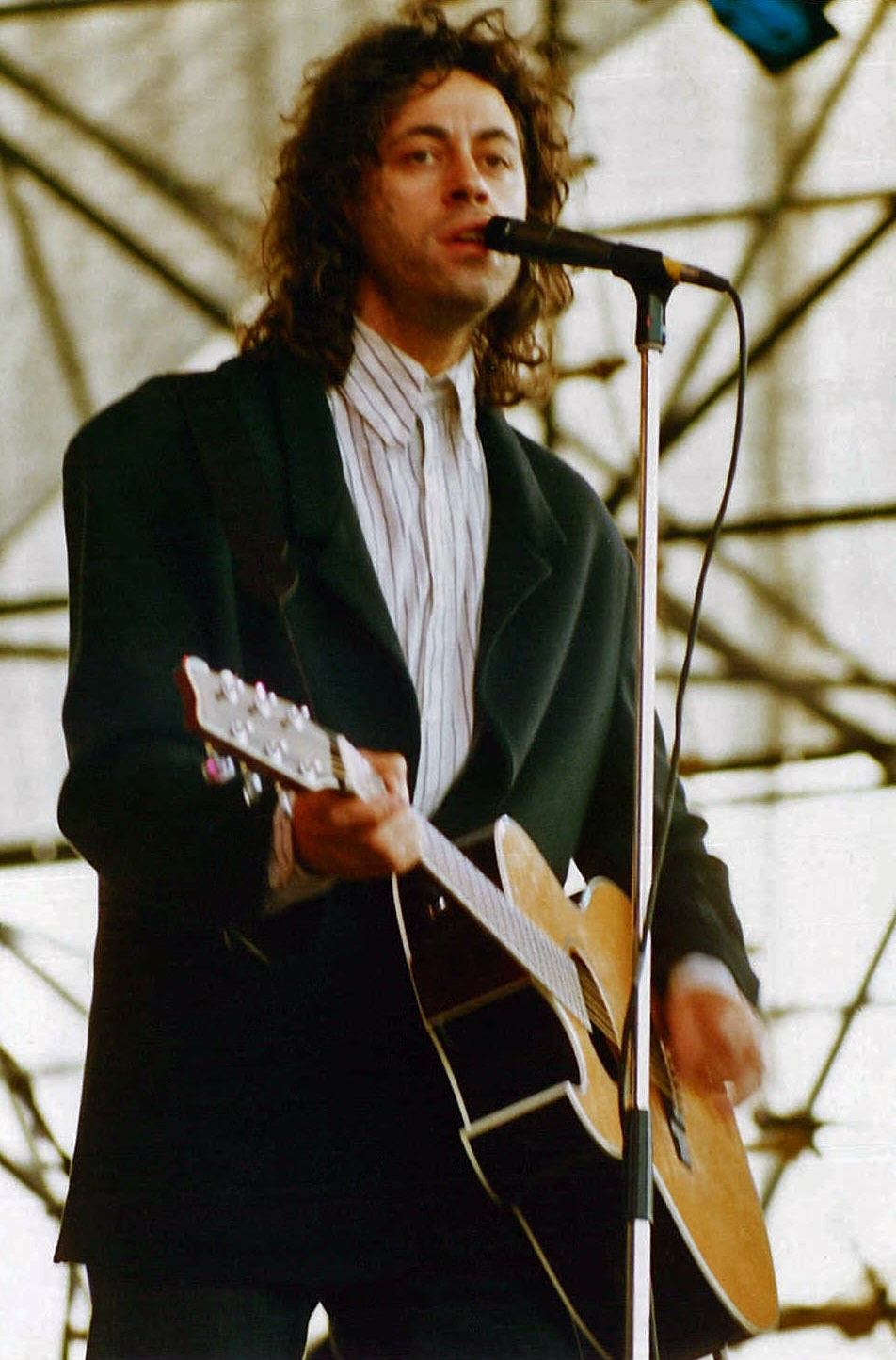
Bob Geldof of the Boomtown Rats
Musicians had given all-star charity benefit shows for many years — George Harrison’s 1971 “Concert for Bangladesh” is a prominent example. In December 1984, British rockers Bob Geldof and Midge Ure organized a holiday charity single to raise money for famine victims in Ethiopia, “Do They Know It’s Christmas?” Three months later, musicians in the U.S. followed with another single, “We Are the World.”
These recordings raised millions for famine relief, but so much more was needed. Geldof and Ure took the lead once again to propose a global charity concert to be held simultaneously in both the U.S. and the U.K.
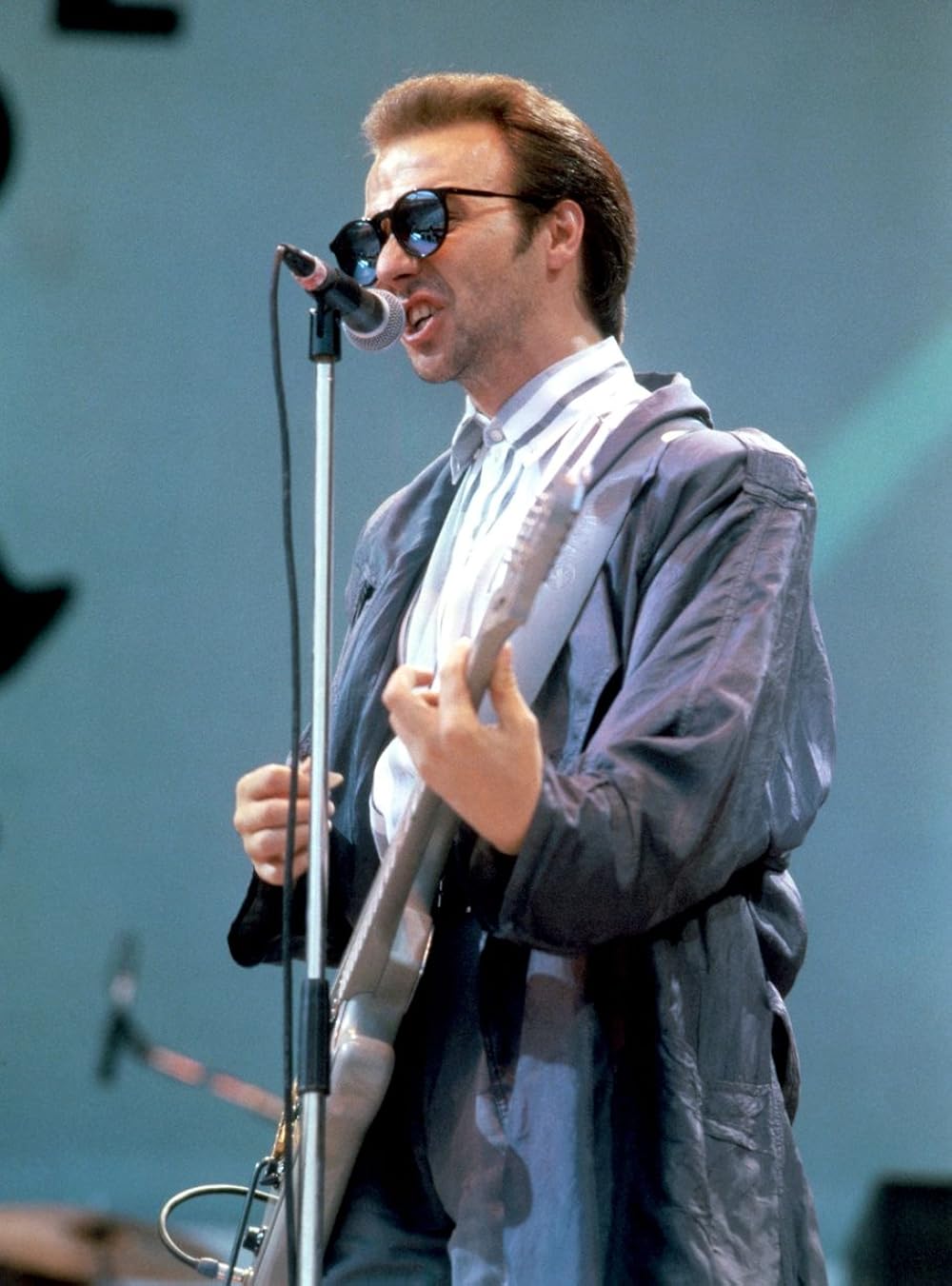
Midge Ure of Ultravox
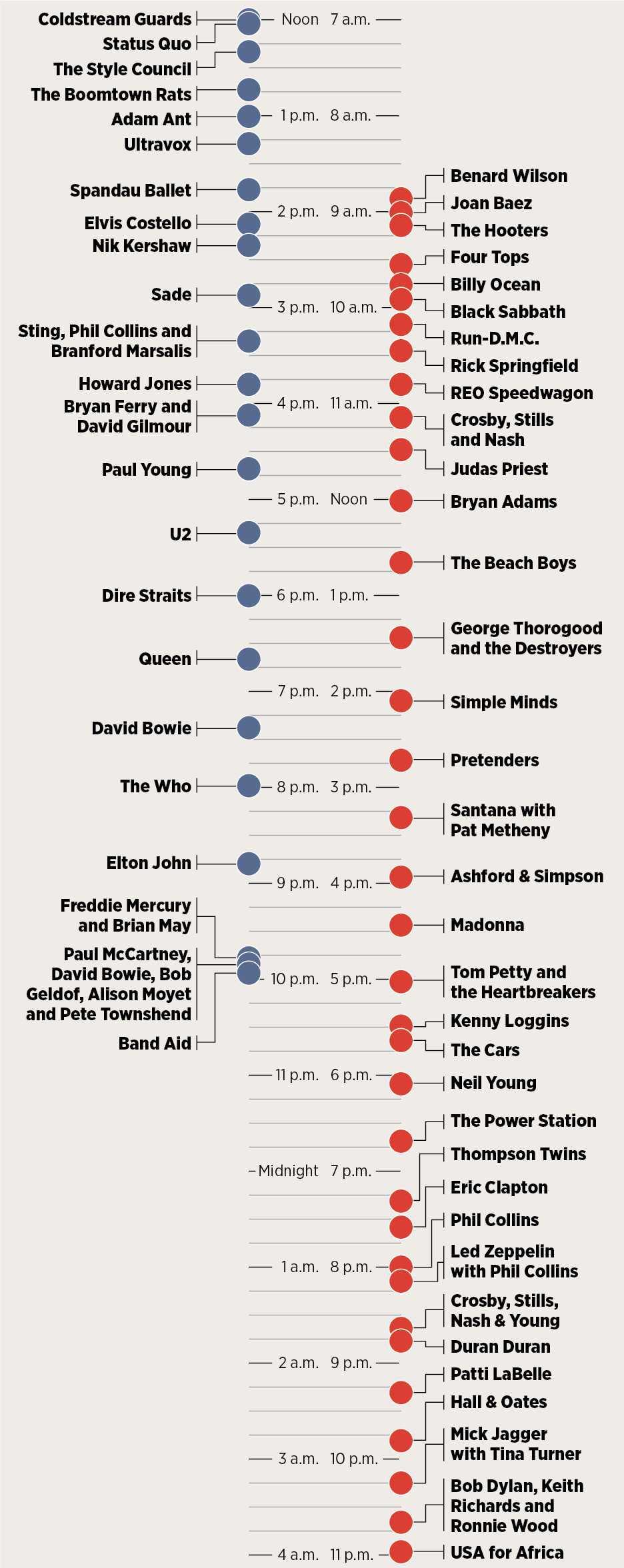
What they called Live Aid was organized over 10 weeks in the spring of 1985. More than 75 musical acts agreed to perform in London’s Wembly Stadium and JFK stadium in Philadelphia on July 13, 1985.
The Live Aid show was broadcast to 110 countries around the world with the aid of 13 satellites. More than 40 of those countries held telethons for African famine relief. In addition, smaller concert events were held in Austria, Germany, Russia, Denmark, Yugoslavia, Japan and Australia.
In the U.S., the all-day concert was broadcast by MTV and, during primetime hours that evening, by ABC. The ABC broadcast was hosted by Dick Clark, who called Live Aid “the day the world came together.”
The event did have critics. A number of Black musicians complained Live Aid lacked diversity. Some of them had been invited but declined to participate. Others questioned whether all the proceeds would, in fact, be used to help famine victims. Notably missing were Stevie Wonder, Michael Jackson and Prince.
Live Aid In London
Wembley Stadium, Attendance: 72,000, Performances: Noon-10 P.M BST
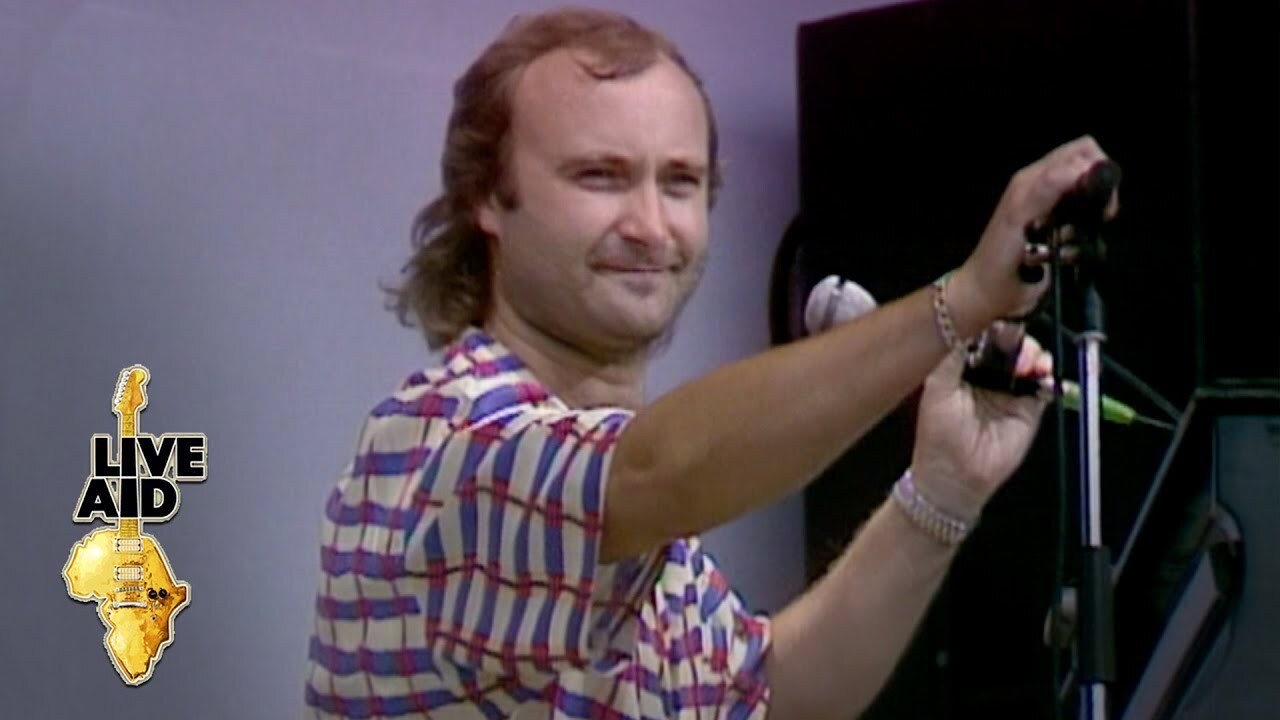
Phil Collins performed with Sting at Wembly and then was ferried by helicopter to London’s Heathrow Airport. There, he boarded a Concorde jet and flew to the U.S., arriving in time to sing two of his own songs and to serve as drummer for Eric Clapton and a reunited Led Zeppelin.
Queen and lead singer Freddie Mercury performed seven songs over 21 minutes in what critics called the “greatest live performance in the history of rock.”
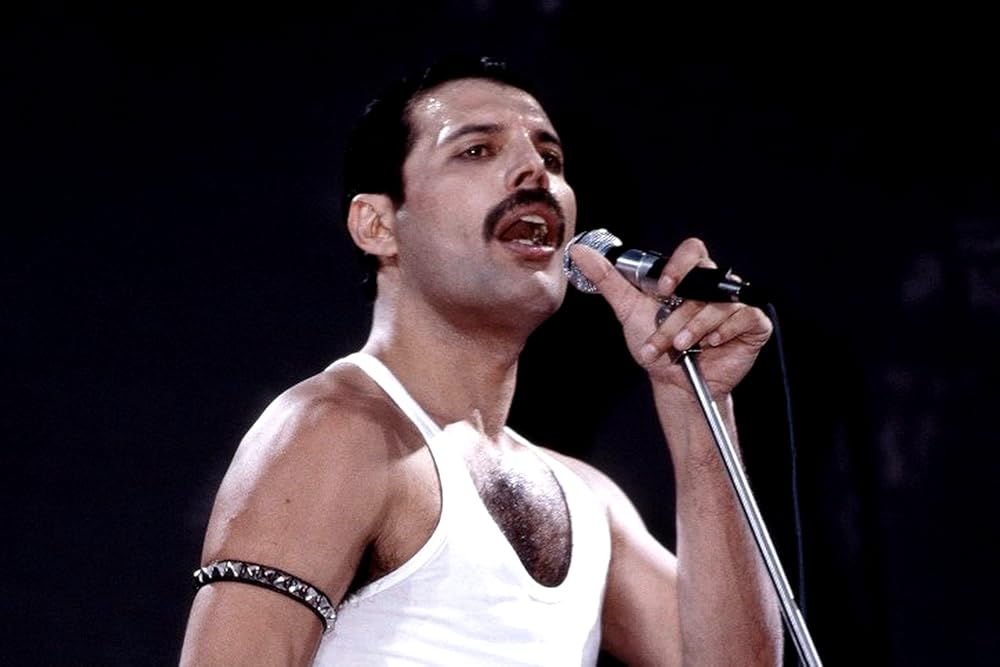
Early in the Who’s first song, “My Generation,” a fuse blew just as Roger Daltry sang “Why don’t you all fade away.” The satellite feed from Wembly then ... faded away. It would be a few minutes before the fuse — and the broadcast — was restored, in the middle of “Pinball Wizard.”
Elton John performed what would be the longest set of the day: Six songs over 32 minutes. The duo Wham! — George Michael and Andrew Ridgeley — was supposed to go on next but bowed out after John’s performance ran way over.
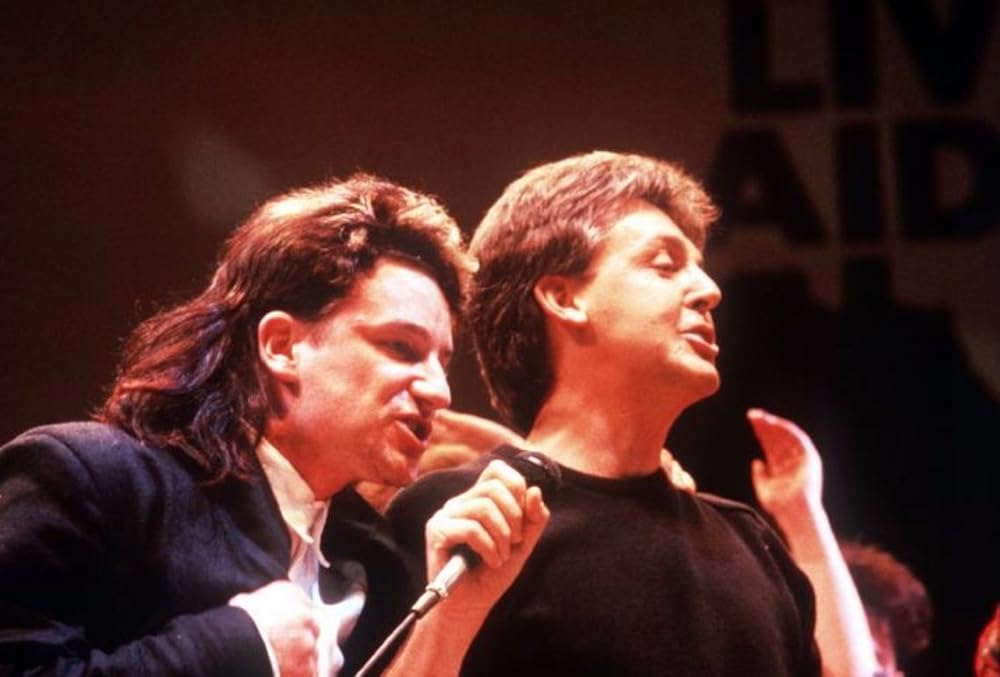
Two minutes into the big “Let It Be,” finale song, Paul McCartney’s microphone failed. In this photo, Bono of U2 shares a mic with him. McCartney later said he considered changing the lyrics of the last verse from “There will be an answer” to “There will be some feedback, Let it be.”
Live Aid In Philadelphia
J.F.K Stadium, Attendance: 89,484, Performance: 9 AM - 11 PM, EDT
Folk singer Joan Baez kicked off the day in Philly by telling the crowd: “This is your Woodstock, and it’s long overdue!”
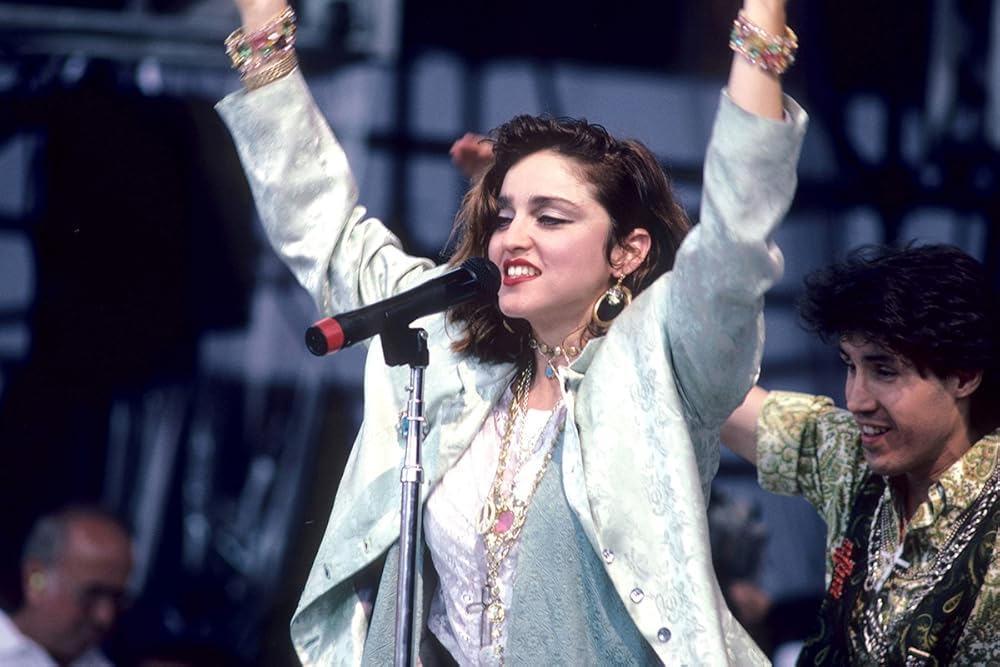
Madonna had recently added to her notoriety by posing for nude pictorials in both Playboy and Penthouse magazines. She took the stage in Philadelphia, noted the 95° heat and wisecracked: “I ain’t taking [Bleep] off today!”
Led Zeppelin’s much-anticipated reunion was poorly-received. Robert Plant’s voice was hoarse and Jimmy Page’s guitar was out of tune. Page later blamed guest drummer Phil Collins for the performance.
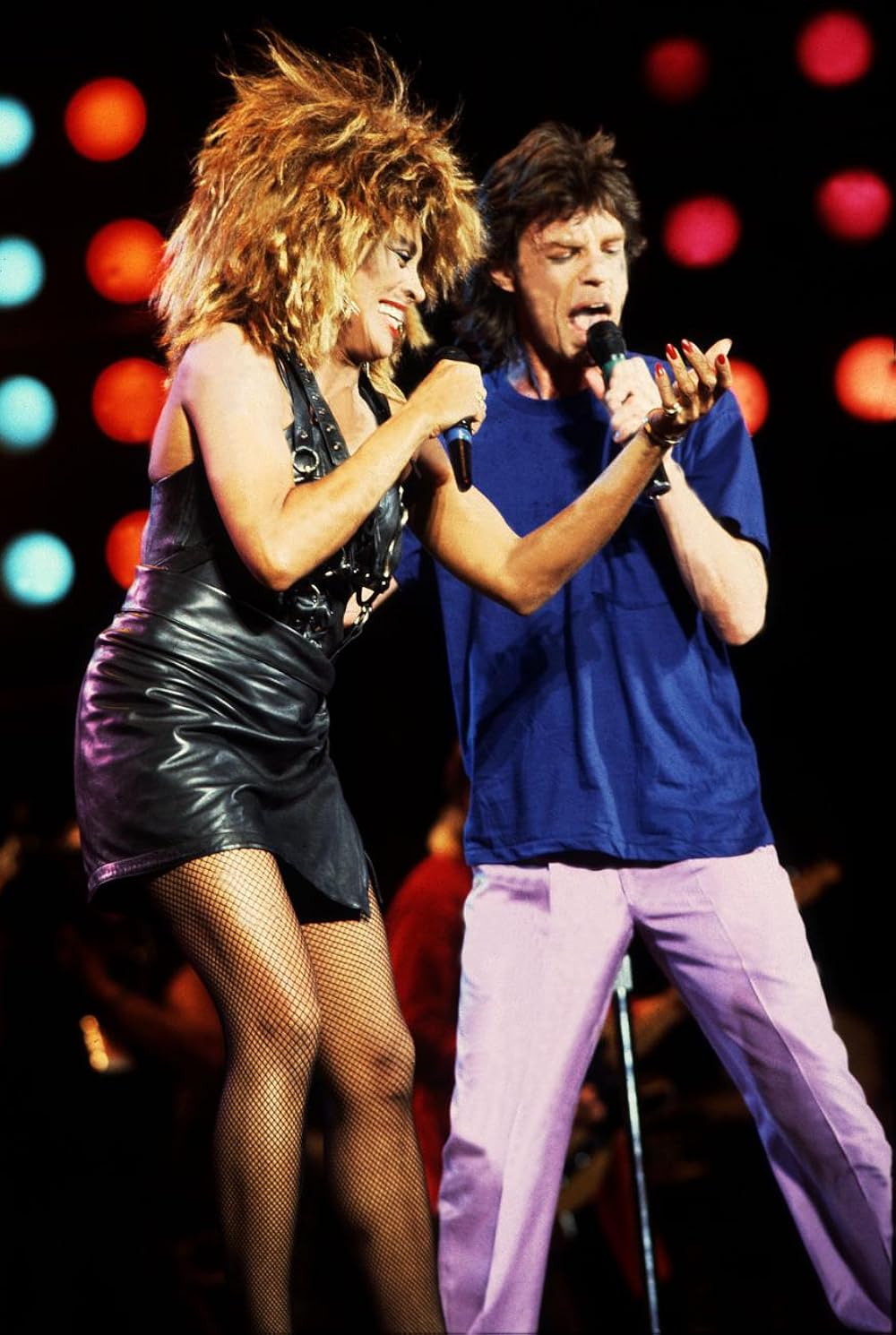
Mick Jagger in Philadelphia and David Bowie in London had intended to perform Martha & the Vandellas’ “Dancing in the Street,” but the time lag built into the satellite technology of the time made that impractical. Plan B for Jagger was to invite Tina Turner to sing with him. He then pulled the leather skirt off of her onstage.
Dylan performed with Keith Richards and Ronnie Wood of the Rolling Stones. When he broke a guitar string, Wood took off his guitar and handed it to Dylan and then shrugged to the audience.
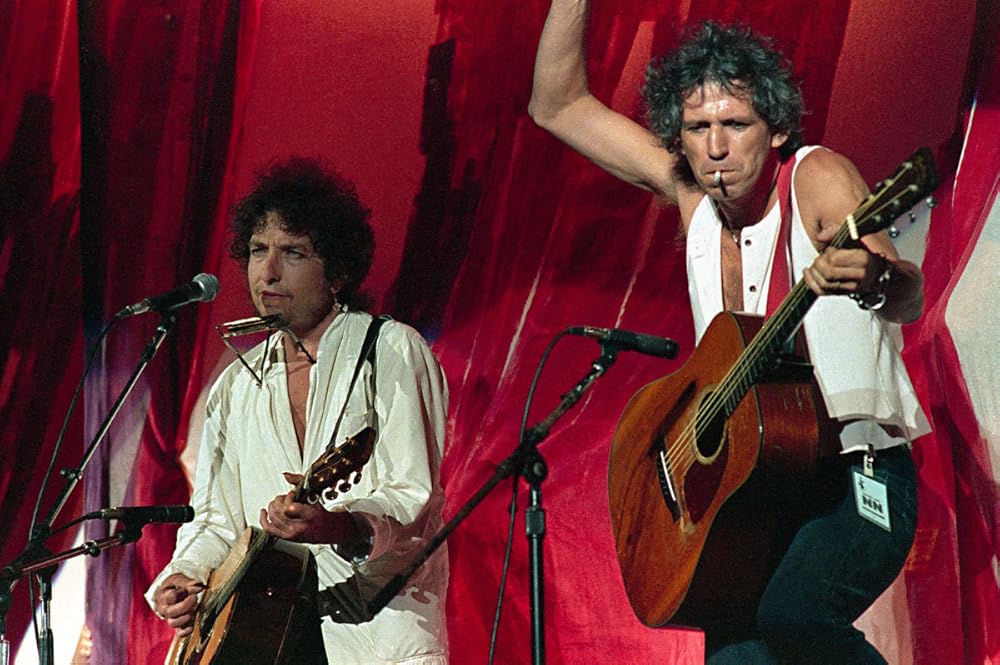
Dylan infuriated his musical colleagues by suggesting onstage that some of the day’s proceeds should go to U.S. farmers who were in danger of losing their farms.
Aid For Africa
The Live Aid shows generated between $125 million and $140 million for famine relief in Ethiopia and eastern Africa.
Dylan’s comments about aid for U.S. farmers inspired Willie Nelson, John Mellencamp and Neil Young to launch a series of benefit shows they called Farm Aid. The first Farm Aid event was held Sept. 22, 1985, in Champaign, Illinois.