The Debut of Zorro: The making and legacy thereof
Zorro, the fictional mask-wearing, sword-fighting champion of the oppressed in Spanish California in the early 19th century, was created for a pulp magazine in 1919.
Hardly anyone had heard of him until Douglas Fairbanks — already a Hollywood legend — played the character in “The Mark of Zorro,” a silent film that went into wide release on Nov. 29, 1920 — 105 years ago today.
The Making of 'Mark of Zorro'
By 1920, Douglas Fairbanks was one of the most famous personalities of Hollywood’s silent film era. He and colleagues Charlie Chaplin, Mark Pickford and D.W. Griffith had founded the United Artists production studio in 1919. Tired of playing the same old romantic lead parts, however, Fairbanks craved action. He saw possibilities in the character of Zorro.
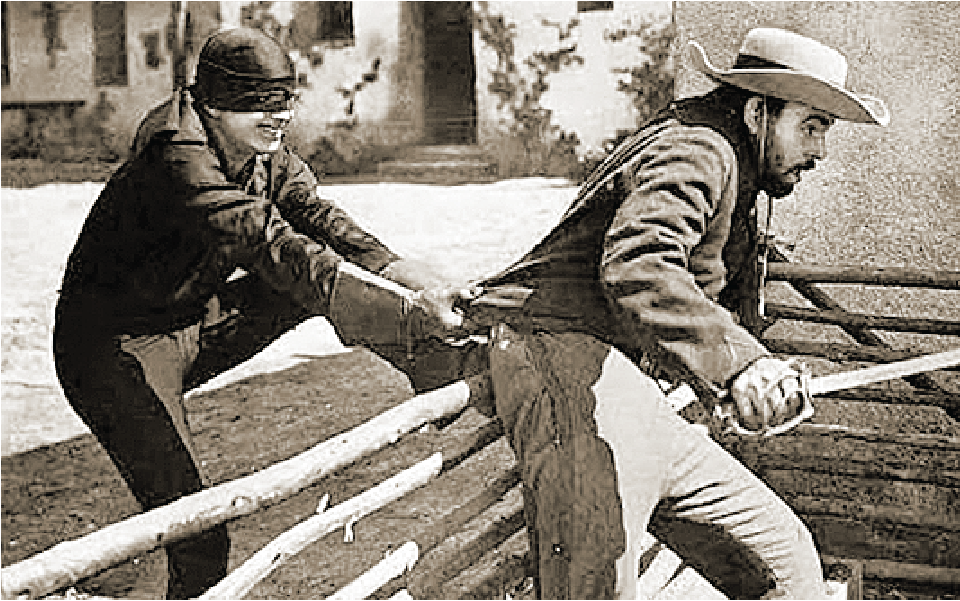
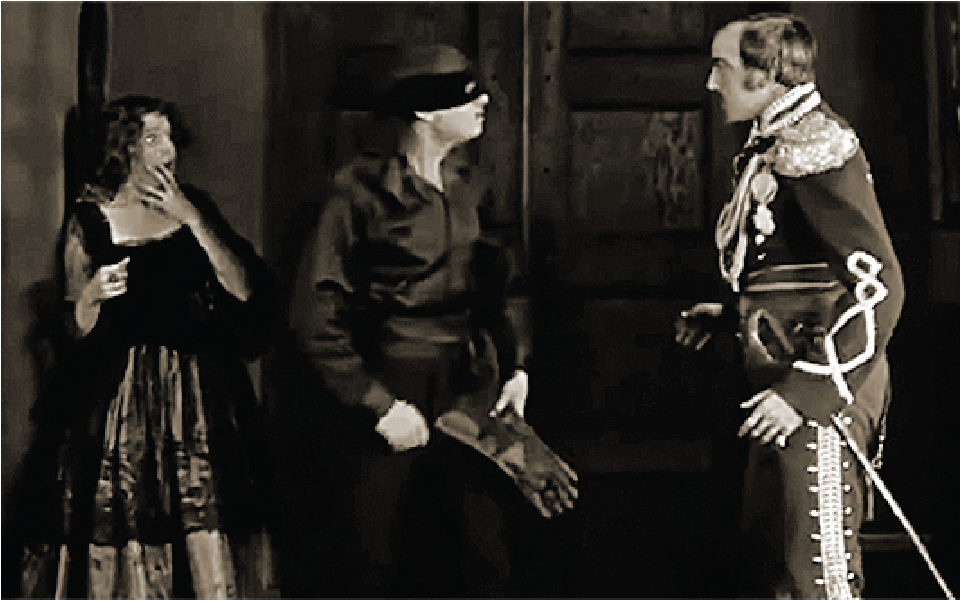
Fairbanks bought the film rights to “The Curse of Capistrano” and hired Eugene Miller to help him adapt the story into a movie script. Fairbanks worked under the name “Elton Thomas” to help disguise his own work on the script. They made a few changes from the story: Zorro wears a half-mask, for example, rather than a full mask.
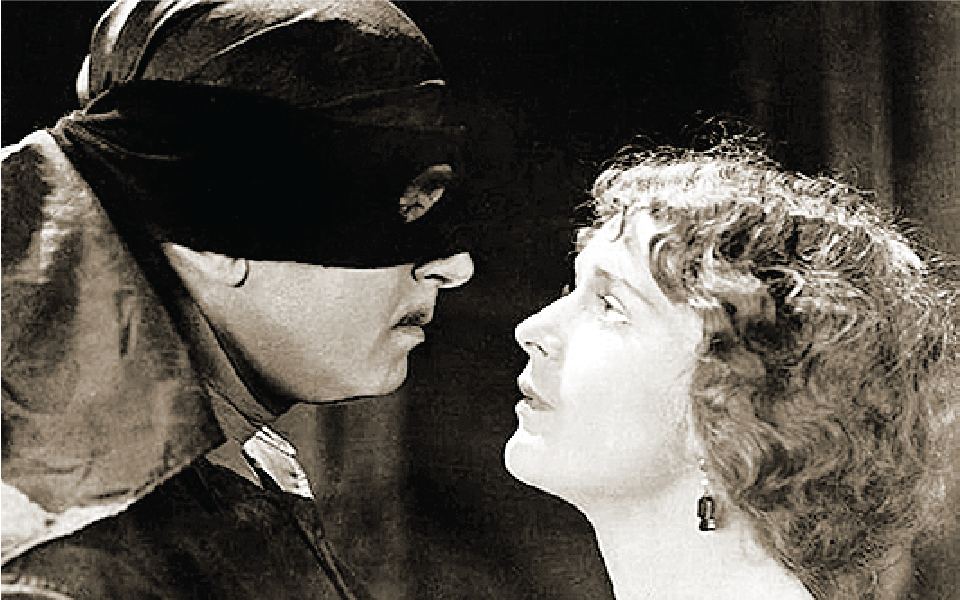
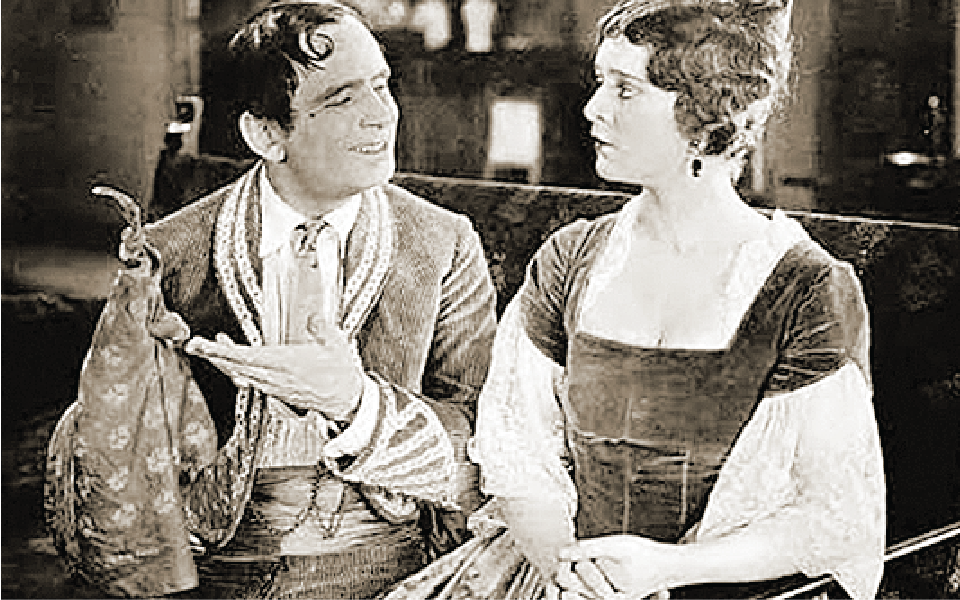
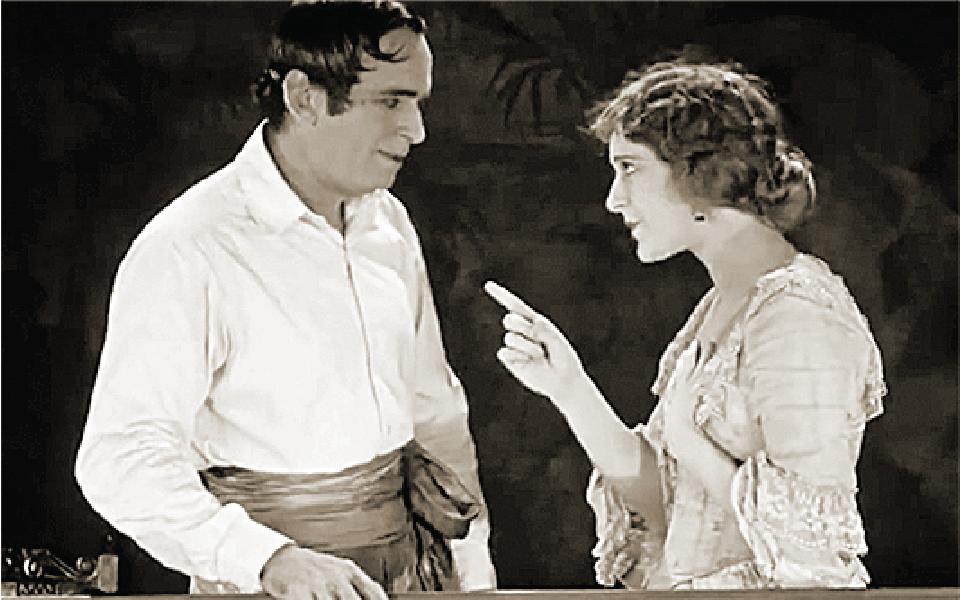
Diego Vega’s identity as Zorro isn’t revealed until the end of the original story. Fairbanks and Miller changed that to reveal to viewers from the start that Diego is in disguise as Zorro and that his rich, sickly, prissy playboy act is just an disguise. Diego tries to woo the story’s leading lady, Lolita Pulido, but bores her with lame magic tricks.
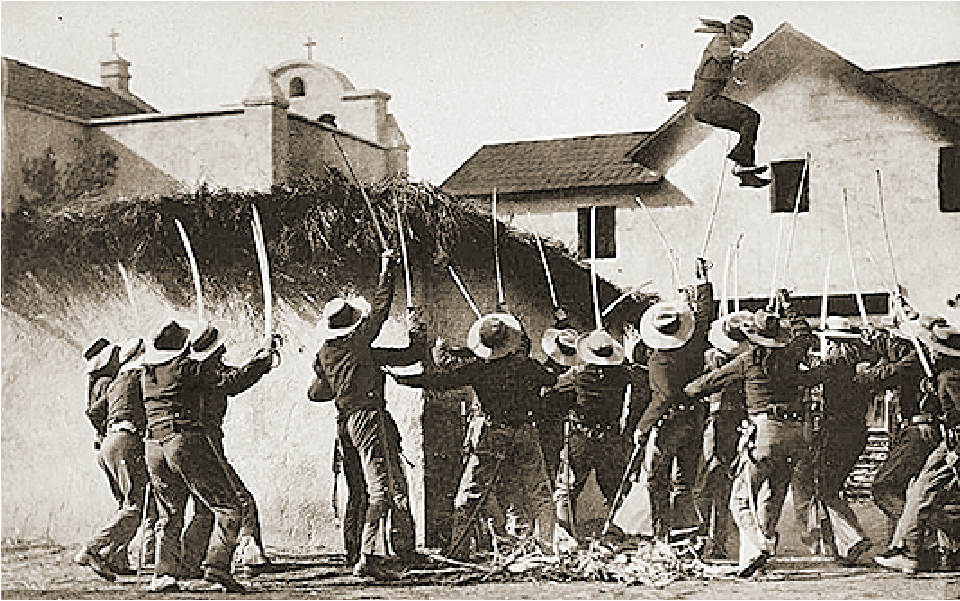
Fairbanks was an athletic actor to begin with, but for “The Mark of Zorro,” he cleverly made use of hidden aids — footholds, trampolines and other little tricks — to make his leaps and climbs appear even more impressive. When Batman was created in 1939, this would be the film young Bruce Wayne’s parents took him to see the night his parents were killed.
In the original story, Lolita — played by 18-year-old Marguerite De La Motte — rescues herself from various predicaments, including the unwanted attentions of the villain, Captain Ramon. In the film, Fairbanks has Zorro rescue her time after time. Fairbanks would also cast De La Motte in his next huge action film, “The Three Musketeers”
The enormous gamble Fairbanks took with “The Mark of Zorro” paid off. He’d go on to be regarded as the father of a new genre of swashbuckling films, starring in “The Three Musketeers” in 1921, “Robin Hood” in 1922, “The Thief of Baghdad” in 1924 and “The Gaucho” in 1927. He’d star in a Zorro sequel in 1925.
'The Curse of Capistrano'
Zorro was the creation of pulp writer Johnston McCulley in a series of stories that ran in All-Story Weekly magazine from Aug. 9 to Sept. 6, 1919.
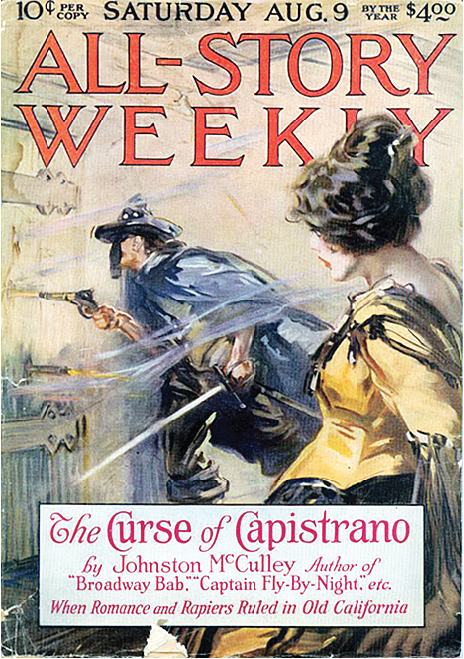
McCulley would collect those stories into a novel published in 1924. He’d go on to write more about Zorro — five serialized stories and 57 short stories — until his death in 1958.
Don Diego Vega of Spanish-occupied Southern California was sent to college in Spain by his wealthy father. In addition to his schooling, Diego learned swordsmanship and developed strong ideas of social fairness.
His father summons him back home after California falls into the hands of an oppressive dictator. Outraged by how he sees local residents and Native Americans treated, Diego dresses in black, wears a mask to hide and fights for justice.
The locals, delighted by the way he embarrasses authorities, call him “El Zorro,” for the way he carves a “Z” into the cheeks of those he defeats.
When not performing his heroics, Diego dresses and behaves as a rich fop who constantly sneezes into a handkerchief and is totally inept with the ladies. Even his father has no clue about his secret activities.
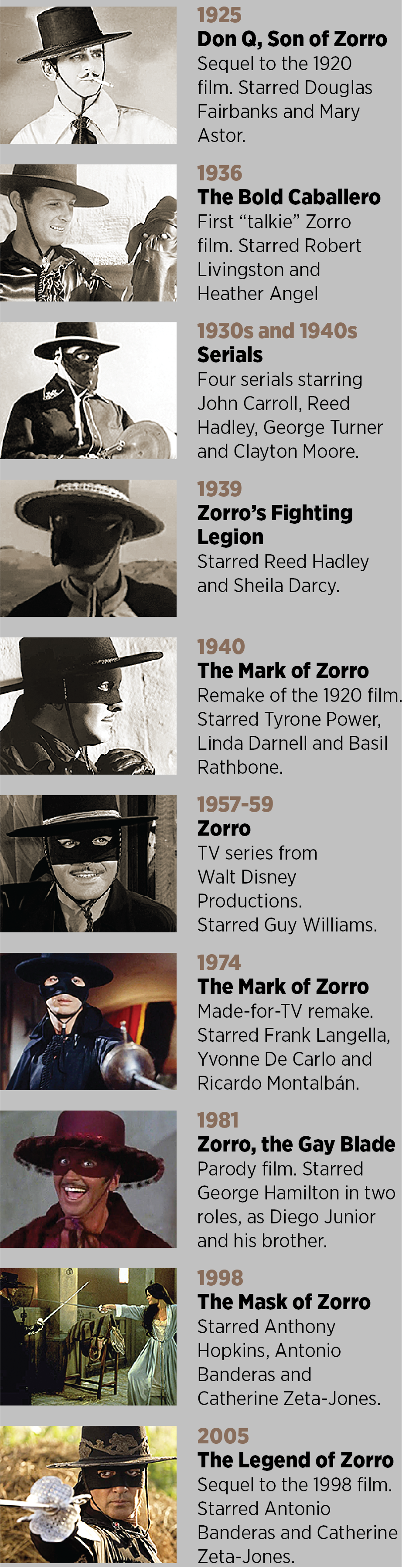
Other Zorros of the Big and Small Screen
McCulley,’s “The Curse of Capistrano” has been remade and adapted several times over the years for movies and TV productions. Here are some of the most notable: