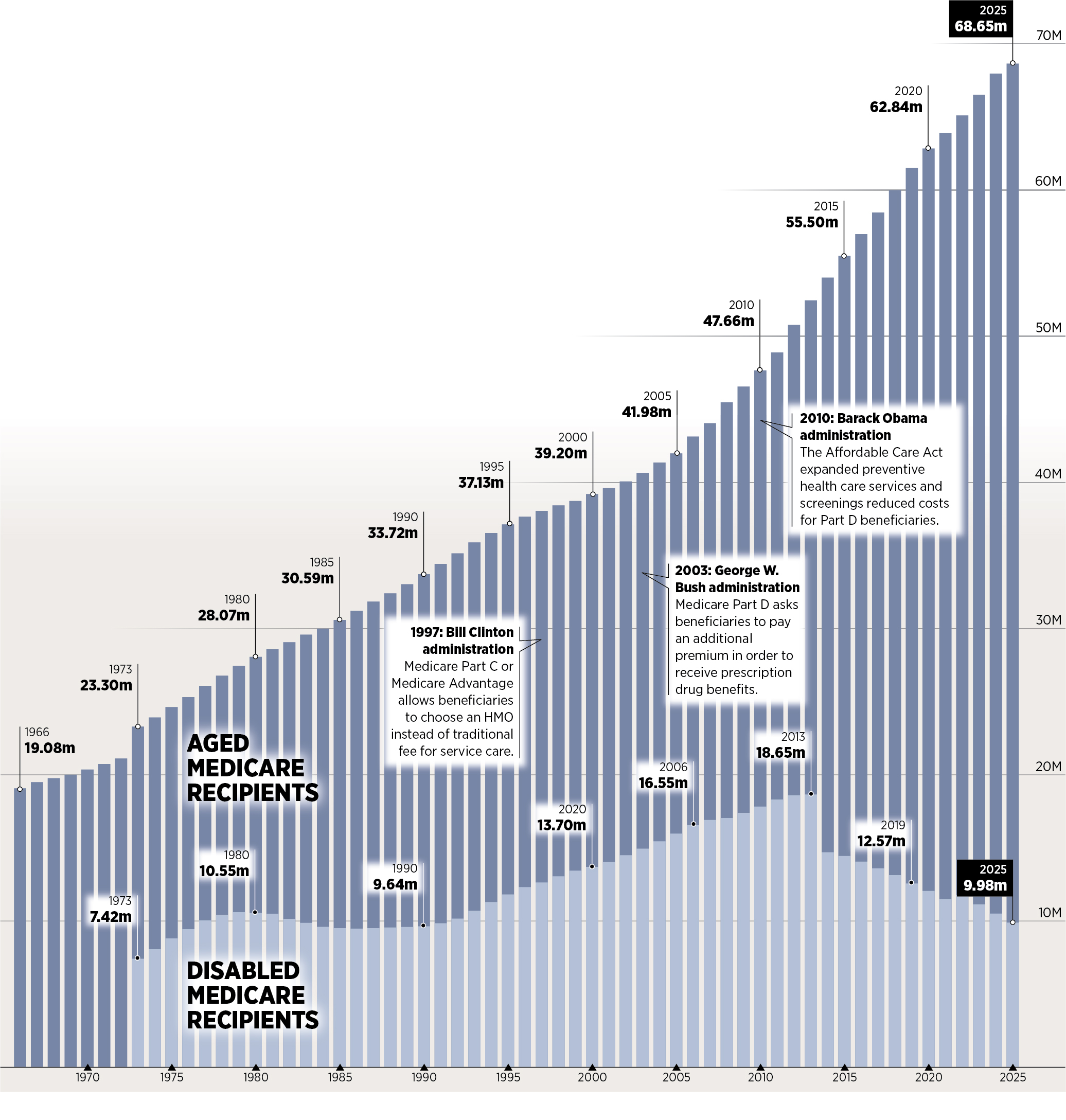
Medicare: A complicated journey to law
On July 30, 1965 — 60 years ago Wednesday — President Lyndon B. Johnson signed Medicare into law at a ceremony that he insisted be held at the Harry S. Truman Presidential Library and Museum in Independence, Missouri.
Why there? Because Truman had worked so hard, nearly 20 years before but unsuccessfully, to make national health care happen.
Decades of Work For National health Insurance Finally Pays off
The original concept by the Franklin Roosevelt administration had been to include medical benefits with the 1935 Social Security Act. That was dropped out of fear of health insurance sinking the entire bill.
FDR tried again to revive hopes of a national health insurance program in 1938. Again, strong opposition from the American Medical Association caused him to stand down.
In the late 1940s, it was President Harry Truman’s turn. “Grandpa tried during his presidency to achieve national health care,” wrote Truman’s eldest grandson, Clifton Truman Daniel, in a 2023 essay for the Truman Library web site. Truman pitched an ambitious plan repeatedly — in 1945, in 1947 and again in 1949 — but “couldn’t get it past voters and a Republican-controlled House. He considered it one of his greatest failures.”
In 1960, the Kerr-Mills Act created a program that enabled states to provide financial assistance to patients. The federal government would provide matching funds. Some states chose not to participate. Two years later, another bill would have covered hospital and nursing home costs for patients age 65 and over. But that bill was defeated in committee.
The election of Lyndon Johnson in 1964 changed everything for Democrats, who suddenly now had a 2:1 majority in the House and 32 more seats in the Senate. Johnson renewed the push for a nationalized health insurance.
A bill was introduced in the House on March 29, 1965. It passed the house on April 8 and an alternative version passed the Senate on July 9. A conference committee brokered a compromise which passed the House and Senate on July 27 and July 28, respectively.
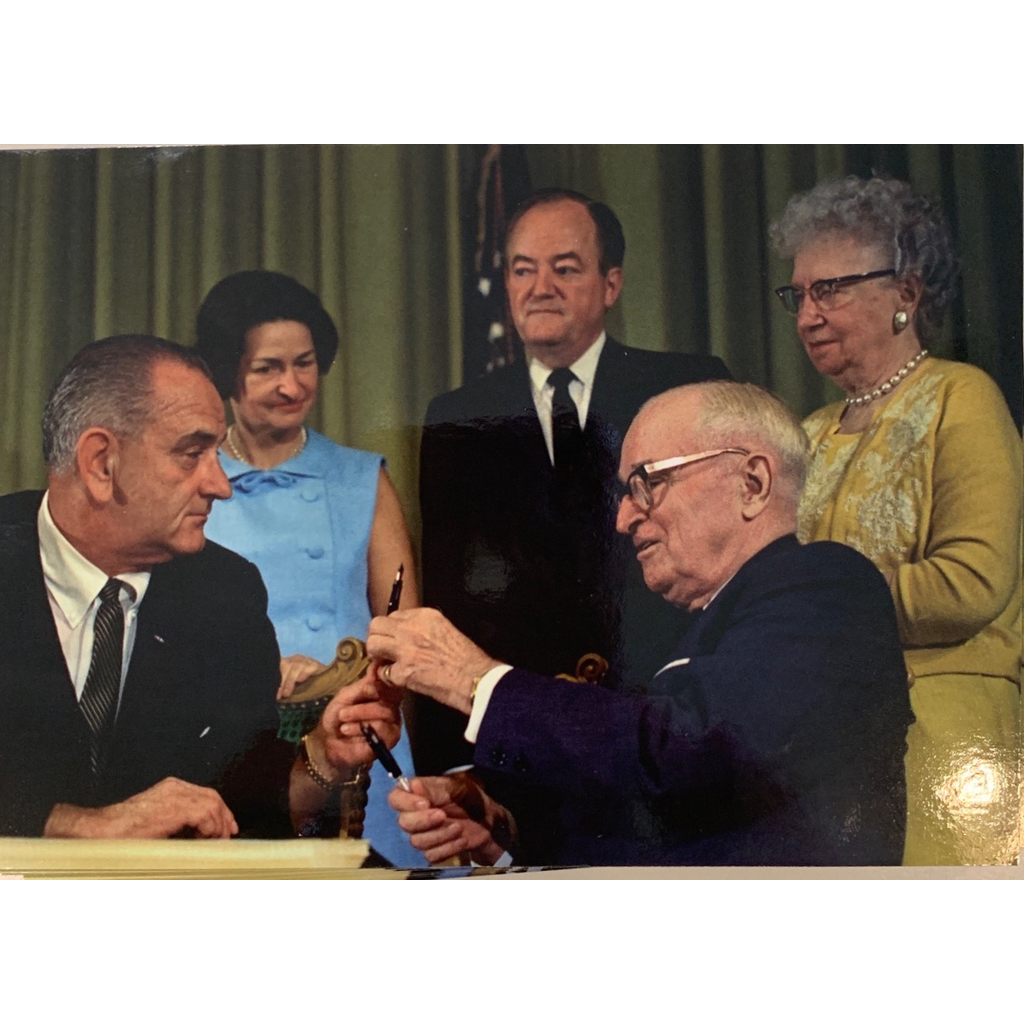
After signing the legislation, LBJ awarded the pens he had used to President and Mrs. Truman.
The bill as passed included two parts. Part A covered hospitalization with payroll taxes and cost about $40 a year. Part B was an optional health insurance program requiring a monthly premium to cover specific outpatient services, medical tests and equipment, among other things. It would cost patients only $3 a month.
Most folks referred to the legislation as the Medicare Bill, but officially, the bills added to amendments to the Social Security Act of 1935. Medicare was Title XVIII and provided hospital insurance for the elderly. Medicaid was Title XIX and provided funds for states to finance health care for those who were at or close to the level of needing public assistance.
Johnson wanted to honor Truman’s previous work with health care by holding the bill-signing ceremony at Truman’s presidential library in Independence, Missouri. Some members of his administration, however, opposed the idea. It might remind the nation of Truman’s more radical ideas for national health insurance and risk a boycott of the ceremony by the AMA, it was said.
“Why Wilbur,” Johnson told Wilbur Cohen, his Under Secretary of Health, Education and Welfare. “Don’t you understand? I’m doing this for Harry Truman.
”He’s old and he’s tired and he’s been left all alone down there. I want him to know that his country has not forgotten him.”
Johnson then wistfully added: “I wonder if anyone will do the same for me.”
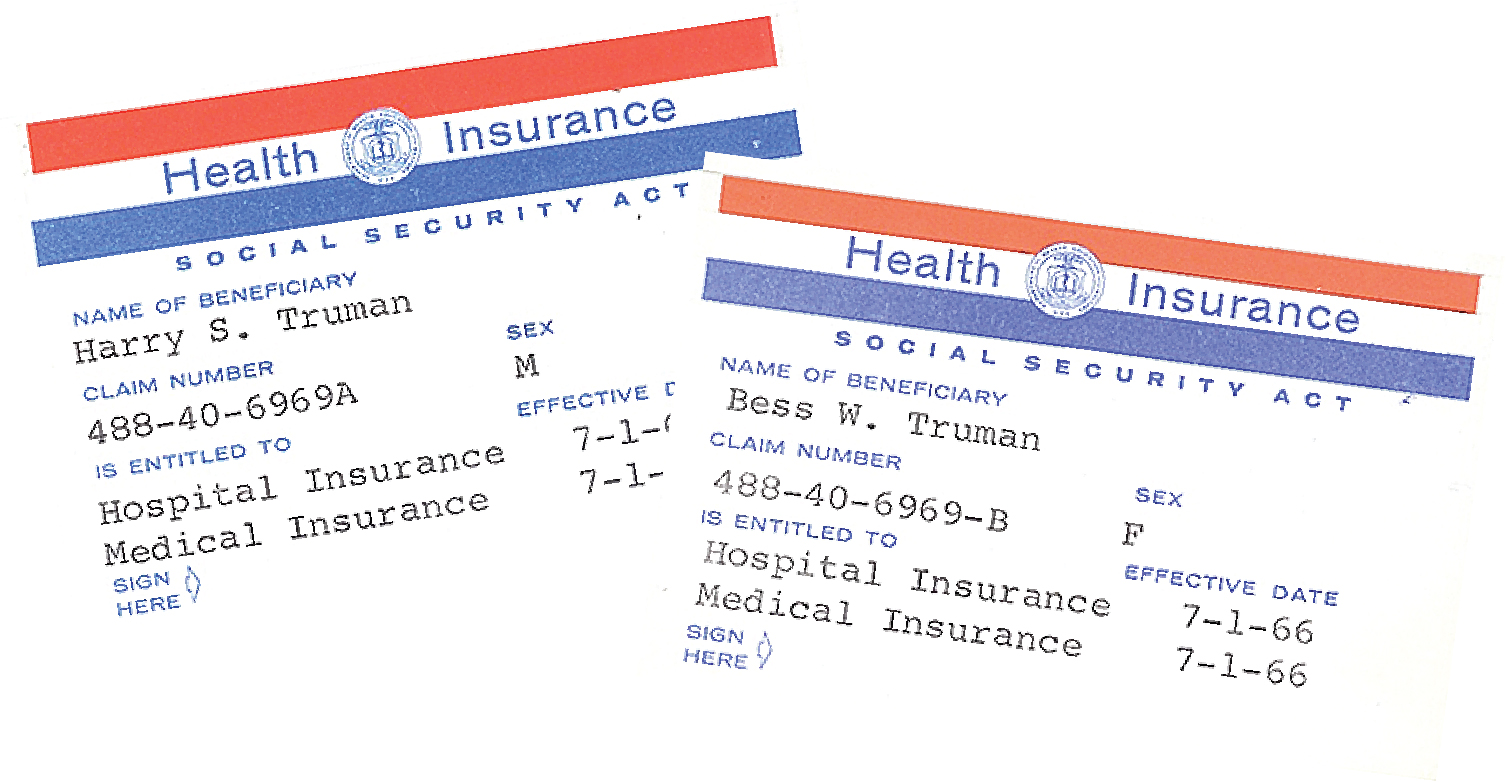
LBJ then presented the Trumans with the first two Medicare cards: Cards numbers 1 and 2.
Medicare Enrollment
While Medicare and Medicaid have been an important part of the American health care system for six decades now, the programs still receive a certain amount of political scrutiny. The agency that oversees the programs — the Department of Health and Human Services — is having its workforce trimmed by 10,000 full-time positions, for example. Congress is reportedly eyeing other cutbacks as well.