
From The Moon To The Front Page: The 19th Century Moon Hoax!
Newspaper readers were captivated by news of an amazing scientific discovery: Creatures — including winged humanoids — who lived on the moon. The story got a lot of attention. And it sold a lot of newspapers.
What came to be called the Great Moon Hoax began publishing in the New York Sun tabloid newspaper on Aug. 25, 1835 — 190 years ago next Monday.
Extra, Extra, Read All About It! Flying People! Living On The Moon!
The six-part series that kicked off in the New York Sun on Aug. 25, 1835, was nothing less than stunning.
Noted British astronomer John Herschel was known to be working in an observatory in South Africa. One of his associates, a Dr. Andrew Grant, wrote of the construction of the world’s largest telescope at the Cape of Good Hope. The amazing things Herschel found on the moon were reported in a scientific journal, Grant wrote, and Grant would share those findings with the readers of the Sun.
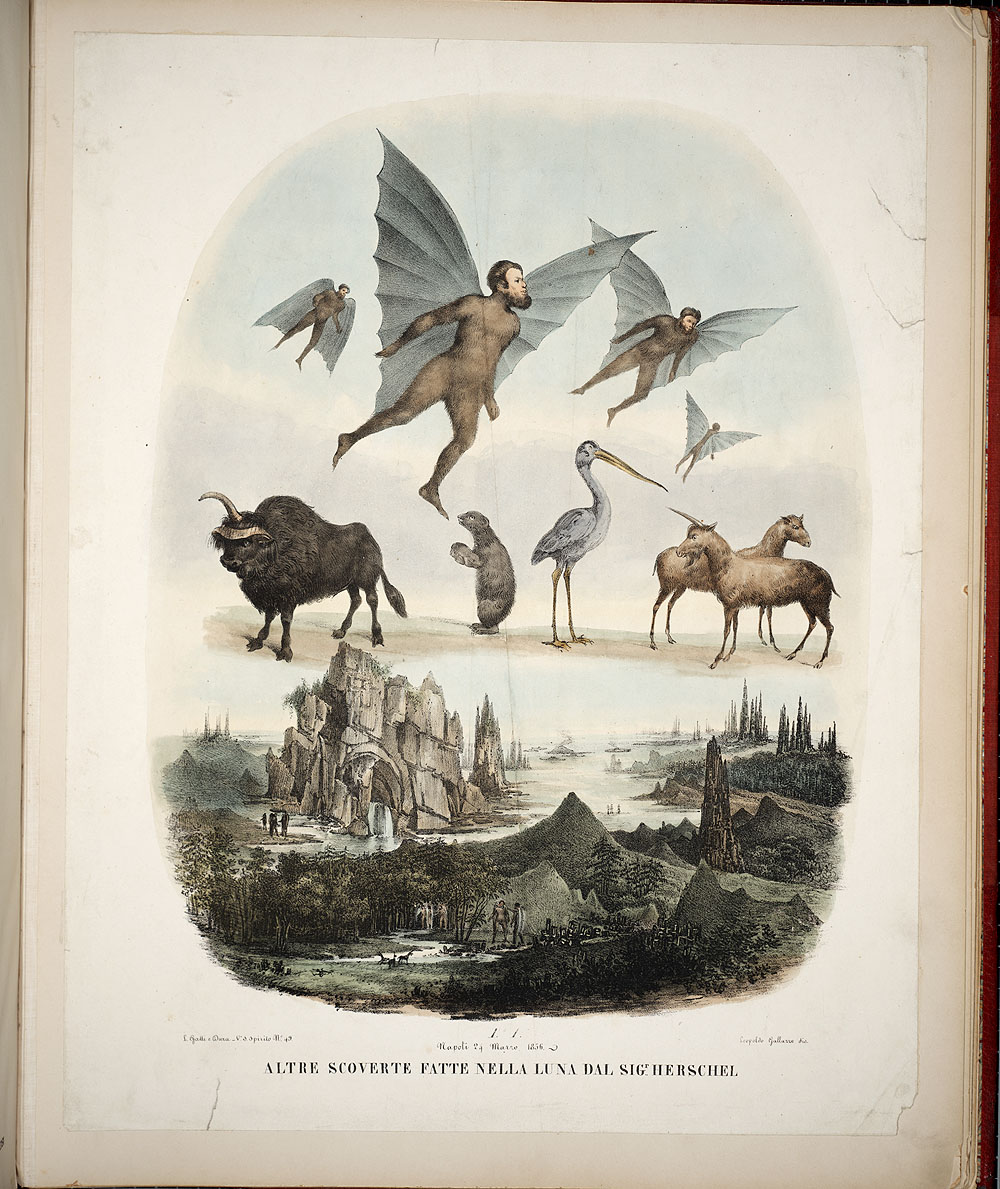
Grant began by explaining the construction of the enormous telescope and how Herschel began moonwatching, finding red, poppy-like flowers, lush greenery, bison-like animals and blue goats with a single horn on their heads.
The third installment revealed Herschel had found beaver-like creatures that walked on their hind legs, carried their young around in their arms like humans do, live in small huts and knew how to use fire.
With part four on Aug. 28, Grant revealed what he had been leading up to: Herschel had observed furry humanoid creatures with wings that enabled them to fly through the lunar sky. They lived in a valley Herschel named the Ruby Colosseum and were capable of speech. Herschel named them in scientific Latin: Verspertilio homo, or Man Bats.
The final two installments discussed what had appeared to be religious assemblies by the Man Bats and guess about the nature of the temples they had built on the moon. They also addressed the Eden-like state of harmony in which the Man Bats lived.
Grant finished his series on Aug. 31 by explaining an accident had damaged Herschel’s observatory and no more research of the inhabitants of the moon could be done.
The readers of the New York Sun ate up the stories. The Sun claimed its daily circulation had soared to nearly 20,000, surpassing the world’s best-selling tabloid, the Times of London.
A committee of scientists from Yale University showed up at the Sun’s offices in search of copies of the scientific journal Grant had mentioned. Staffers gave them a runaround before the scientists returned to New Haven, disappointed and empty-handed.
Copies of the series made their way to England and then to the rest of Europe. Newspapers reprinted the story, hiring illustrators to help readers visualize what Herschel had seen.
It was truly the story of the century. There was just one little problem. It never happened.
There was a John Herschel, of course, but there was no giant new telescope in South Africa. There were no one-horned blue goats. No walking beavers. No flying Man Bats.
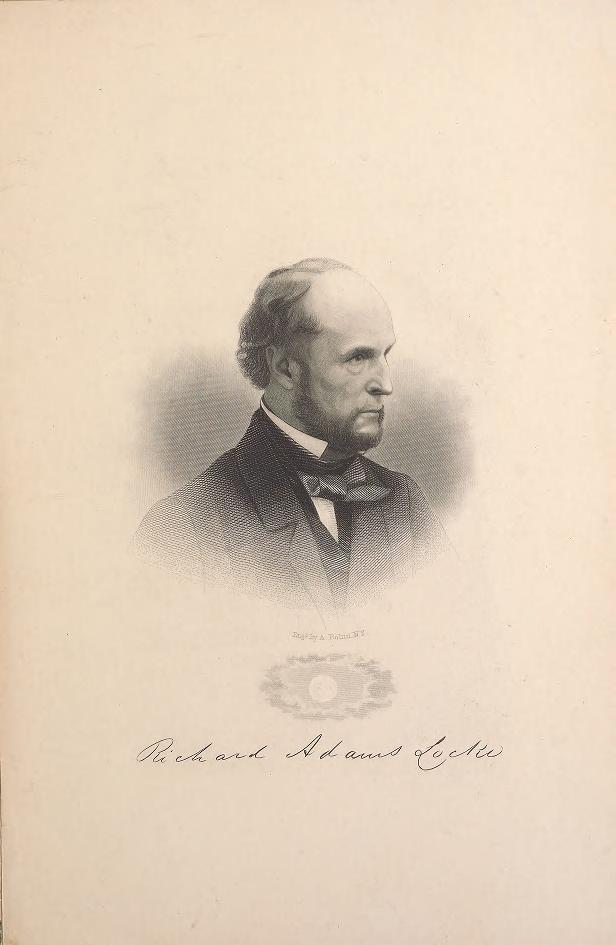
There wasn’t even a Dr. Andrew Grant. The entire series was written by the Sun’s editor, Richard Locke.
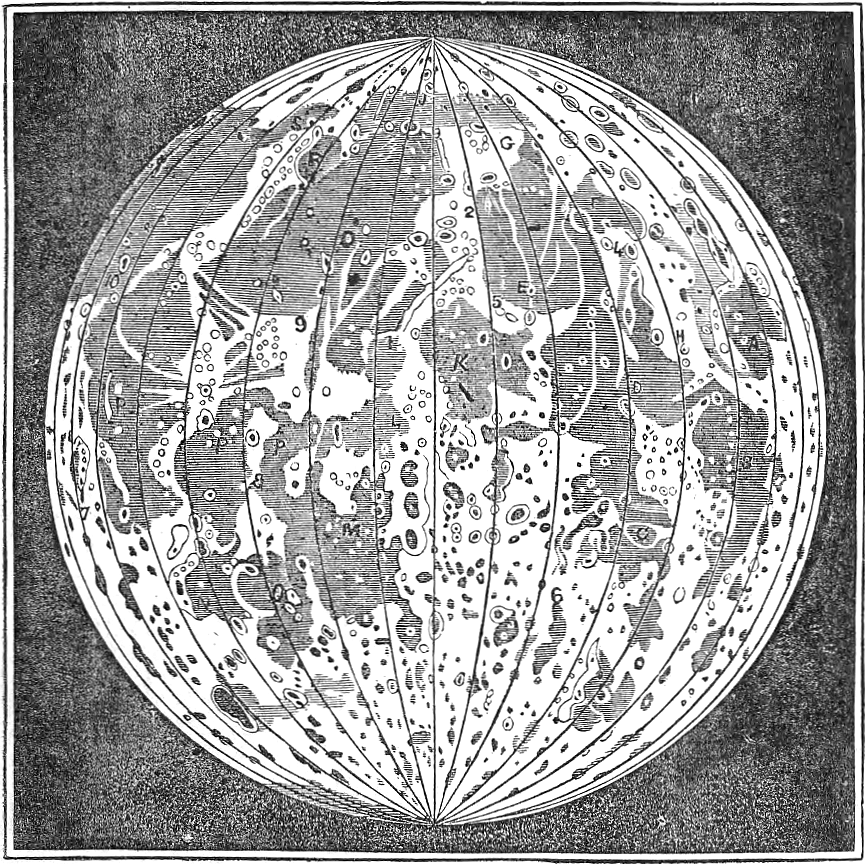
One reason the hoax was so believable was the amount of detail Locke had included. This detailed map of the moon was part of the original newspaper series.
Wikimedia Commons
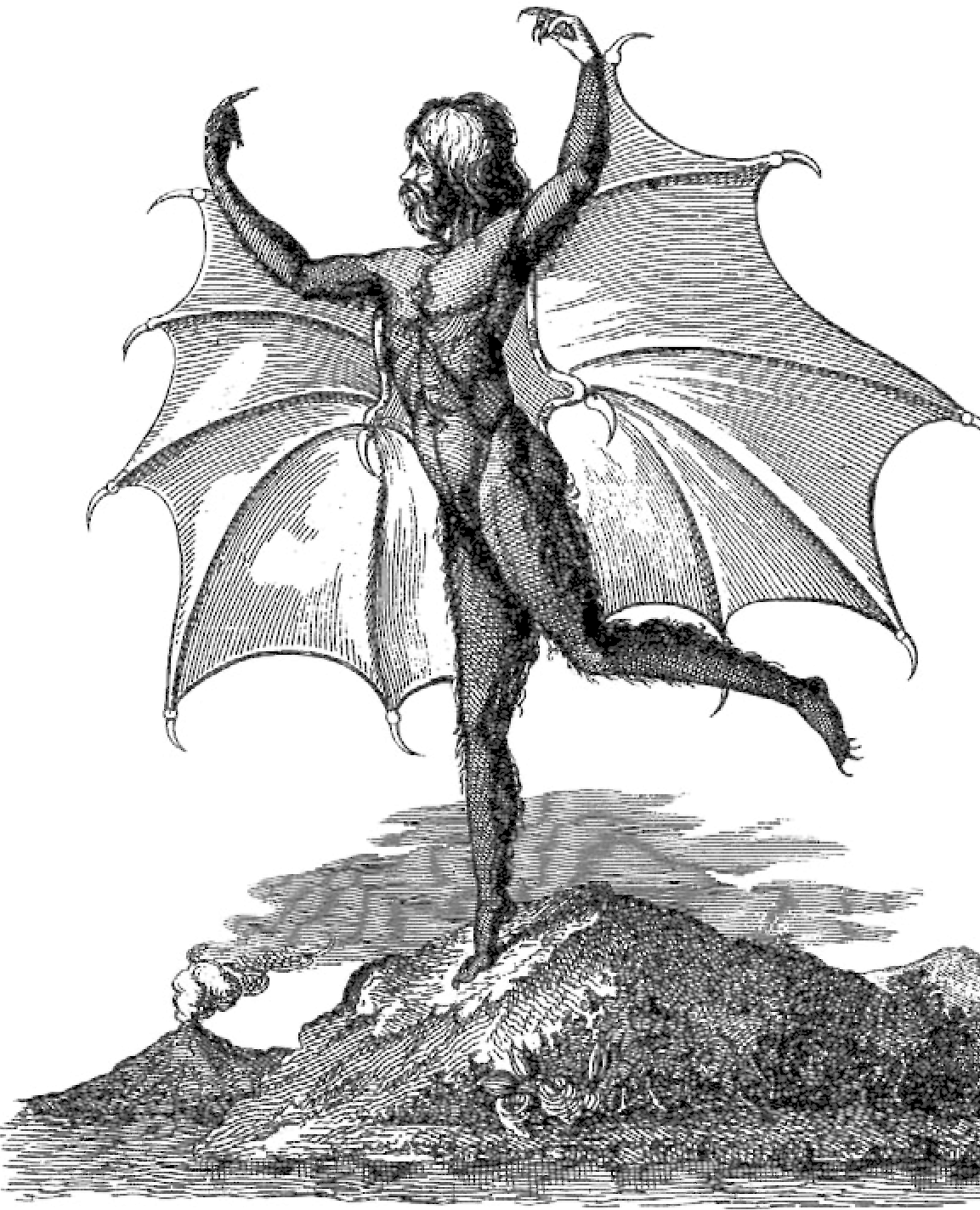
Locke wrote that the humanoids on the moon “possessed wings of great expansion, and were similar in structure to this of the bat, being a semi-transparent membrane.”
Wikimedia Commons
As the Sun story was republished time and time again, artists were hired to elaborate on the crude, early sketches of the creatures Herschel had reportedly seen on the moon.
Smithsonian
What It Was, Was Satire
The Sun was founded in 1833 — only two years before it published the Great Moon Hoax.
The Sun was a “penny press” tabloid newspaper that aimed at a wider audience than the city’s successful broadsheet papers, the New York Times and the New York Herald Tribune. Those papers charged a nickel a copy and were mostly distributed to subscribers. The Sun cost only a penny and was one of the first papers sold by street hawkers.
It aimed at luring blue-collar readers and pioneered the art of reporting on crime and arrests. For a while, the Sun became the best-selling newspaper in the U.S. You may know it best for an 1897 editorial in which it assured a young girl who had asked the Sun: “Yes, Virginia, there is a Santa Claus.”
Locke’s intent was to poke fun of the Rev. Thomas Dick, a religious leader who became a best-selling author by writing books in which he claimed — with no proof whatsoever — that people lived on many other planets and that 4.2 billion people lived on the moon.
There were clues that Locke’s story was fiction. For starters, the scientific journal that he wrote was publishing detailed proof of Herschel’s discoveries, the Edinburgh Journal of Science, was no longer publishing.
Edgar Allan Poe claimed Locke’s series plagiarized a short story Poe had published two months before — “The Unparalleled Adventure of One Hans Pfaall” — about a man who traveled to the moon in a hot air balloon.
Locke and the Sun never confessed about the ruse or admitted the story was fake. The New York Herald outed the hoax and fingered Locke as its author. Locke himself wrote to friends: “If the story be either received as a veritable account, or rejected as a hoax, it is quite evident that it is an abortive satire; and, in either case, I am the best self-hoaxed man in the whole community.”
But what did the astronomer himself, Herschel, think about the hoax? He reportedly laughed at the unbelievability of the tale and said, “It is only a great pity that it is not true.”
A year later, however, Herschel had enough. In a letter discovered in May 2001, Herschel wrote the editor of a French journal: “It appears to me high time to disclaim all knowledge of or participation in the incoherent ravings under the name of discoveries which have been attributed to me.”
Source: British Library
Smithsonian
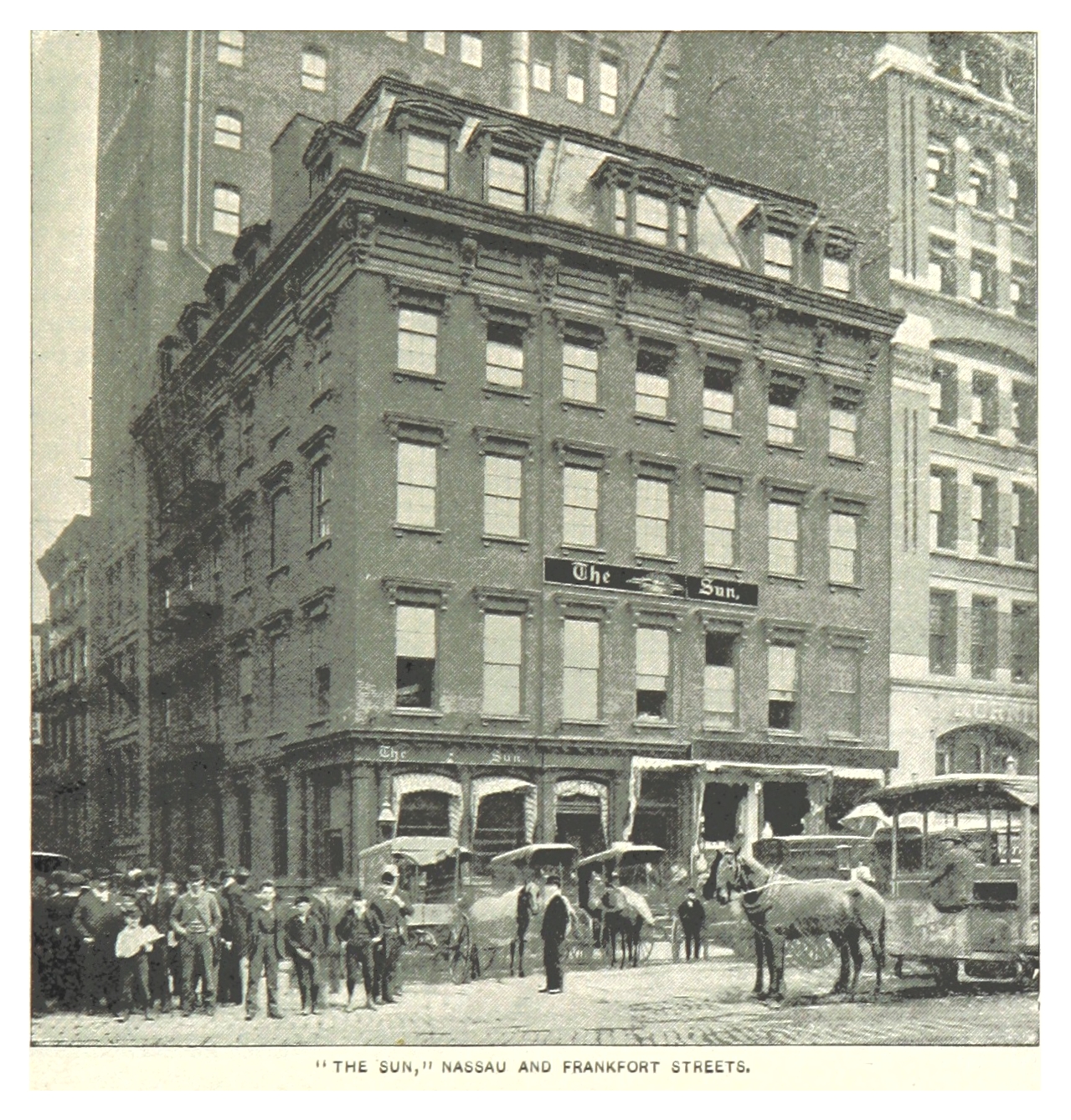
Sun editor — and principal hoax creator — Richard Locke and the Sun’s New York headquarters