
Our Four Freedoms: Roosevelt's vision for the world
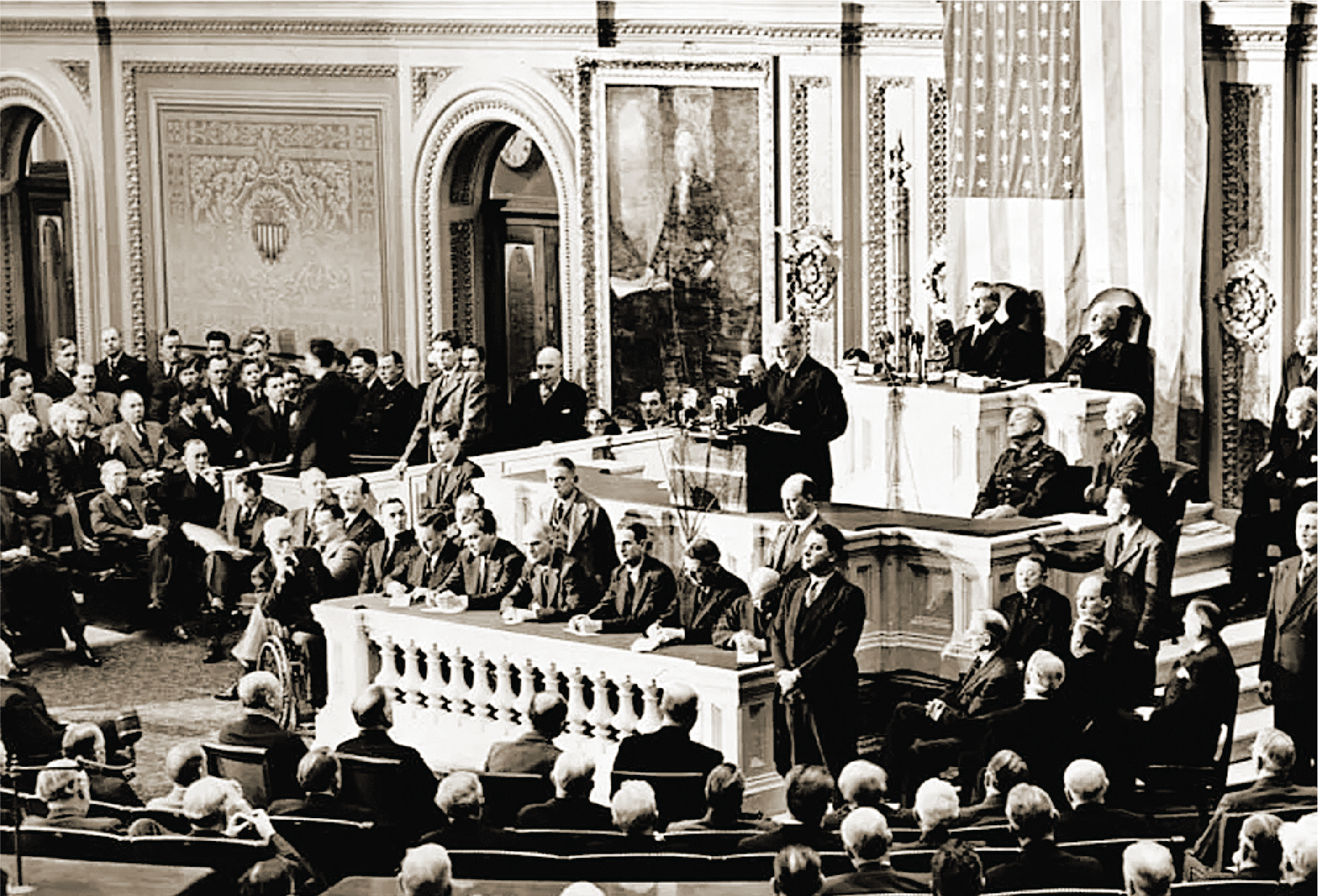
In his State of the Union address on Jan. 6, 1941 — 85 years ago today — President Franklin D. Roosevelt shook the nation out of its complacency by outlining four freedoms enjoyed by Americans that should be spread around the globe.
The Four Freedoms' Speech
The occasion was Roosevelt’s opening address to the 77th Congress on Jan. 6, 1941. Europe was in turmoil but most Americans wanted no part of the growing Second World War.
The freedoms didn’t appear in FDR’s address until the fourth draft. Aide Samuel Rosenman recounted, “he dictated the words so slowly that on the yellow pad I had on my lap, I was able to take them down myself in longhand.”
FDR’s address came to be called “the Four Freedoms speech” and was regarded as “a new Magna Carta of democracy.” It later became the cornerstone of the Atlantic Charter and the United Nations.
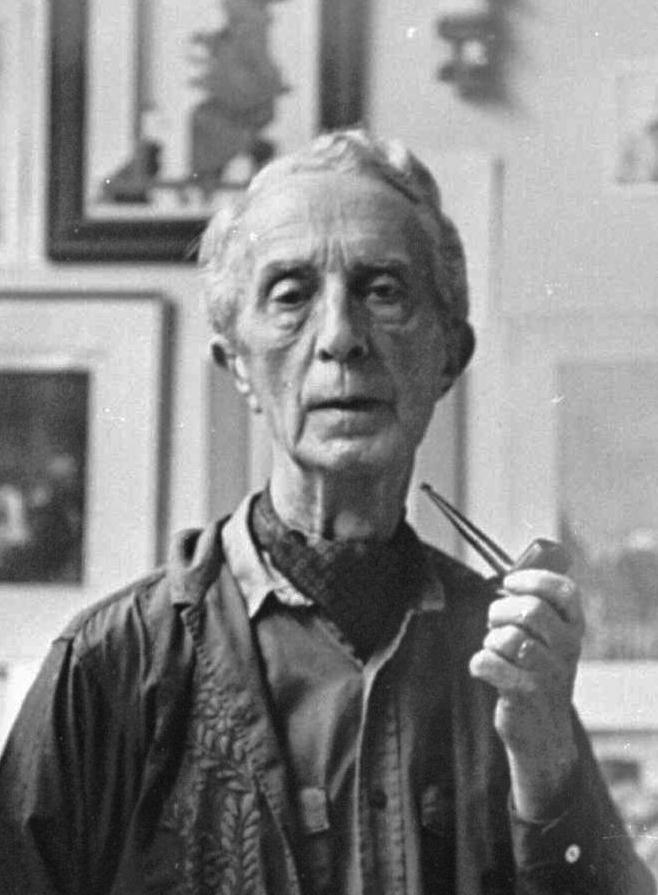
Two years later, Roosevelt’s Four Freedoms also became a rallying point for selling war bonds. Famed illustrator Norman Rockwell of the Saturday Evening Post — a popular weekly magazine of the day — painted each of FDR’s freedoms.
As he did for much of his work, Rockwell used friends and neighbors around his studio in Arlington, Vermont, as models. The paintings accompanied thoughtful articles about each of the freedoms Roosevelt had listed.
Rockwell
A traveling exhibit featuring the original canvases helped raise more than $132 million — $2.34 billion in today’s dollars.
1. Freedom of Speech
What FDR Said: "The first is freedom of speech and expression - everywhere in the world."
Published Feb. 20, 1943:
It took four tries for Rockwell to find the composition and angle he liked. Rockwell’s neighbor, Carl Hess, played the part of the lone dissenter. Hess’ father — or, at least, his ear — is at the bottom left.
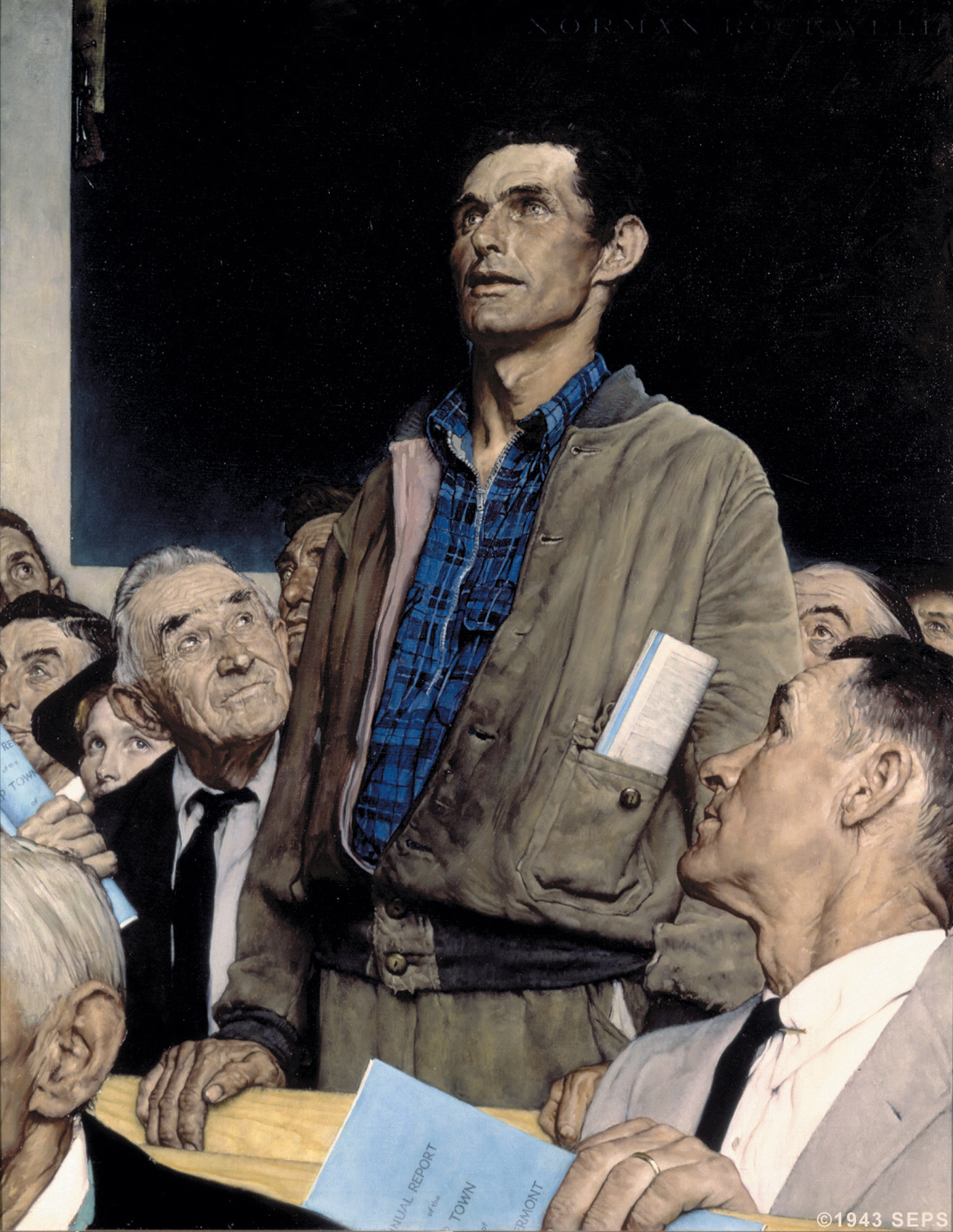
- The model with the red hair is Rosa Hoyt, who holds a rosary in the next painting
- Norman Rockwell's friend and neighbor Jim Martin - the man in white looking up at the dissenter - appears in all 4 paintings.
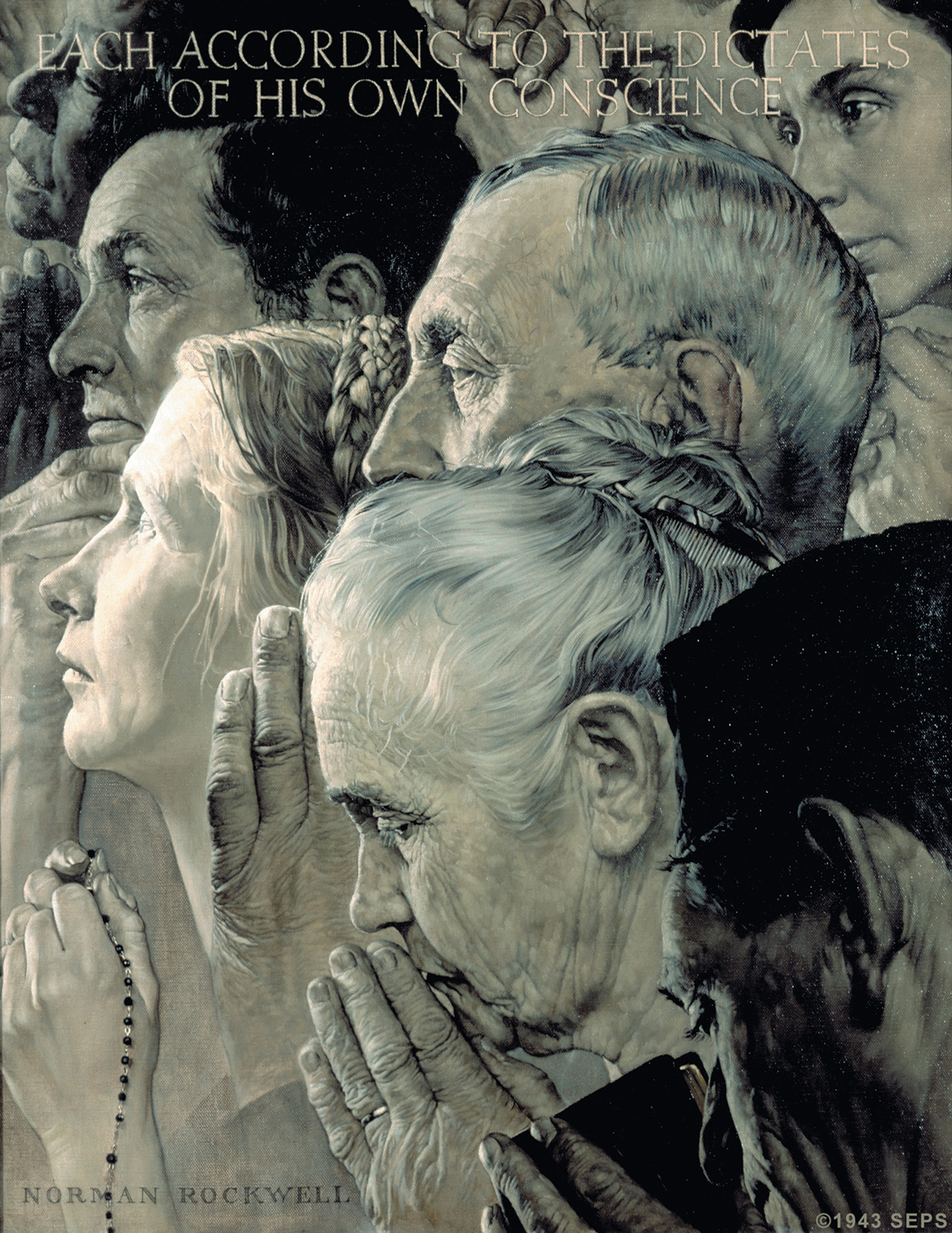
2. Freedom of Worship
What FDR Said: "The second is freedom of every person to worship God in his own way - everywhere in the world."
Published Feb. 27, 1943:
Rockwell originally painted a diverse group of men waiting for haircuts but didn’t feel the result matched the tone he was aiming for. Rockwell spent two months reworking the concept from the ground up. “I depended on the hands alone to convey about half of the message I wish to put over,” Rockwell said later.
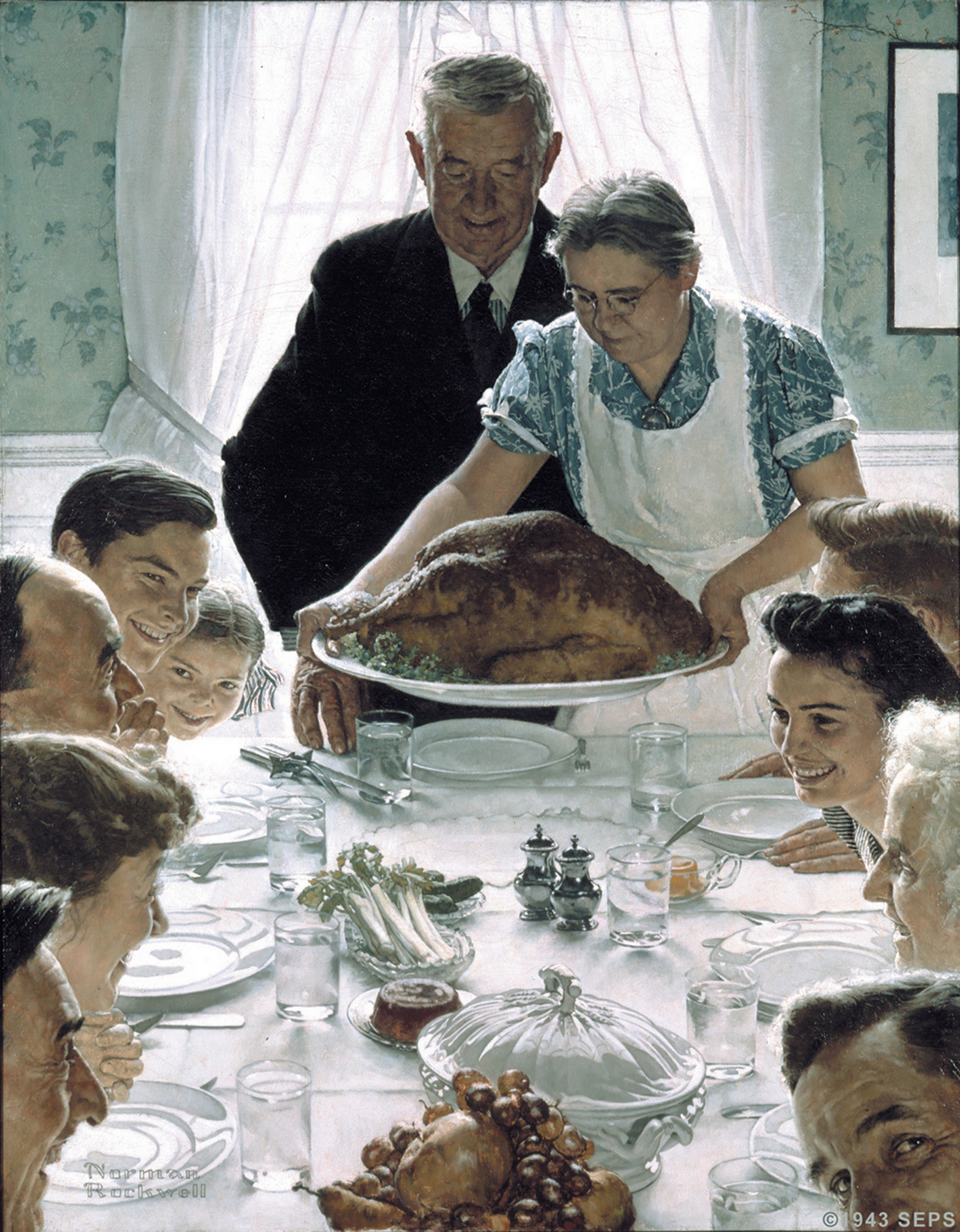
3. Freedom From Want
What FDR Said: "The third is freedom from want, which, translated into world terms, means economic understandings which will secure to every nation a healthy peacetime life for its inhabitants - everywhere in the world."
Published March 6, 1943:
The most famous of the Four Freedoms paintings, Rockwell said he painted his actual Thanksgiving dinner. “Our cook cooked it, I painted it and we ate it,” Rockwell later said. “That was one of the few times I’ve ever eaten the model.”
4 - Freedom From Fear
What FDR Said: “The fourth is freedom from fear, which, translated into world terms, means a world-wide reduction of armaments to such a point and in such a thorough fashion that no nation will be in a position to commit an act of physical aggression against any neighbor – anywhere in the world.”
Published March 13, 1943:
The only of the four not created specifically for this project. Rockwell painted this to illustrate the Battle of Britain: Note the newspaper headline, which the Bennington (Vermont) Banner mocked up and printed as a special front for use as a prop. The Saturday Evening Post didn’t use the painting, so Rockwell recycled it here.
