
Mass Metal: Ozzy Osbourne & Black Sabbath
On July 13, 1968 — 57 years ago this month — a quartet of hard-rocking musicians that called themselves the Polka Tulk Blues Band played their first show in a tiny backstreet blues club in their working-class hometown of Birmingham, England.
By all accounts, the show didn’t go well. The band would change its name to Earth — and then again, later, to Black Sabbath — and play a key role in popularizing what would come to be called heavy metal music.
Black Sabbath closed out its career on July 5, 2025, with the highest-grossing charity concert of all time. On Tuesday — just 17 days after the show — its lead singer, Ozzy Osborne died at age 76.
The Birth of Heavy Metal
The four musicians who would become Black Sabbath were all from Birmingham, England, which was struggling to recover from World War II. Band members recall that they belonged to street gangs and fought each other until they realized their common love for rock music.
In 1968, they, a second guitarist and a saxophone player formed a band called the Polka Tulk Blues Band. Their first gig on July 13, 1968, “went down like the Titanic,” bass player Geezer Butler would say later. The crowd hurled insults at the band — and especially at its lead singer, Ozzy Osbourne. The audience followed the band out to its van and brawled with them after the show.
As they refined their sound — becoming increasingly harder and louder — the group shed the other members and changed its name to Earth. On a tour of Germany in the summer of 1968, they ran across another band with that same name and — inspired by the title of a 1963 Boris Karloff movie — changed their name again to Black Sabbath.
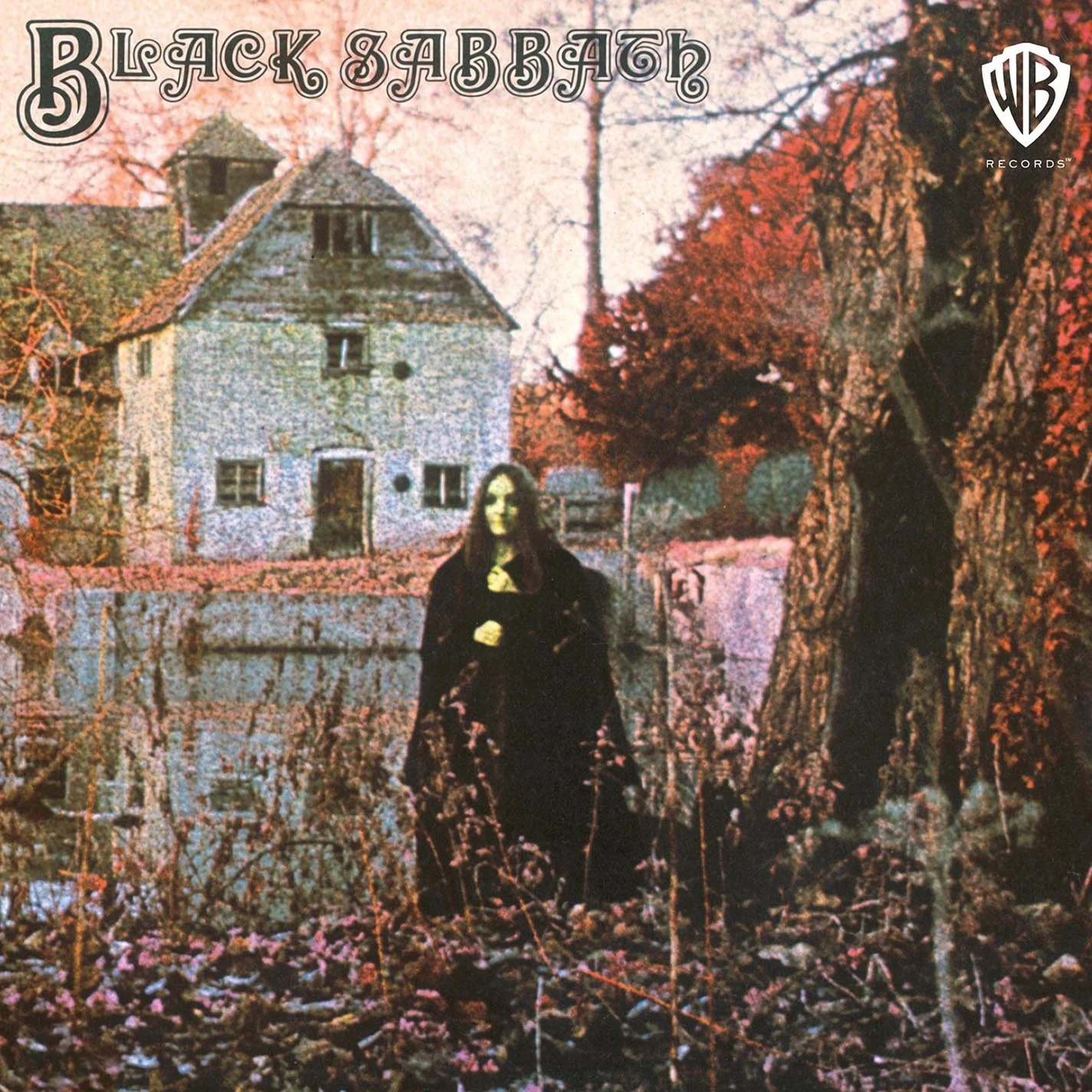
Black Sabbath's 1970 self-titled debut album.
With its new sound, the band began to attract rough but enthusiastic groups of fans. A recording contract quickly followed. Striving for cover art that would match the tone of the music on the band’s first album, artist “Keef” Macmillan photographed a creepy witchlike woman — in fact, it was 18-year-old Louisa Livingstone — on intentionally low-fidelity film.
In order to capture its live feel on vinyl, Black Sabbath worked quickly in the studio. Its first album was recorded in a single day. Its second album, “Paranoid,” was recorded in six days.
Both albums would sell well. The latter would feature what’s still the band’s best-known single, “Iron Man.”
Throughout the 1970s, Osbourne’s increasing use of drugs and alcohol resulted in a reduction of his participation in the group. He even left the band for a few months in 1977. By April 1979, however, the band was forced to fire him. The daughter of the band’s manager — Sharon Arden who later, ironically, would marry Osbourne — recommended vocalist Ronnie James Dio as a replacement.
Black Sabbath would go on to sell more than 70 million records. The band was inducted into the Rock and Roll Hall of Fame in 2006 and was presented with a Grammy Lifetime Achievement Award in 2019.
With a constant shuffle of band members and especially lead singers — including the occasional return of Osbourne — Black Sabbath would finally announce the end of the band in March 2017.
Black Sabbath Chart History
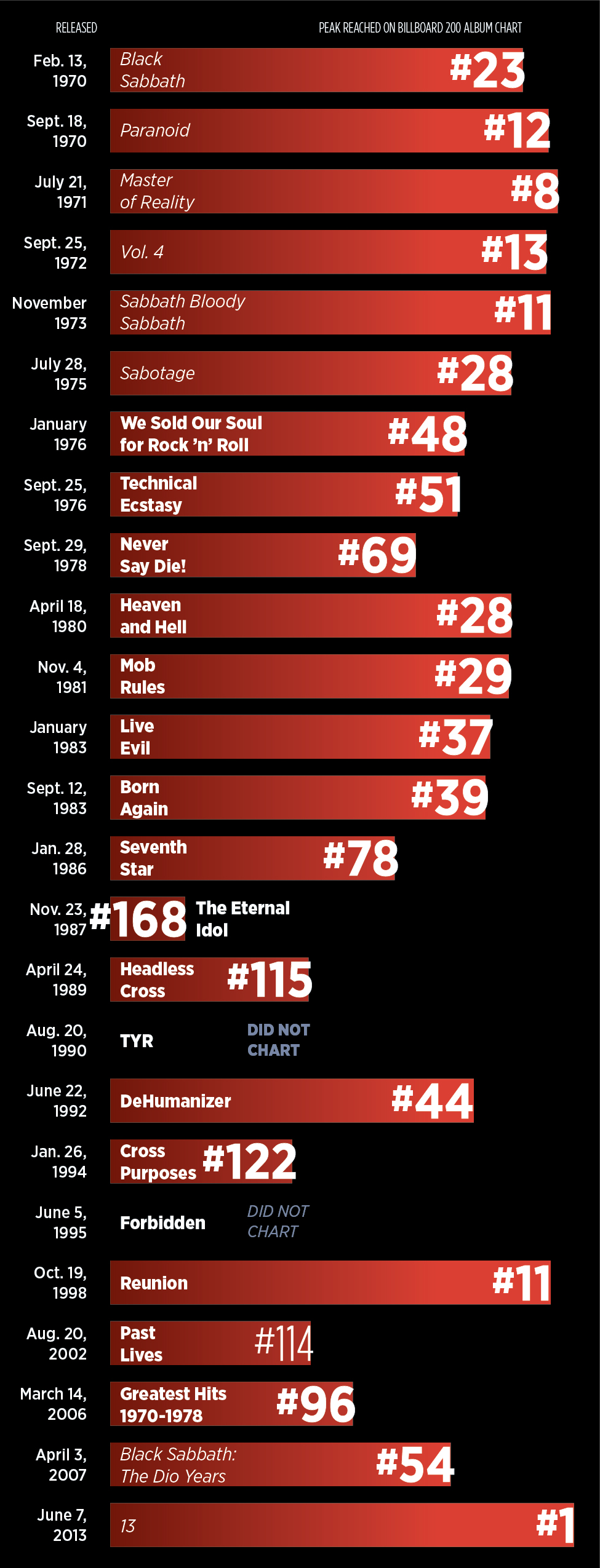
A Revolving Door of Lead Singers
Shown here: When each of the 10 lead singers of Black Sabbath started with the band.
