
When The Gales of November Came Early: The Sinking of the Fitzgerald
On Nov. 10, 1975 — a half-century ago next Monday — a Great Lakes freighter measuring 729 feet long and weighing 13,000 tons empty and carrying more than twice that weight in iron ore pellets sank, along with its 29 crew members, in a hurricane-force windstorm in Lake Superior.
Thanks to Canadian folk singer Gordon Lightfoot, just about anyone of a certain age has heard of the wreck of late, great Edmund Fitzgerald.
'The Big Lake They Call Gitche Gumee'
When it was completed in June 1958 at River Rouge, Michigan, the S.S. Edmund Fitzgerald was the largest ship in the Great Lakes. At 729 feet long, 75 feet wide and 13,632 tons, it would remain the largest on the lakes for 13 years.
The ship was commissioned by the Northwestern Mutual Insurance Company of Milwaukee, which had invested heavily in the iron and minerals business. It paid $8.4 million to build the ship and it named it after the head of the company.
The Edmund Fitzgerald’s main task was to carry taconite — pellets of a low-grade iron ore — from the mining region at Silver Bay, Minnesota, to the steel mills on the lower lakes near Detroit and Toledo, Ohio. By the time it met its fat, the ship had logged 748 round trips on the Great Lakes — roughly equivalent to 44 trips around the world.
Boat watchers called the spectacular vessel “the Mighty Fitz,” “the Toledo Express,” “the Pride of the American Side” and “the Queen of the Great Lakes.”
On Nov. 9, 1975, the Edmund Fitzgerald’s task was to sail from the Burlington Northern Railroad Dock in Superior, Wisconsin, to a steel mill on Zug Island, near Detroit. After 14 hours of loading its three giant cargo holds with taconite pellets, the ship set sail eastward at about 2:30 p.m.
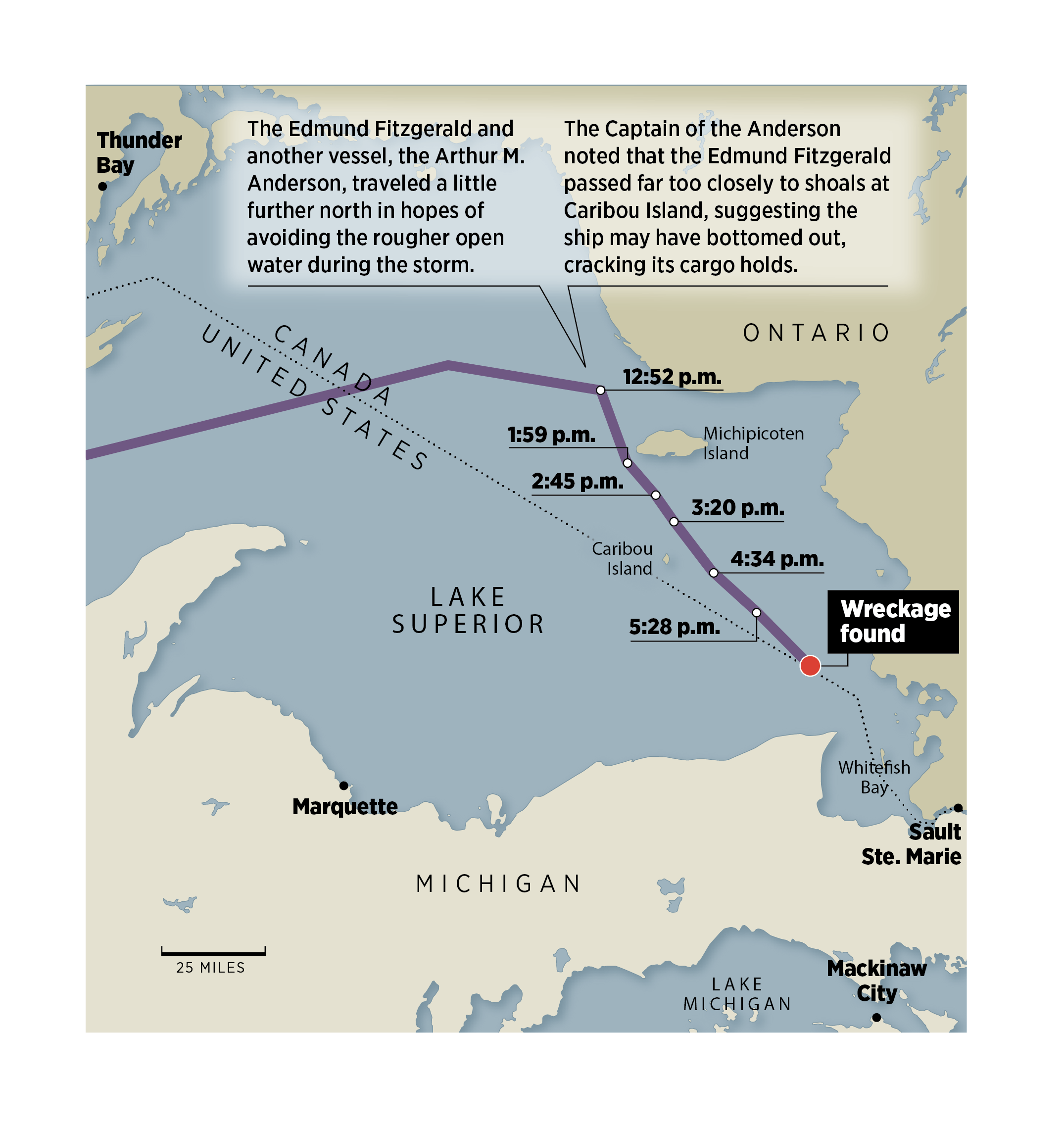
Master Capt. Ernest McSorley, who was in his final voyage before retirement, took notice of gale warnings posted by National Weather Service. When those warnings were upgraded the next morning, McSorley had the Edmund Fitzgerald head slightly more to the north than it normally would. The idea: Let the coast of Ontario help shield some of the wind away from his vessel.
The winds increased. The ship became damaged, losing its radar antennae. McSorley radioed the Edmund Fitzgerald was taking on water but it was unclear exactly why: Did it bottom out on shoals or were the enormous waves drowning the vessel?
The Edmund Fitzgerald needed just 15 more miles to make it to the relative safety and calmer waters of Whitefish Bay. But sometime after 7 p.m., the ship disappeared from radar and no further radio contact was made.
The Edmund Fitzgerald and its crew of 29 were lost.

'At 7 P.M. A Main Hitchway Caved In'
At 3:30 p.m. that afternoon, McSorley told the captain of the Anderson he had a fence rail down, had lost two vents and his ship was listing. At 7:10, he told the other ship “We are holding our own.” But when the captain of the Anderson tried to check on the Edmund Fitzgerald 12 minutes later, he received no reply.
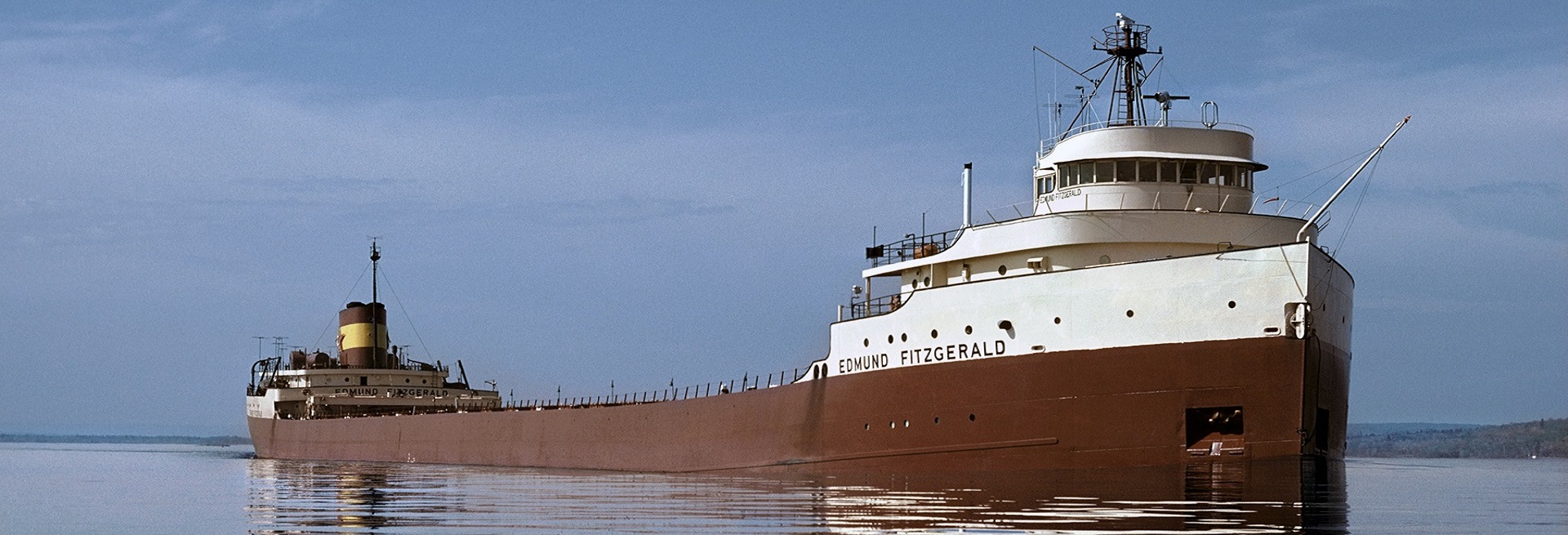
U.S. Coast Guard.
Search vessels and a Coast Guard aircraft found magnetic contact but no debris or other signs of the ship. It wasn’t until the following May 20, 1976, that the Navy was able to photograph the wreck, 535 feet below the surface of Lake Superior.
The Coast Guard released its official report of the accident in April 1977, admitting the cause of the sinking couldn’t be conclusively determined. It did say, however, that the most likely cause was “a massive flooding of the cargo hold” through “ineffective hatch closures.”
The ship’s four cargo holds were serviced by 21 steel hatch covers, each measuring 11 by 48 feet and weight 7 tons each. You can see those hatches in the photo here.
Industry groups and family members of the victims strongly disagreed with this analysis.
This is when the other ship captain’s observation came to play: It appeared as if the Edmund Fitzgerald, riding low in the water with its heavy load, may have bottomed out on shoals. At that point, it would have been a matter of time before the ship sank.
A half-century later, neither of these two theories — or others that have been proposed — have been proven.
In July 1995, the ship’s bell was recovered from the wreck and is now on display at the Great Lakes Shipwreck Museum.
'The Legend Lives On From The Chippewa On Down'
Canadian folk singer Gordon Lightfoot had a passion for recreational sailing on the Great Lakes. He told NPR’s “Morning Edition” in 2015 that he was inspired to write a song about the sinking of the Edmund Fitzgerald after reading an article about the accident in Newsweek.
Lightfoot then noticed, in subsequent coverage, newspapers misspelled the name of the ship: “Edmond Fitzgerald” rather than “Edmund Fitzgerald.” He came up with a tune, wrote lyrics and recorded the song before the wreckage was discovered.
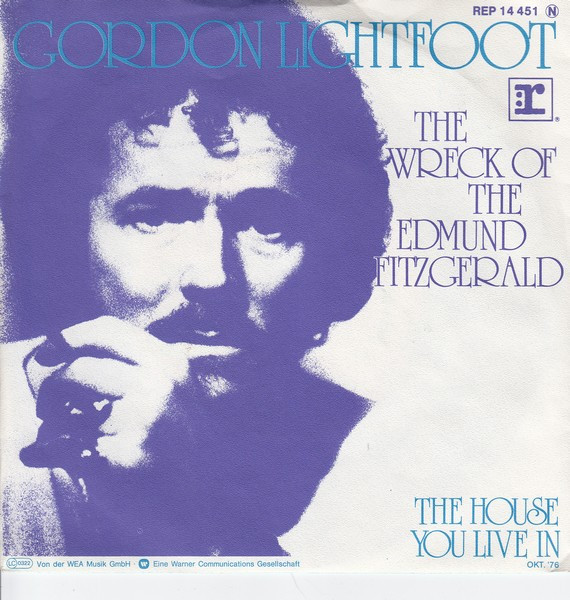
The single was released in August 1976 and hit No. 1 on the Canadian singles chart. It peaked at No. 2 in the U.S., held out by Rod Stewart’s “Tonight’s the Night.” “The Wreck of the Edmund Fitzgerald” was nominated for a Grammy Award for Song of the Year but was beaten out by Barry Manilow’s “I Write the Songs.”
After an official investigation of the sinking was released, however, Lightfoot became troubled by how some of his lyrics proved not to be factual. For example, his original version stated: “At 7 p.m., a main hatchway caved in. He said, ‘fellas, it's been good to know ya’.” Lightfoot changed that to: “At 7 p.m. it grew dark, it was then he said, ‘Fellas, it's been to know ya’.”
Later still, the original lyric describes the church where the shipwreck is commemorated as “a musty old hall.” After complaints from a parishioner of that church, Lightfoot changed the line to “a rustic old hall.”
Reprise Records