On Nov. 7, 1940 — 85 years ago Friday — the Tacoma Narrows Bridge twisted and danced in a 40 mph windstorm and then collapsed. The failure of a bridge only four months old was a spectacular lesson for civil engineers around the world.

The Fall of the Tacoma Narrows Bridge
A Dancing, Bouncing Bridge In A Windstorm
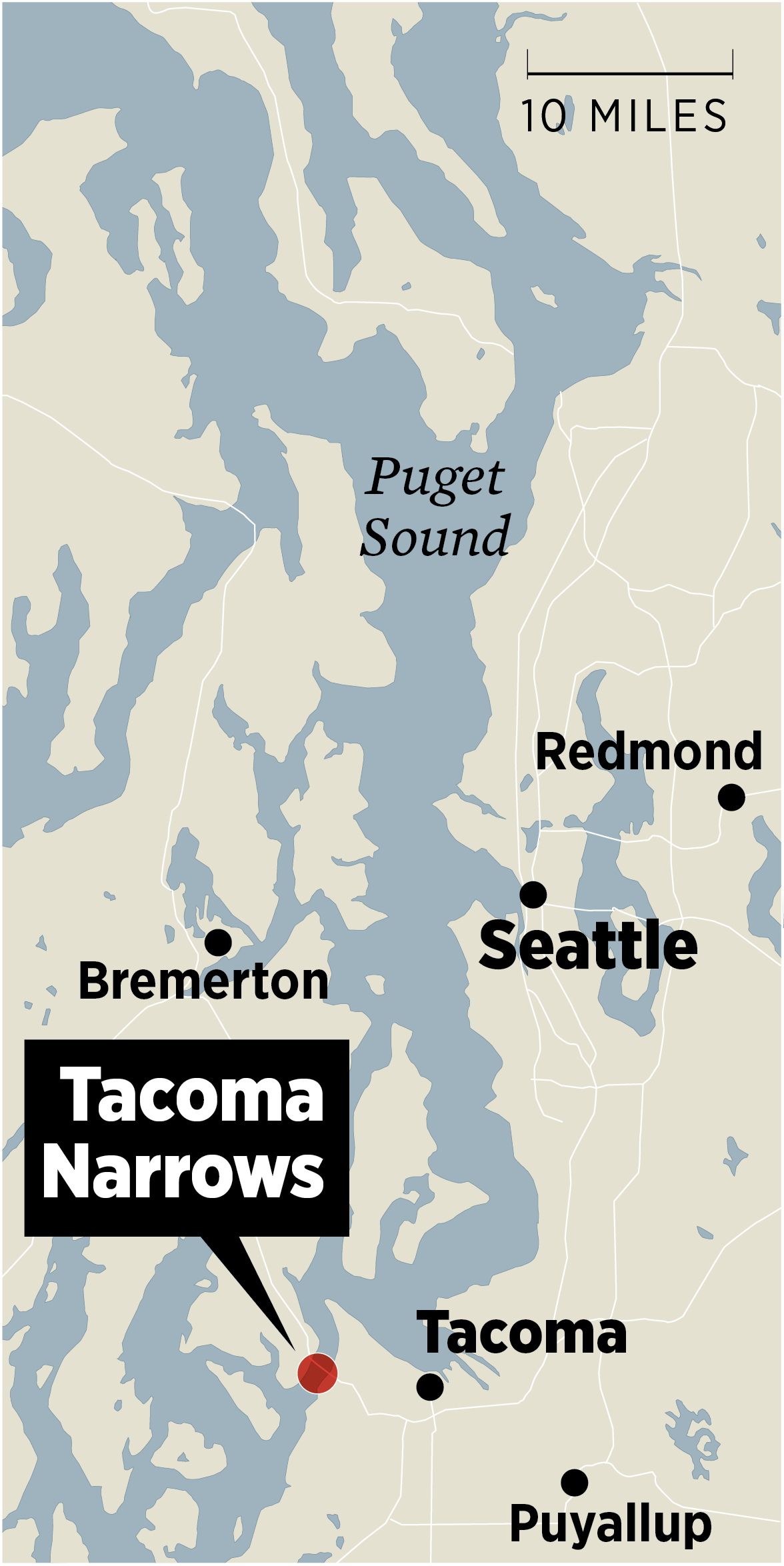
On Nov. 7, 1940, a deep low-pressure zone formed 150 miles west of Tatoosh, Washington. The disturbance resulted in gusts of 40 mph in the direction of the port city of Tacoma. Meanwhile, the new bridge at Tacoma Narrows Bridge, which connected the city with the Kitsap Peninsula, was a sitting duck for a storm like this.
Engineer Clark Eldridge's original design for the bridge had been sound. But depression-era finances caused state officials to look for ways to cut costs. They discarded Eldridge's plans and went with a design by Leon Moisseiff, who had consulted on San Francisco's Golden Gate Bridge.
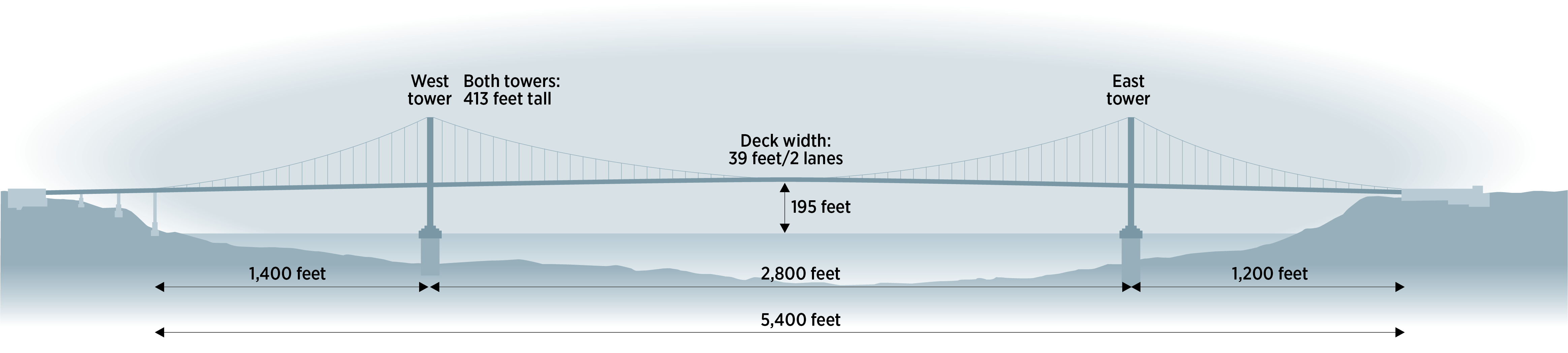
Moisseiff proposed a bridge using thinner, lighter materials. He wanted to show how elegantly a bridge of this size could be built, he said. This would, after all, be the world's third-longest suspension bridge, after New York City's George Washington Bridge and the Golden Gate. Thinner, lighter materials were used — and fewer of them. The bridge was built just 39 feet wide, to accommodate two lanes of traffic.
Even during construction, the deck of the bridge wobbled and danced. Workmen sucked on lemons to fight the nausea they experienced from motion sickness. Alarmed by this, the Public Works Administration declined to sign off on the project. But he was overruled. The $6.5 million bridge finally opened for traffic on July 1, 1940.
Locals enjoyed the bouncing bridge, which they called “Galloping Gertie.” When the wind was right, they’d drive over to “ride the bridge.” A bank even put up a billboard nearby, proclaiming itself to be as safe as the bridge.
But engineers hadn’t taken into account aerodynamic forces and their effect on the bridge. One engineer pointed out that if the bridge were to twist, it could collapse. He said this might be avoided if the wind was allowed to whistle through the bridge’s solid girders. He recommended holes be cut in those girders and curved fairings put in place to help direct wind around them. But no action was taken on his suggestions before the windstorm of Nov. 7, 1940.
The Bridge
The Tacoma Narrows Bridge was massive, at 2,800 feet long and 39 feet wide.
Scenes From Newsreel Footage Shot That Day
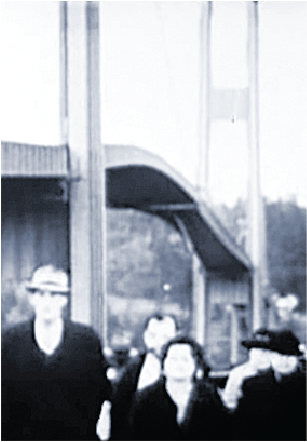
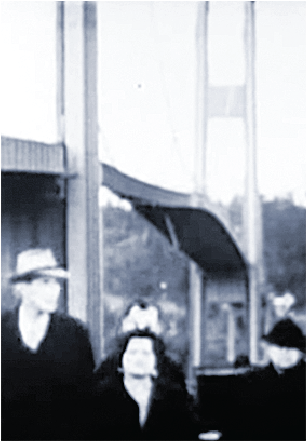
Locals often drove out to watch the bridge oscillate in the wind, but Gertie had never galloped this much before. Officials shut down bridge traffic. More than one newsreel photographer showed up to film the bridge rocking back and forth in the wind.
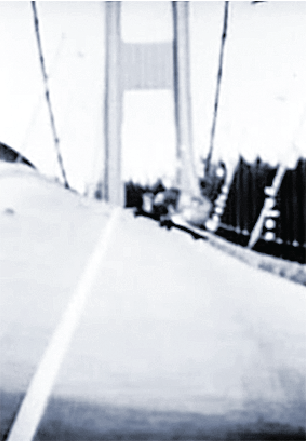
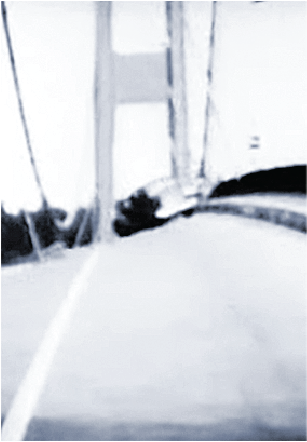
This view from the Tacoma end of the bridge shows what the oscillations looked like to the drivers of the two vehicles who halted while trying to cross. Both the car and the truck were lost. Both drivers survived, but there was one casualty. More about that in a moment ...
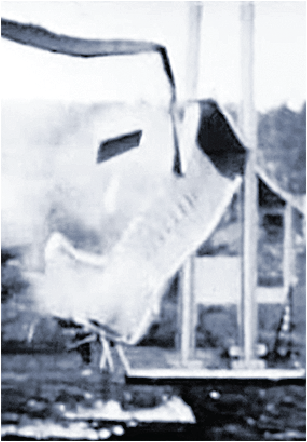
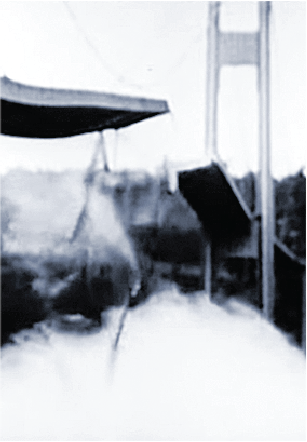
Finally, at 9:45 a.m., the bridge’s 17-inch-thick support cables — each of which consisting of 6,300 strands — pulled clear of their moorings. Gertie’s deck broke up and fell into the water. It would take another decade for a new bridge to be constructed near the site of the collapse.
The Collapse
There Was Only One Fatality - But Brace Yourself...
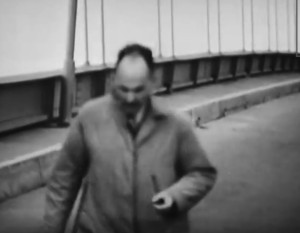
Leonard Coatsworth shuffles off the bridge, moments before it collapses.
Leonard Coatsworth, news editor of the Tacoma News Tribune newspaper, was smack in the middle of it all.
“I drove on the bridge and started across,” he wrote. “In the car with me was my daughter’s cocker spaniel, Tubby. The car was loaded with equipment from my beach home at Arletta.
“Just as I drove past the towers, the bridge began to sway violently from side to side. Before I realized it, the tilt became so violent that I lost control of the car ... I jammed on the brakes and got out, only to be thrown onto my face against the curb.”
“Around me I could hear concrete cracking. I started back to the car to get the dog, but was thrown before I could reach it. The car itself began to slide from side to side on the roadway. I decided the bridge was breaking up and my only hope was to get back to shore.
“On hands and knees most of the time, I crawled 500 yards or more to the towers ... My breath was coming in gasps; my knees were raw and bleeding, my hands bruised and swollen from gripping the concrete curb ... Toward the last, I risked rising to my feet and running a few yards at a time ... Safely back at the toll plaza, I saw the bridge in its final collapse and saw my car plunge into the Narrows.
“With real tragedy, disaster and blasted dreams all around me, I believe that right at this minute what appalls me most is that within a few hours I must tell my daughter that her dog is dead.”
Sources:
Tacoma Narrows Bridge History by the Washington State Department of Transportation, KIRO Seattle, University of Washington Libraries’ Special Collections, Library of Congress, Moving Image Archive News, Encyclopaedia Brittanica, Structure magazine, ResearchGate, Shippai.org, History.com. All photos from the Library of Congress and from newsreel footage distributed by Paramount Pictures and Castle Films and are now in the public domain.