
Arrow-right Camera

Color Scheme

Subscribe now

'The Clock Has Started:' Alan Shepard and the Mercury missions

By Charles Apple

'The Clock Has Started'

Those were the words Alan Shepard used 60 years ago Wednesday to note his cockpit timepiece had begun running. This meant his Redstone rocket booster had left the ground sending him and his one-man Mercury spacecraft for America’s first trip into space.

After the Soviet Union stunned the world — and especially Washington, D.C. — by launching the first satellite into orbit in October 1957, American officials were determined to not be shown up again in what came to be called “the space race.”

The Eisenhower administration created the National Aeronautics and Space Administration in 1958. Immediately, NASA began laying the groundwork for putting an American into space. It selected its first seven astronauts in April 1959 and it dove into work on a single-seat spacecraft — the new astronauts hated the word “capsule.” Meanwhile, the Soviets were plugging away as well. The Americans used lab monkeys in early Mercury flight tests. The Soviets used dogs — and, without U.S.-style wall-to-wall media coverage to inform an easily-outraged public, they didn’t worry so much about how to return those dogs safely to Earth afterward.

Of the seven original Project Mercury astronauts, former Navy carrier-based fighter pilot Alan Shepard was chosen to fly the first “ballistic” 15-minute suborbital mission, scheduled for April 1960. But this got pushed back time and time again by technical delays and concerns about the vehicle selected to put the spacecraft into space: The Army’s Redstone rocket, developed by a team led by the already-legendary former German V-2 scientist Wernher von Braun.

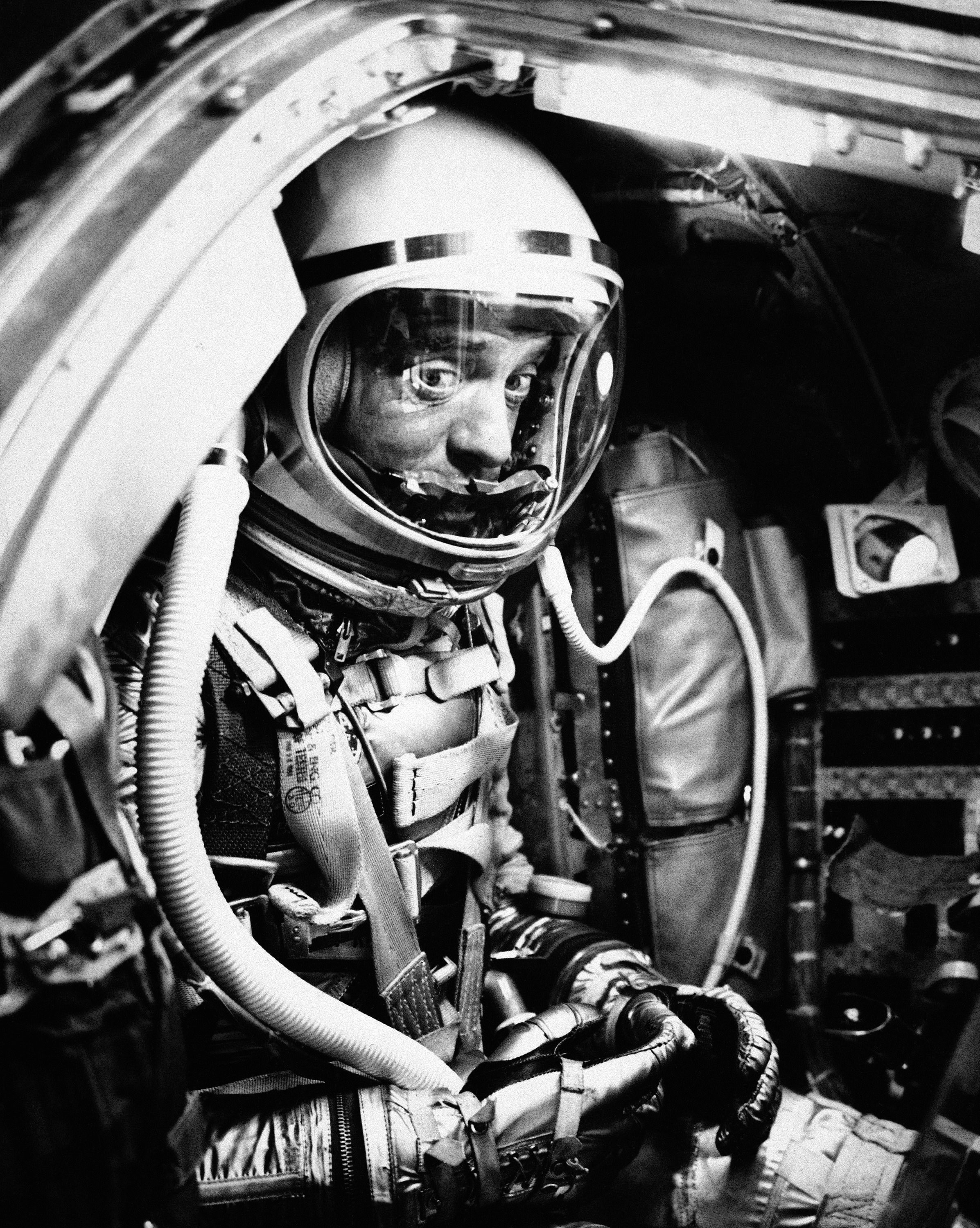
Alan Shepard in his space suit for the Mercury mission. Photo provided by the Associated Press.

Alan Shepard in his space suit for the Mercury mission. Photo provided by the Associated Press.

Finally, with the first Mercury launch scheduled for April 25, 1961, it happened again: The USSR announced it had put cosmonaut Yuri Gagarin into space for a 108-minute orbit of the Earth. Still not having mastered the art of bringing space travelers home, the Soviets had Gagarin eject from his Vostok 1 capsule and parachute to the ground.

Americans were stunned again. When Shepard heard the news, he slammed his fist onto a table so hard that a NASA official feared Shepard had broken his hand.

Twenty-three days later, the Redstone rocket and the Mercury spacecraft were finally ready. Shepard was inserted into the cramped cockpit of the spacecraft he had named Freedom 7, the hatch was bolted shut and then ... nothing. An expected two-hour wait turned into more than four. Inevitably, nature called. But because Shepard’s planned flight was only 15 minutes, no one had prepared for that.

In an incident that would be later played for laughs in the 1983 movie “The Right Stuff,” Shepard ended up peeing in his suit. NASA would make sure that subsequent astronauts wore proper urine collection devices built into their suits.

Finally, at 9:34 a.m. — with 45 million Americans watching on live TV — the Redstone rocket was fired, sending Shepard on his way. Two minutes and 22 seconds later, the spent Redstone missile was cut loose. The Mercury spacecraft flew to a height of 125 miles before turning around, blunt-end first, and falling back to Earth. Slowed by aerodynamic forces and then by a parachute, the spacecraft splashed into the Atlantic, 218 miles from Cape Canaveral, Florida.

The Navy guided missile cruiser USS Lake Champlain was there to pick up Shepard and his craft. Shepard showed no ill effects.

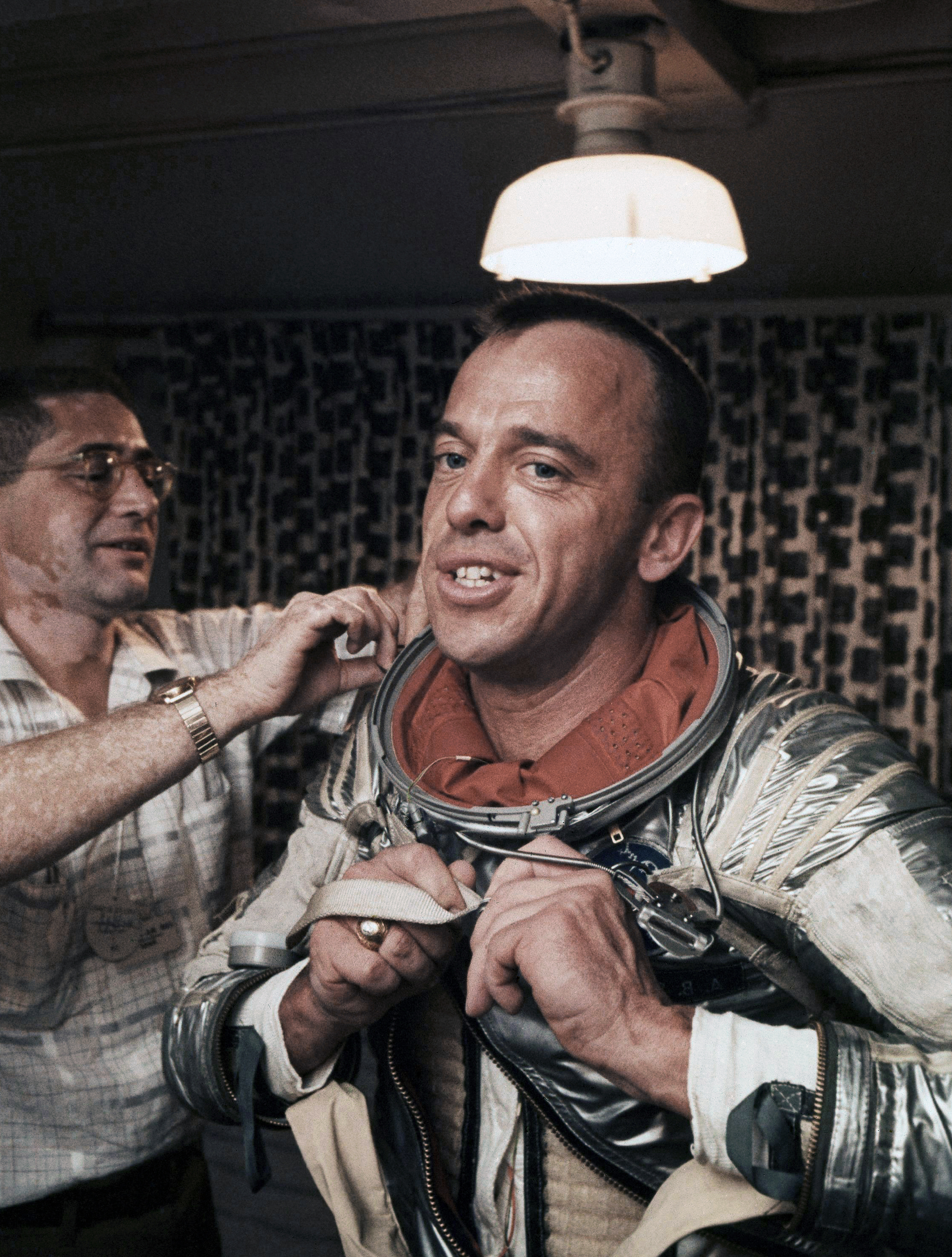
Alan Shepard being helped out of his space suit after the mission. Photo by the Associated Press.

Alan Shepard being helped out of his space suit after the mission. Photo by the Associated Press.

One more astronaut would fly a suborbital mission before John Glenn, in February 1962, made it to orbit, boosted there by an Air Force Atlas ICBM missile. Glenn flew three orbits around the Earth. Three more Mercury astronauts would follow.

After that, NASA would see a long drought in crewed missions before it was able to put its two-man Gemini spacecraft to work in March 1965.

The launch of the Freedom-7 mission in 1961. Photo provided by NASA.

The launch of the Freedom-7 mission in 1961. Photo provided by NASA.

The Seven Original Mercury Astronauts
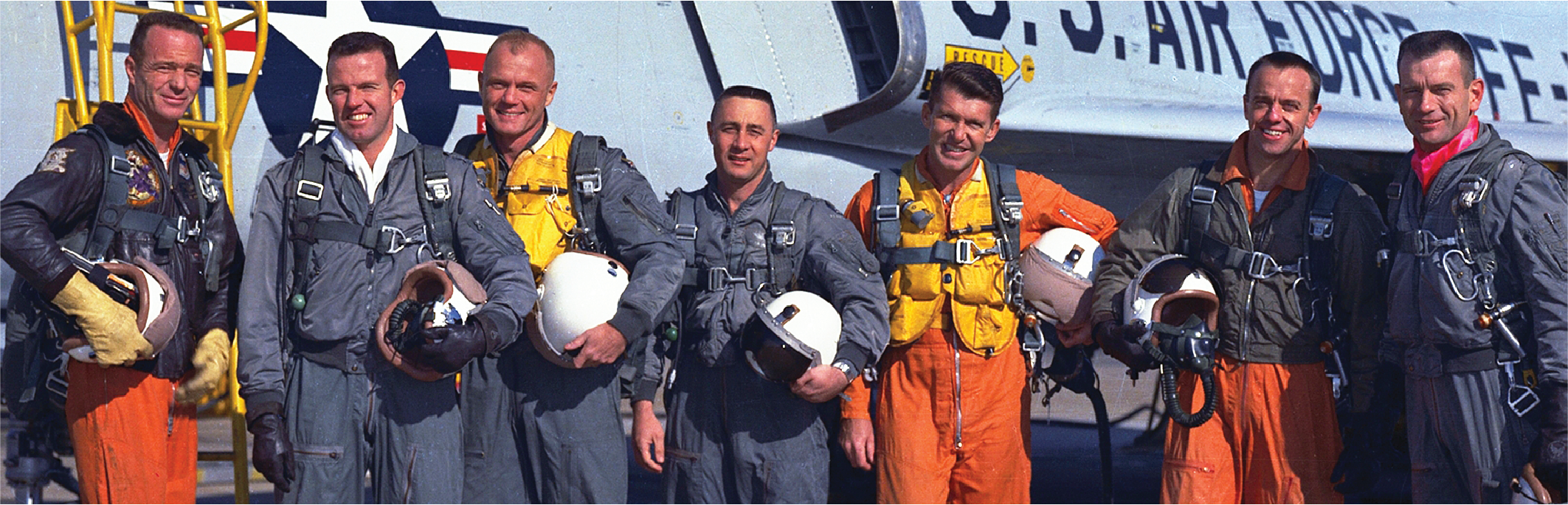
  • Scott Carpenter

    Born: May 1, 1925, in Boulder, Colorado

    Before Nasa: Specialized in electronics. Flew anti-sub missions in the Korean War.

    Mercury Flight: Circled the Earth three times amid technical and procedural glitches.

    After Mercury: Never flew again.

    Died: 2013, after a stroke. He was 88.

  • Gordon Cooper

    Born: March 6, 1927, in Shawnee, Okla.

    Before Nasa: Air Force pilot based in Europe.

    Mercury Flight: The final Mercury flight, which was a 34-hour endurance test.

    After Mercury: Commanded Gemini 5 in August 1965.

    Died: 2004, from heart failure after a long battle with Parkinson's disease. He was 77.

  • John Glenn

    Born: July 18, 1921, in Cambridge, Ohio.

    Before Nasa: Was a decorated Marine pilot in Korea and set a transcontinental air speed record in 1957.

    Mercury Flight: The first orbital mission on Feb. 20, 1962.

    After Mercury: Left NASA and served four terms in the U.S. Senate. Flew on the space shuttle in 1998 at age 77.

    Died: 2016 at age 95.

  • Gus Grissom

    Born: April 3, 1926, in Mitchell, Ind.

    Before Nasa: Won a Distinguished Flying Cross for combat missions over Korea.

    Mercury Flight: Second suborbital mission on July 21, 1961.

    After Mercury: Commanded the first Gemini mission in March 1965.

    Died: In the Apollo 1 launch pad fire in January 1967. He was 40.

  • Wally Schirra

    Born: March 12, 1923, in Hackensack, N.J.

    Before Nasa: Flew 90 combat missions over Korea.

    Mercury Flight: Orbited the Earth six times on the third orbital mission.

    After Mercury: Commanded Gemini 6 and the first manned Apollo mission, Apollo 7.

    Died: 2007, from a heart attack due to cancer of the mesothelium. He was 84.

  • Alan Shepard

    Born: Nov. 18, 1923, in East Derry, N.H.

    Before Nasa: Decorated carrier-based Navy pilot.

    Mercury Flight: The first suborbital mission on May 5, 1961.

    After Mercury: Walked — and hit two golf balls — on the moon as commander of Apollo 14 in 1971.

    Died: 1998, from leukemia. He was 74.

  • Deke Slayton

    Born: March 1, 1924, in Sparta, Wis.

    Before Nasa: Flew bomber missions over Europe in World War II.

    Mercury Flight: Was grounded because of an erratic heartbeat.

    After Mercury: Served as chief astronaut and then director of flight crew operations. At age 51, flew on the Apollo-Soyuz link-up mission in 1975.

    Died: 1993, from brain cancer. He was 69.

Sources: NASA History Program Office, “Moon Shot: The Inside Story of America’s Race to the Moon” by Alan Shepard and Deke Slayton, “Light This Candle: The Life & Times of Alan Shepard” by Neal Thompson, “Americans into Orbit: The Story of Project Mercury” by Gene Gurney, “Space: The First 50 Years” by Sir Patrick Moore and H.J.P. Arnold, “Spaceflight: A Smithsonian Guide” by Valerie Neal, Cathleen S. Lewis and Frank H. Winter