The Martian: Hard science-fi hits the big screen
Considered one of the most realistic science fiction movies of all time, “The Martian” starring Matt Damon and directed by Ridley Scott opened in U.S. theaters Oct. 2, 2015 — 10 years ago next Thursday.
From A Web Serial To A Hit Novel To A Major Motion Picture
Andy Weir was born in 1972 to a father who was a physicist and a mother who was an electrical engineer. He began working as a computer programmer for a Department of Energy laboratory in New Mexico when he was only 15.
Weir worked as a software programmer and wrote fiction as a hobby, publishing it on his web site. He began work on “The Martian” in 2009, posting it in installments on his web site. The idea was for Weird to research and solve the stranded astronaut’s issues as they came up in a realistic timeline.
Weir’s serial attracted a large following, which led to readers asking him to publish it via Amazon Kindle. Which he did — for 99 cents per copy.
Kindle sales of “The Martian” attracted a literary agent that signed Weir to a publishing contract. The book was published in hardcover in early 2014 and debuted at No. 12 on the New York Times bestseller list. The paperback edition, published later that year, would spend 19 nonconsecutive weeks at No. 1 on the Times’ paperback trade fiction list.

Andy Weir
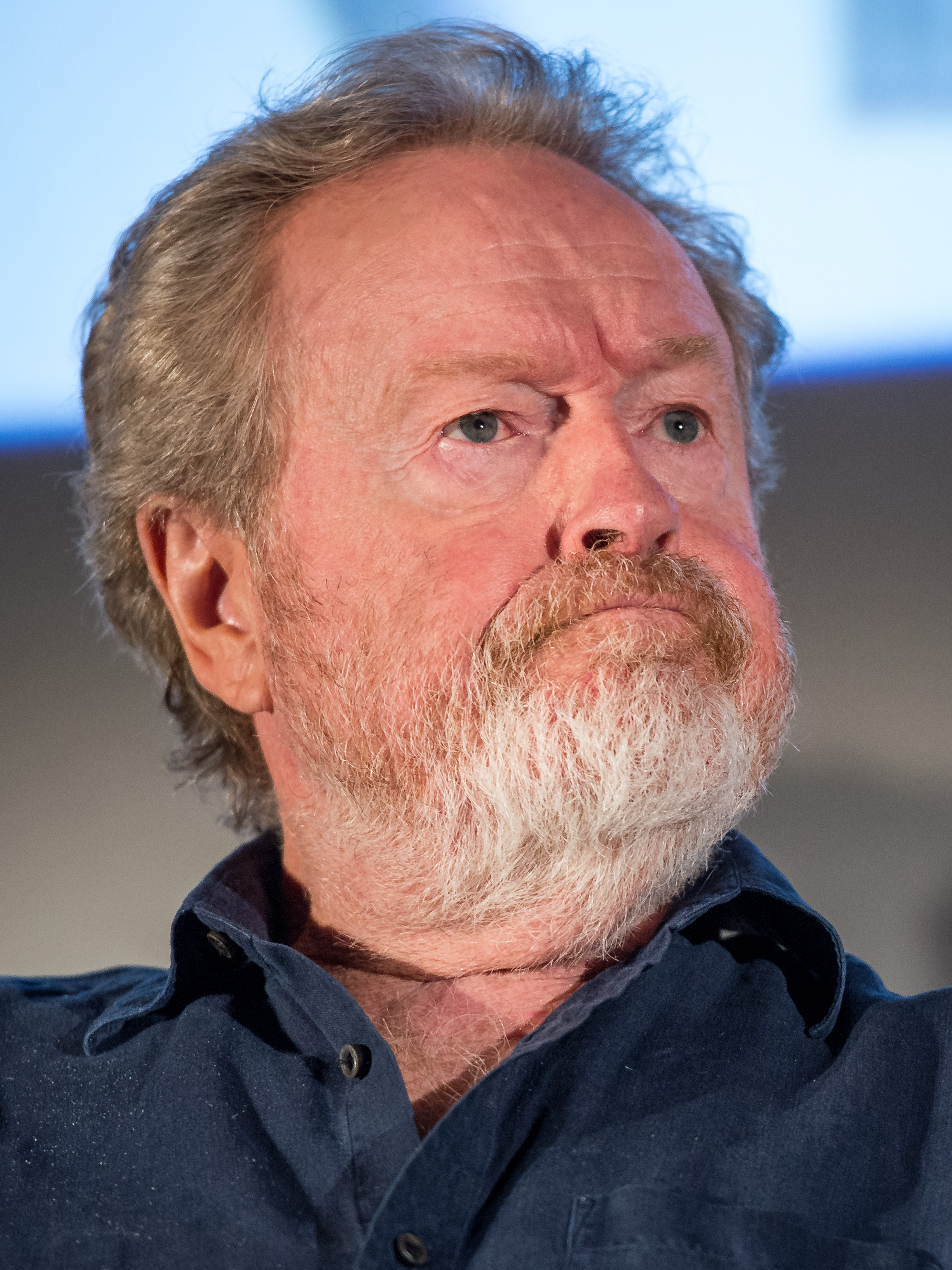
Ridley Scott
Naturally, that success led to a movie contract from 20th Century Fox. Drew Goddard — who had written for “Buffy the Vampire Slayer,” “Alias” and “Lost” — was hired to write a screenplay for “The Martian” but then bailed on a chance to direct the film when he was offered a chance to direct “The Sinister Six,” a comic book movie that would eventually be canceled.
Fox then brought in Ridley Scott, who had directed “Gladiator”, “Blade Runner” and the “Alien” movies. Goddard would later say Scott did a much better job with the film than he would have done.
From the start, 20th Century Fox had wanted Matt Damon to star in the film. Scott then populated his cast with a number of actors from Marvel comics movies: Sebastian Stan, the Winter Soldier, Michael Pena from “Ant-Man,” Benedict Wong from “Doctor Strange” and Kate Mara from the 2015 “Fantastic Four” reboot.
A Scientifically Accurate Sci-fi Film
While much of “The Martian” was filmed on indoor sets in Budapest, Hungary, many of the exterior shots of the Martian surface were filmed in Wadi Rum in southern Jordan. Also filmed there was the 1962 classic “Lawrence of Arabia” and other films set on Mars: “Mission to Mars” and “Red Planet” in 2000 and the 2013 horror flick “The Last Days on Mars.”
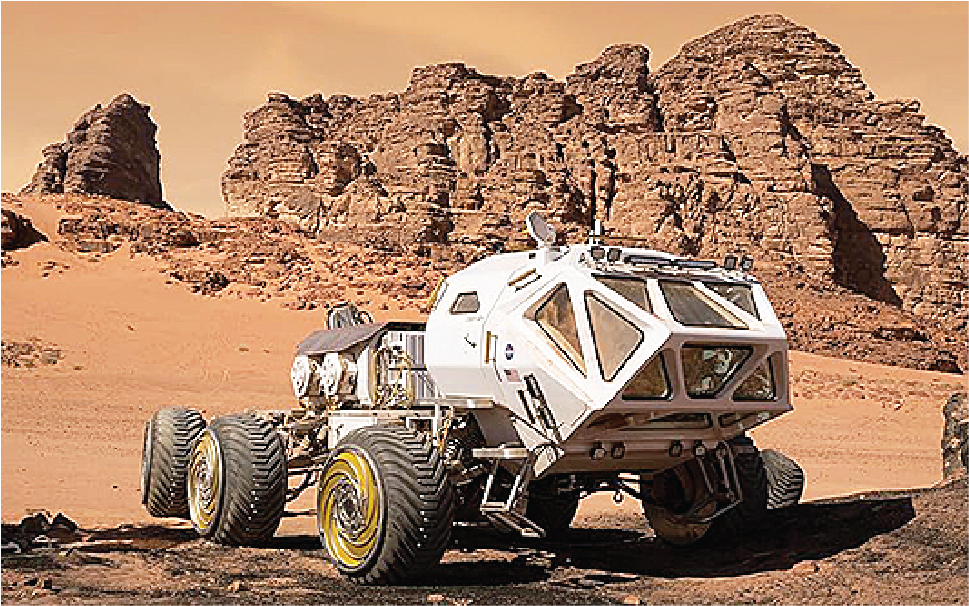
Scott accurately had his effects team paint the Martian sky with a reddish-orange glow. In fact, the sky on Mars is this color because of all the Martian dust. The sunsets and sunrises on Mars are blue because the atmosphere on Mars is so thin. One day — or “sol,” scientists call it — on Mars is 37 minutes longer than a day on Earth.
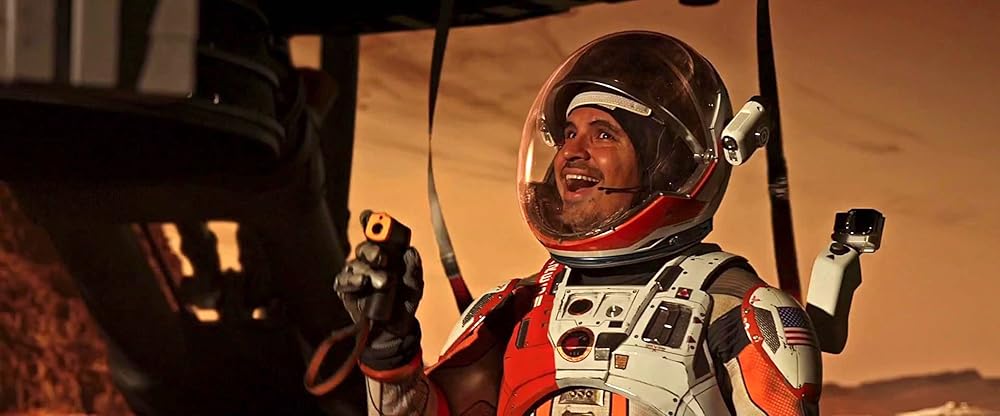
Scott didn’t like NASA’s designs for future space suits. He said he thought they looked “exactly like a Buzz Lightyear suit.” Instead, Scott had his costume designer build suits based on designs he had used in his film “Promethius” in 2012. The visors on actors’ helmets were added digitally to prevent reflections of cameras and crew appearing on film.
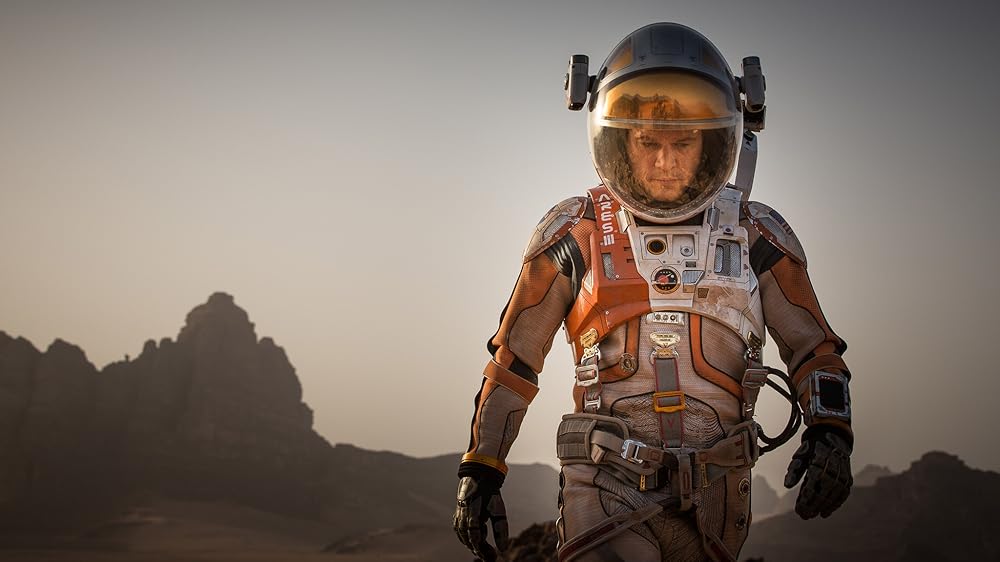
Actual potatoes were grown in a garden built on the sound stage next to the one used for filming. This way, the crew could have different sized potato plants to depict different stages of growth. In the film, Watney fertilizes the plants with human waste and creates water from rocket fuel. A NASA botanist said there was no reason this wouldn’t work in real life.

Scott worked with NASA to make the film as accurate as possible. Neil deGrasse Tyson called “The Martian” the most accurate film he has ever seen in regards to astrophysics. British physicist Brian Cox said the film “is the best advert for a career in engineering I’ve ever seen.” President Barack Obama called “The Martian” one of the best science fiction films of all time.
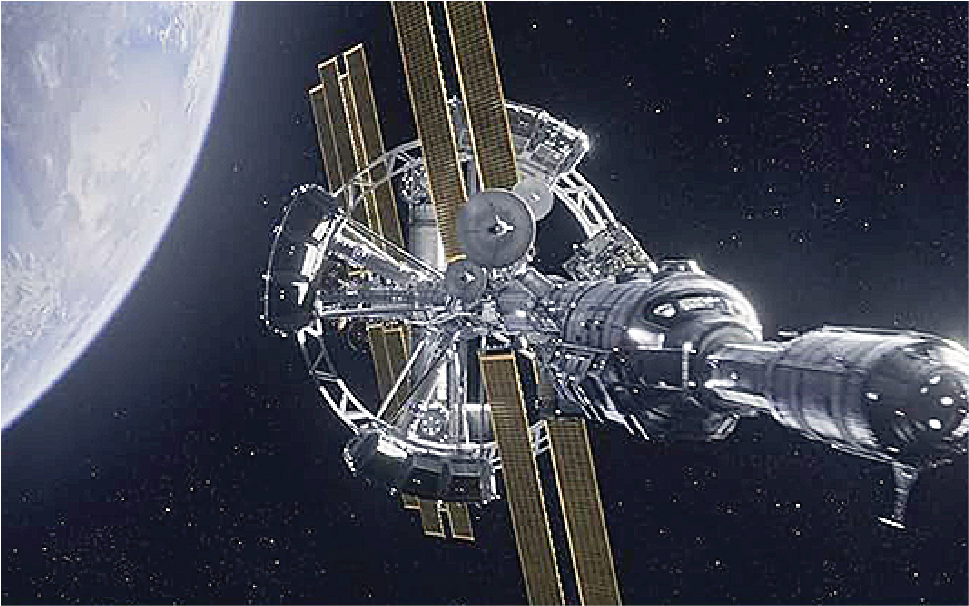
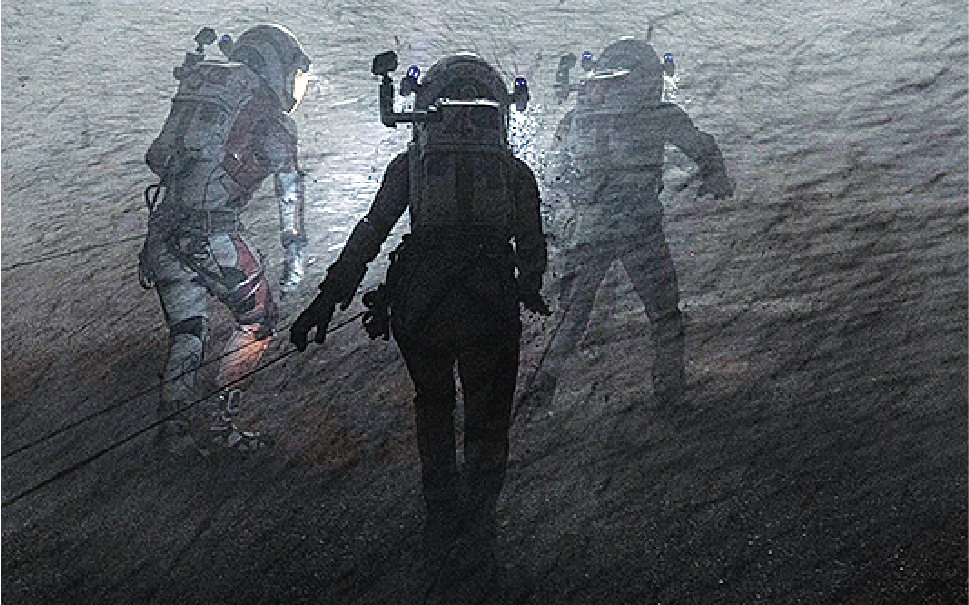
The one part of “The Martian” that scientists say is not accurate is the dust storm that results in Damon’s character being stranded. While there are, in fact, giant dust storms on Mars, the atmosphere there is so thin that the most an astronaut might feel is “a breeze,” one NASA scientist said, “but it wouldn’t be knocking you over.”
“The Martian” was nominated for seven Academy Awards but won none of them. In addition, it was nominated improperly for Golden Globes. “The Martian” won Best Musical or Comedy and Damon won for Best Actor in a Musical or Comedy. Damon’s character does reluctantly listen to a colleague’s disco playlist in the film, so please insert your own wisecrack here.
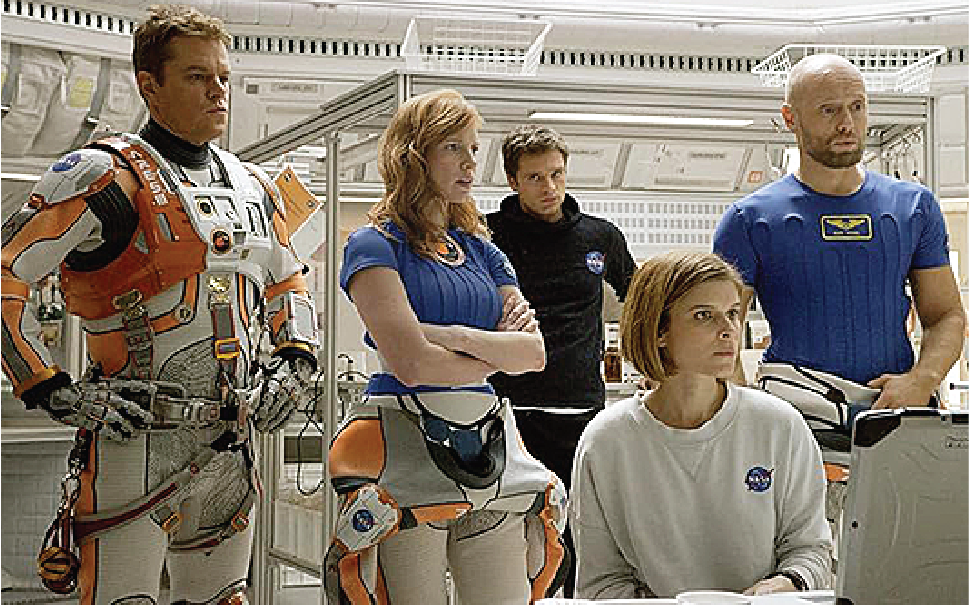
At one point in the script, a NASA psychologist wonders how Watney passes the time when in isolation. Watney volunteers a question he pondered: “How come Aquaman can control whales? They’re mammals! Makes no sense!” Weir has said not seeing this in the final cut of the film was his biggest disappointment. It is included as a bonus on the Blu-ray disc release.

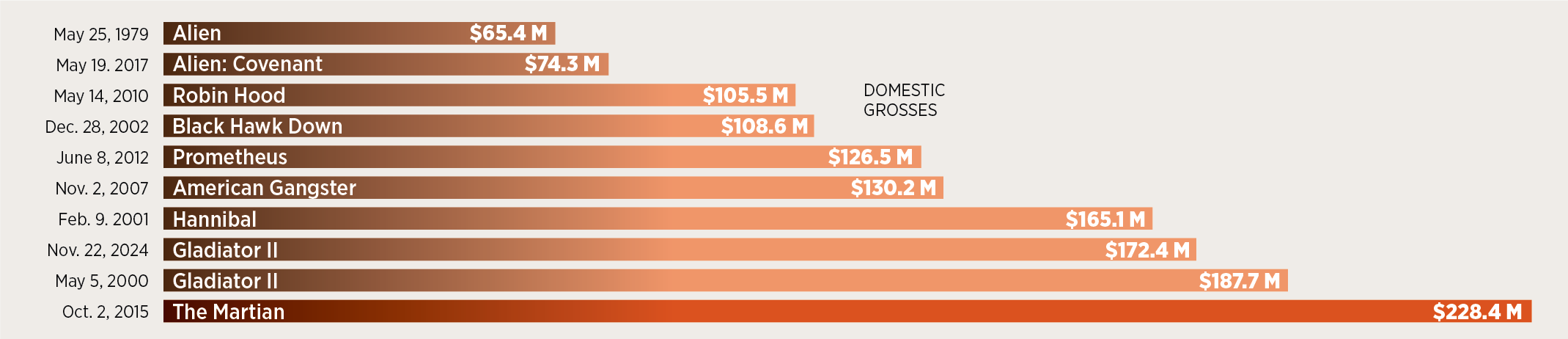
Ridley Scott's 10 Biggest Box Office Hits
Scott has been nominated for three Academy Awards for directing. One of his films, “Gladiator,” won the Oscar for Best Picture.
“The Martian” was nominated for seven Academy Awards, including Best Picture, Best Actor, Best Adapted Screenplay, Best Production Design and Best Visual Effects.