Originally, the president of the United States and his family lived in what was officially called the Executive Mansion.
In 1901, however, President Theodore Roosevelt decided he disliked that name, so he declared that from then on, the building would be known as the name just about everybody already called it anyway: the White House.
Here’s what’s inside the White House and a little about how it became the landmark it is today:
Welcome to the White House
The White House has been the home of the President of the United States since 1800. In that time, it's been repeatedly redesigned and renovated to meet the needs of its powerful residents. Here's a rundown of the building and its many rooms and changes over the years.
The Residence: Third Floor
Each family of occupants is granted a budget to redecorate the family living spaces on the top two floors to their liking — for example, Hillary Clinton converted a bedroom into a music room where her husband, the president, could play his saxophone without bothering Hillary and Chelsea.
The Residence: Second Floor
Originally, the second floor of what is now called the residence served as both living and working quarters for the president. The famous Lincoln bedroom, for example, was never Lincoln's bedroom: It was his office. Eventually, the executive offices migrated to what would become known as the West Wing, and what had been a large storage attic was converted to private living spaces for the president and his family.
The Residence: First Floor
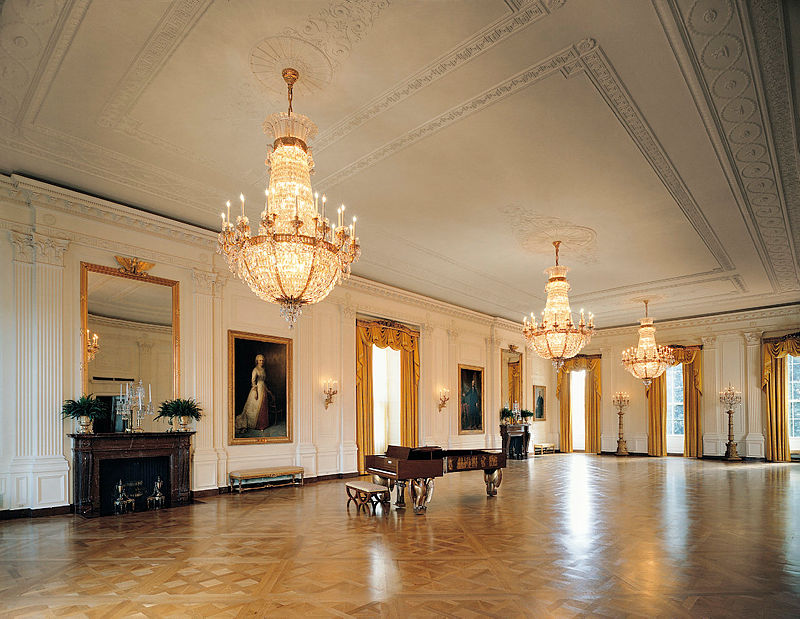
The first floor features the largest room in the White House: the East Room. Designed by the original White House architect as a "public audience room," it's used for ceremonies, receptions, concerts, banquets and press conferences. The famous portrait of George Washington that Dolley Madison saved when the British burned the White House in 1814 hangs here.
The Residence: Ground Floor
The ground floor of the White House residence contains a wide assortment of rooms, from receptions to recreation areas — like the bowling alley that was installed during the Truman administration.
The East Wing: Second Floor
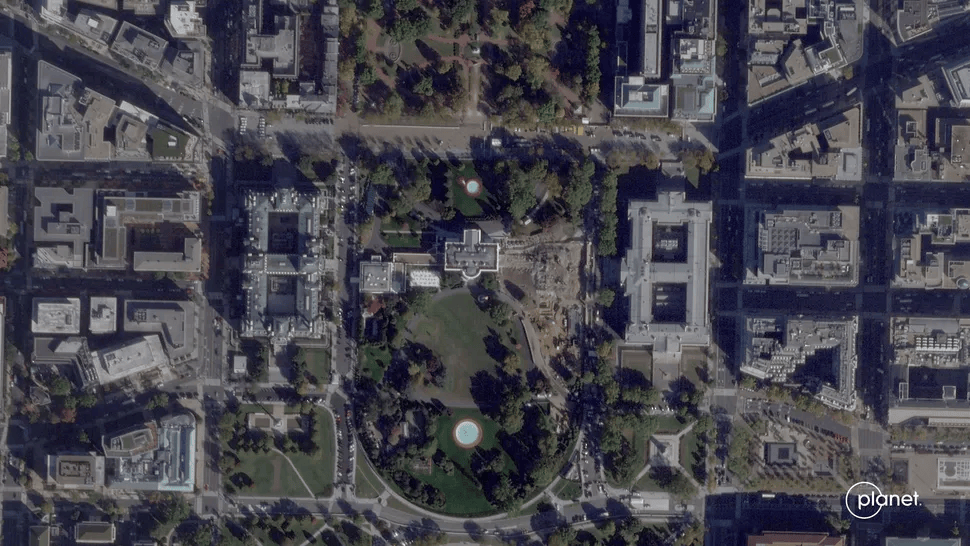
The second floor of the East Wing historically served as office space for the first lady and her staff. In October 2025, it was demolished as part of President Trump’s plans to renovate the ground-floor ballroom.
The East Wing: Ground Floor
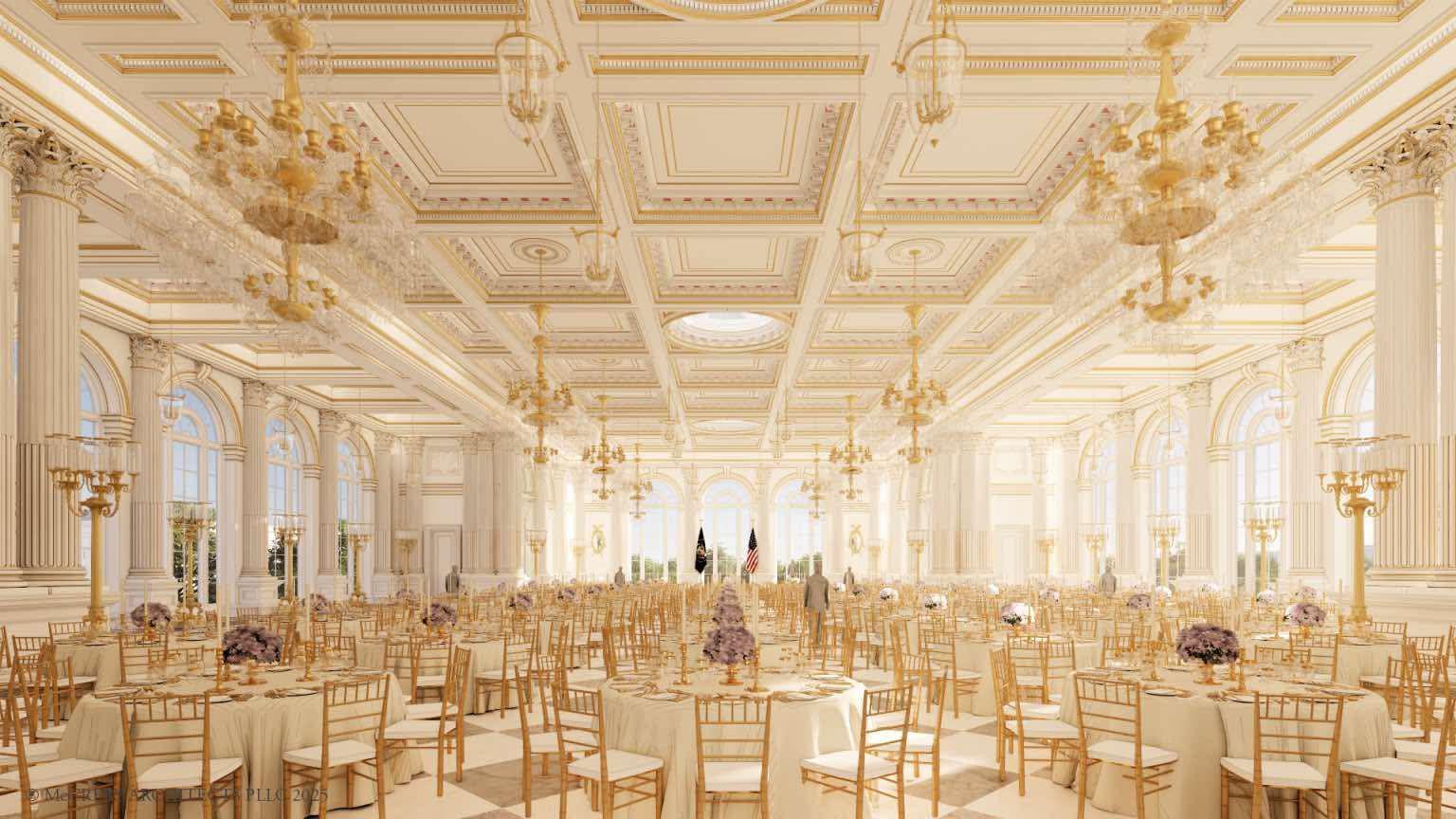
The ground floor of the East Wing historically included the visitors entrance and the White House theater. It will host Trump's 90,000-square-foot ballroom (see below).
The West Wing: Second Floor
The second floor of the famous West Wing houses numerous offices, dispensed as needed by the administration. Usually this floor is for the offices of economic and presidental advisors.
The West Wing: First Floor
Unhappy with the size and layout of the president's suite of offices, President Franklin D. Roosevelt had the West Wing renovated and the Oval Office moved to its current corner location. Many presidents have used the Oval Office for meetings, choosing to perform their day-to-day duties in a small private study nearby.
The West Wing: Ground Floor
President John F. Kennedy ordered the creation of a situation room after the Cuban Missile Crisis in 1961. It's part of a 5,000-square-foot suite of three secure conference rooms plus a duty watchstation and serviced by a staff of 130.
Sub-Basement
A sub-basement and mezzanine level of the residence, added during the 1948-1952 renovation, contains air conditioning and heating systems, an incinerator, elevator machinery rooms, a laundry room, a medical clinic, a dentist's office and storage spaces.
The East Room
Designed by the original White House architect as a “public audience room,” the largest room in the White House is used for ceremonies, receptions, concerts, banquets and press conferences. The famous portrait of George Washington that Dolley Madison saved when the British burned the White House in 1814 hangs in the East Room.
Photo sourced from The White House
A History of the White House
1792: Construction begins on a mansion for the president.
1800: John Adams becomes the first president to live in the Executive Mansion.
1801: “Water closets” are added to the upper floor to replace the need to walk to the outdoor privy.
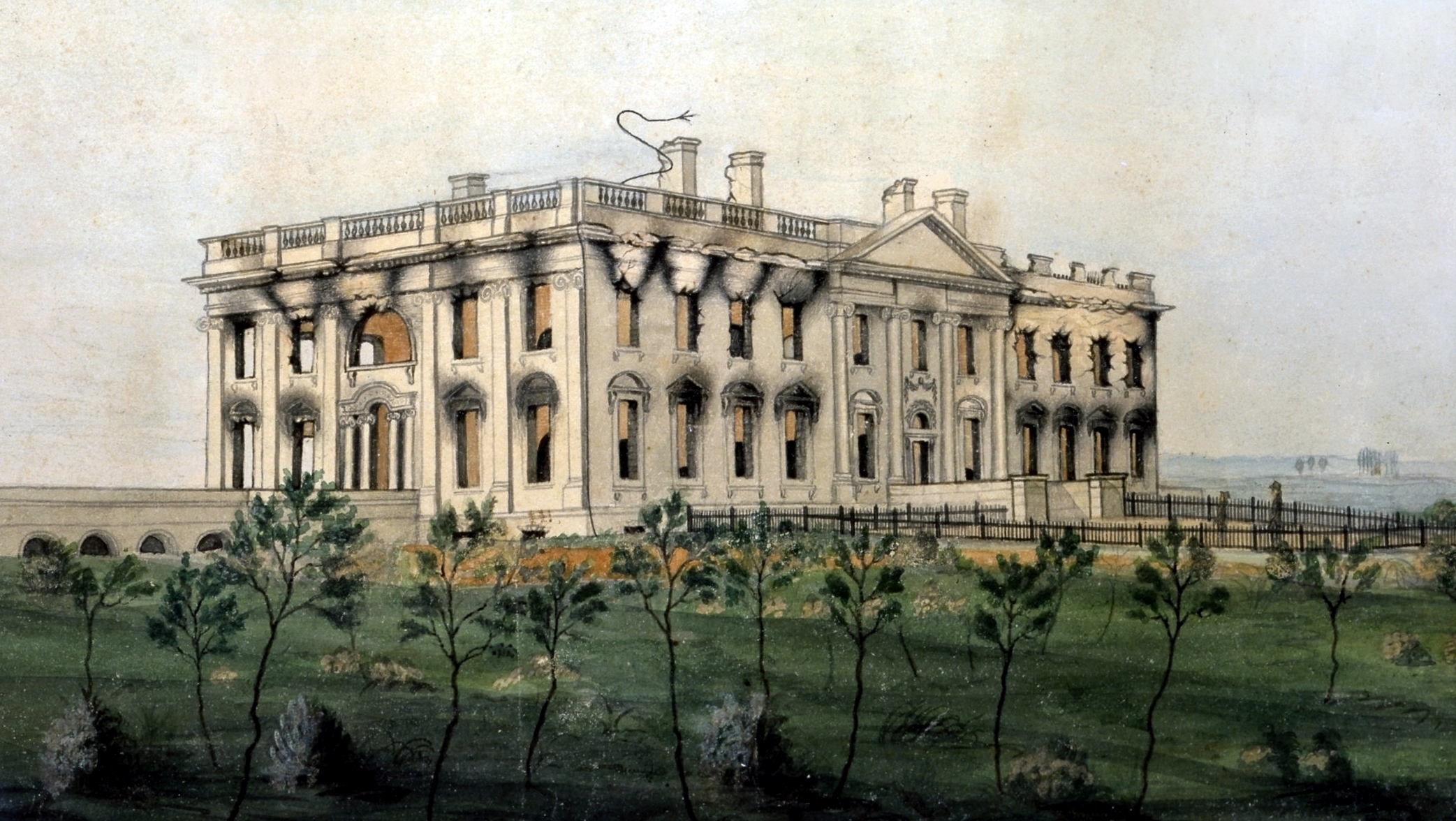
1814: The Executive Mansion — and much of Washington, D.C. — is burned down by invading British troops.
The Executive Mansion after British troops burned it on Aug. 24, 1814. It would be three years before the mansion was habitable again. Photo sourced from The White House.
1817: With repairs complete, the Executive Mansion is occupied once more when James Monroe moves in. While much of the building had to be reconstructed, the original walls were preserved.
1825: The North Portico is added.
1830: The South Portico — the famous round-shaped one — is added.
1834: Columnated terraces are added to each side of the mansion.
1835: Running water and central heat are added.
1891: Electric lights replace gas lights in the mansion.
1901: Disliking the name “Executive Mansion,” newly sworn-in President Theodore Roosevelt orders the building officially referred to as “the White House.” Formal stationery is ordered displaying that name.
1902: Roosevelt embarks on an ambitious expansion campaign. He has a facility built to the west of the main building and moves most of the executive branch offices there. He also has a small building constructed to the east to serve as a formal social entrance for the White House.
1909: Roosevelt’s office building is expanded. A large room is added to serve as the president’s office.
1927: While repairs are made to a leaky roof, the White House attic is rebuilt and rooms are added to the third floor.
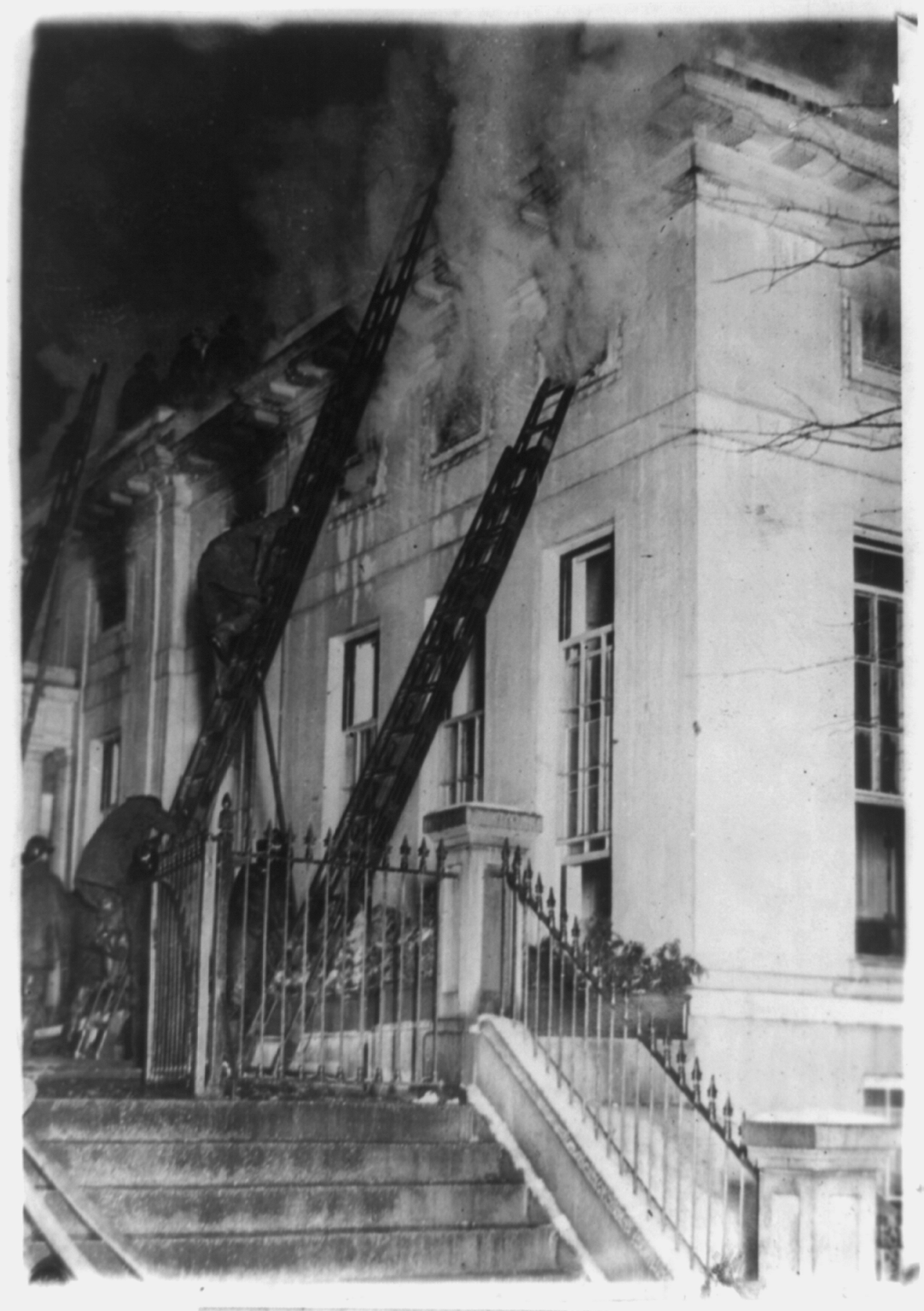
1929: A fire breaks out in the storage attic of the West Wing, damaging much of the presidential office suites.
The attic of the West Wing on fire on Dec. 24, 1929. Photo sourced from National Archives.
1933: The West Wing is remodeled and expanded again. The Oval Office is moved to the southeast corner of the wing, where it is today. In addition, President Franklin D. Roosevelt has a small pool built in the West gallery.
1942: The East Wing building that exists today is built — primarily to hide the construction of a new underground bunker and emergency operations center.
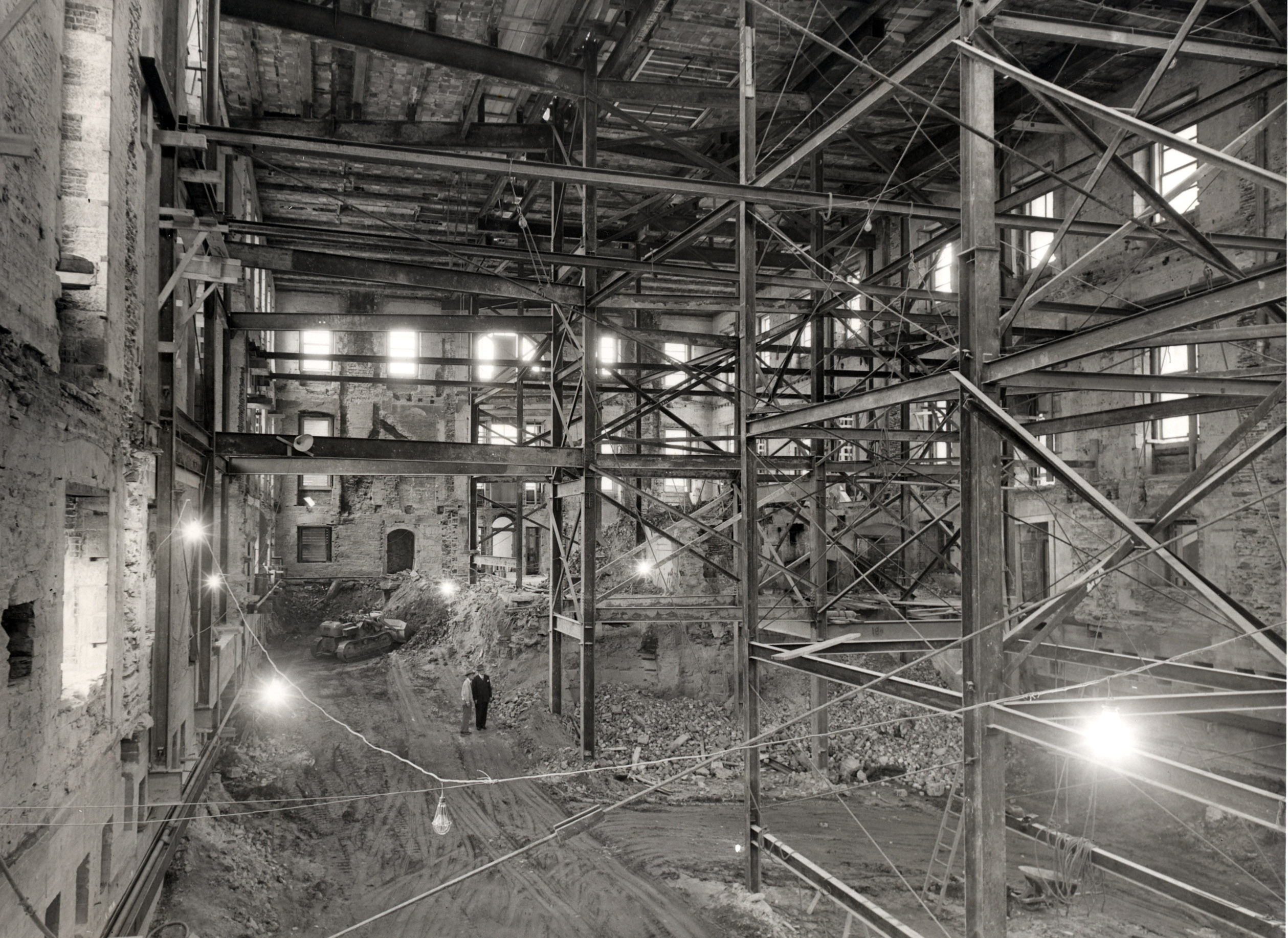
1948: A second-floor balcony is added to the South Portico. Shortly afterward, the entire White House is found to be structurally unsound. President Truman moves across the street into the Blair House while the building is gutted and rebuilt from the inside out, leaving the original walls intact.
By the 1940s, much of the aging wooden interior structure of the White House was in poor condition. Rebuilding the interior with a modern steel frame while keeping the original walls intact cost $5.7 million. For three years and four months, President Harry Truman and his family lived across the street in the Blair House. Photo sourced from The White House.
1961: First lady Jacqueline Kennedy embarks on an ambitious plan to redecorate the White House using period-authentic furnishings. She also creates a Rose Garden on the South Lawn.
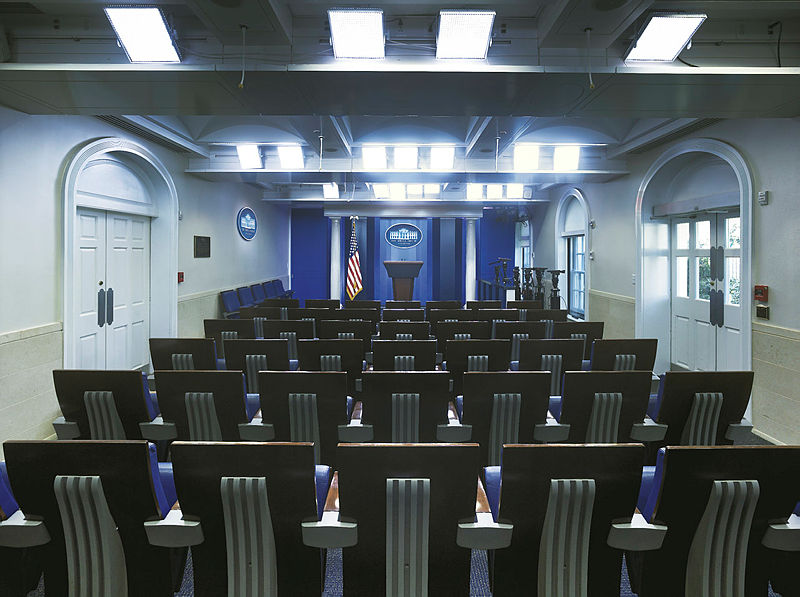
1970: The pool and gym in the West gallery are covered over and converted into offices for the White House Press Corps.
The White House briefing room has seating for 49 members of the media. Photo sourced from The White House.
1977: Rosalynn Carter becomes the first first lady to have her personal office in the East Wing.
Early 1990s: The exterior of the White House is stripped of up to 40 layers of paint and the original sandstone walls are refurbished.
2025: The East Wing is torn down for renovations
Renovations of The East Wing
A photo of The White House, provided from Planet Labs PBC showcasing the destruction caused during the renovation of the East Wing.
Originally built in 1902 by the Roosevelts to serve as a formal entrance to the White House, the East Wing has long served as the home of the First Lady; and as a hub of the United State's soft power, hosting diplomatic and social meetings through the years. The historic White House family theater, one part of this strategy, has been torn down, though the administration insists they are taking efforts to preserve cultural artifacts from the East Wing.
The renovation of the East Wing for its new ballroom has come under fierce criticism, drawing accusations of conflicts of interest - stemming from President Donald Trump's insistence that the makeover will be wholly private funded. With construction of the ballroom starting during a government shutdown, in which millions of Americans have their food security threatened, it has become a target for critics of the president.
The new ballroom is expected to be 90,000 square feet large, and will reportedly be able to seat 1,000 people according to President Trump. It is expected to cost 300 million dollars, being funded largely by donors such as Palantir and Lockheed Martin.
A rendering of the new ballroom provided by The White House.
Sources:
“The White House: An Illustrated Tour” by Bill Harris, “The White House: An Historic Guide” by the White House Historical Association, “The Living White House” by the White House Historical Association, “The White House and the Presidency” by Earl Schenck Miers, “The President’s House” by Margaret Truman, the White House Museum, the White House Historical Association, WhiteHouse.gov, WhiteHouseHistory.org, CNN