Counting On You: The history of the U.S. census
On Aug. 1, 1790 — 235 years ago Friday — the first Constitutionally-mandated U.S. Census was completed.
While those of us who love data enjoy poring over the results of each decade’s census, the counting didn’t begin as a way of gaining scientific knowledge.
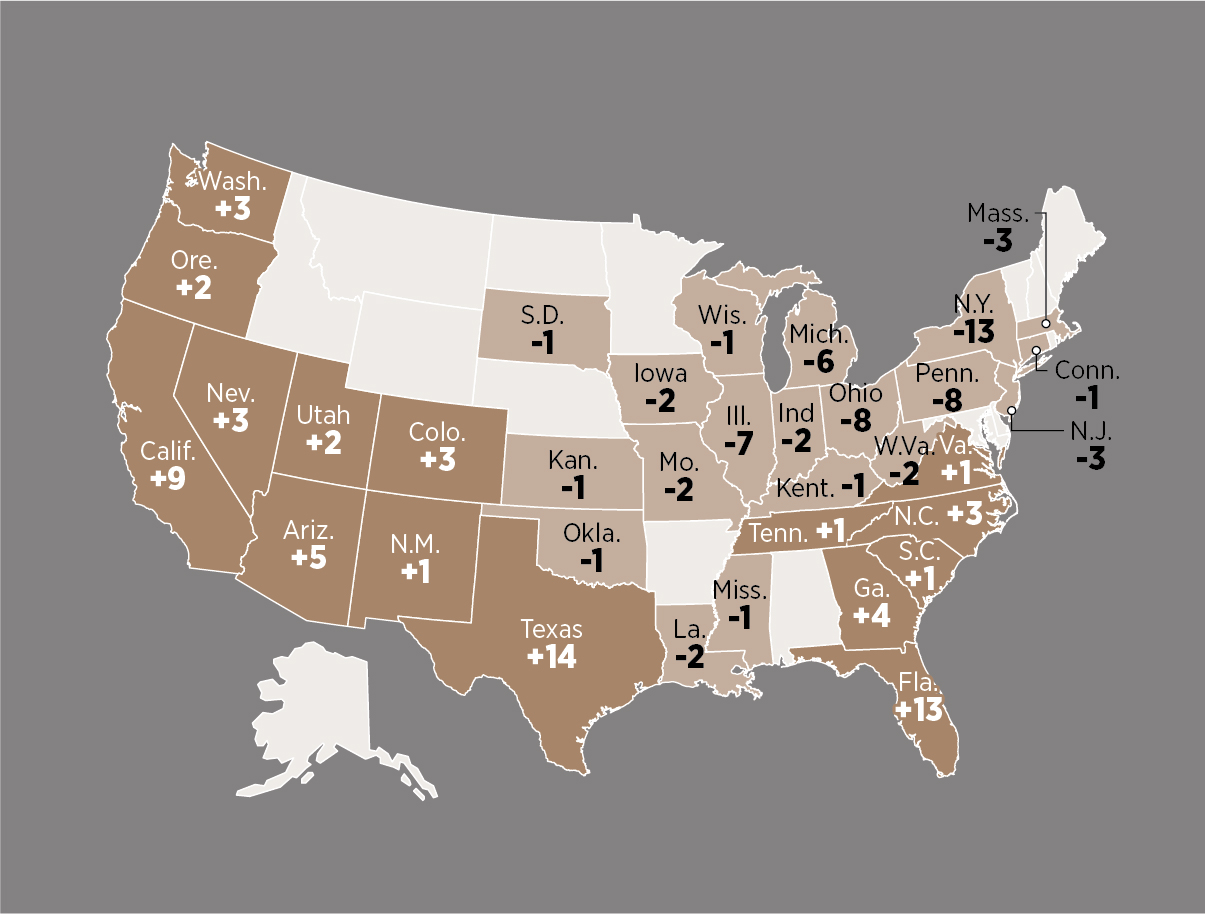
The point of the census was to determine how much population states gained or lost compared to others so Congressional seats could be reapportioned every decade.
Counting The People
The Constitutional Convention argued long and hard about the makeup of its two legislative bodies. It was eventually decided to give each state two members in the Senate and to apportion members of the House depending on that state’s population.
The first step in doing this, naturally, would be to take a measure of each state’s population. Therefore, it was written into the Constitution that a population count of the entire nation would be taken every ten years. The Constitution also stated: that this count should be of “free persons;” that Indians who didn’t pay taxes should not be counted; and that the apportionment should take into account three-fifth of all other persons — in other words, slaves.
Congress put this count in motion in its second session by passing a law that delegated the actual work of the 1790 census to the marshals of the U.S. judicial districts. That would remain the custom through the 1840 Census. The law specified for workers to take an oath, to be paid for their work and also penalties for failing to turn in data or falsifying data.
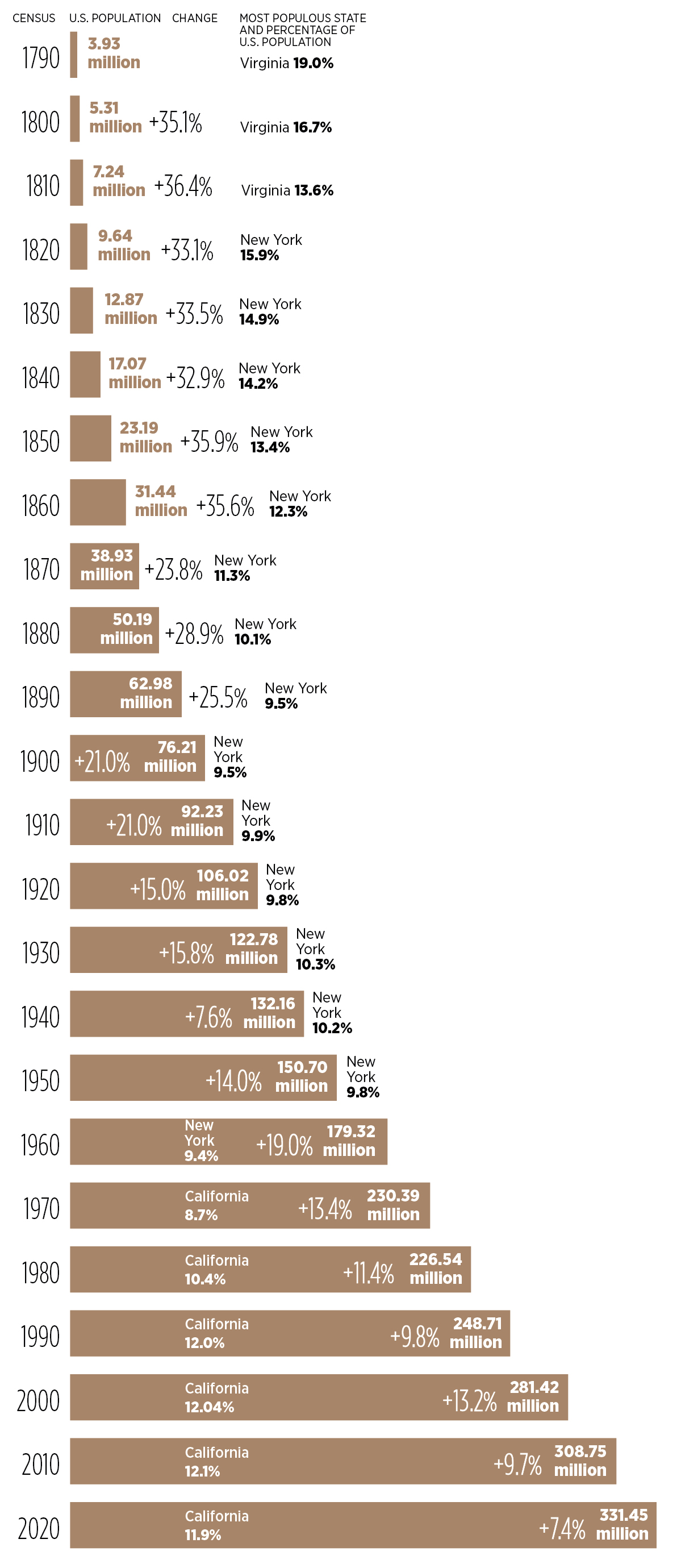
The first U.S. census was completed on Aug. 1, 1790 and was published the next year. It showed a population of 3.9 million Americans and that Virginia was the most populous state with 747,610 residents — 39% of those residents were slaves who were indeed counted.
“On every side, loud complaints were heard — both of the results of the census and of the methods used,” wrote Edward C. Lunt in a report he wrote in the summer of 1888 for the American Statistical Association. “In sending abroad copies of the first census, President Jefferson was at some pains to point out the deficiencies of the work and to supply omissions.”
The final cost of the first census and the resulting 56-page report was $44,377.28 — that’s $1.55 million in today’s dollars. Compare that to the estimated $14.2 billion it cost to compile the 2020 census.
Over the years, the data compiled by census takers expanded. In 1810, the U.S. Marshals began collecting data on American manufacturers. In 1820, they began asking about rural families’ “agricultural pursuits.” By 1830, they had stopped taking raw notes and were filling out preprinted forms with the data they collected.
In 1849, Congress established a census board to take on the duty of data collection and responsibility for the census moved from the State Department to the Department of the Interior. In 1872, the work was made a bit easier with the addition of new “mechanical tallying machines.”
In 1951, the Census Bureau received the first nonmilitary computer, the UNIVAC I (below).
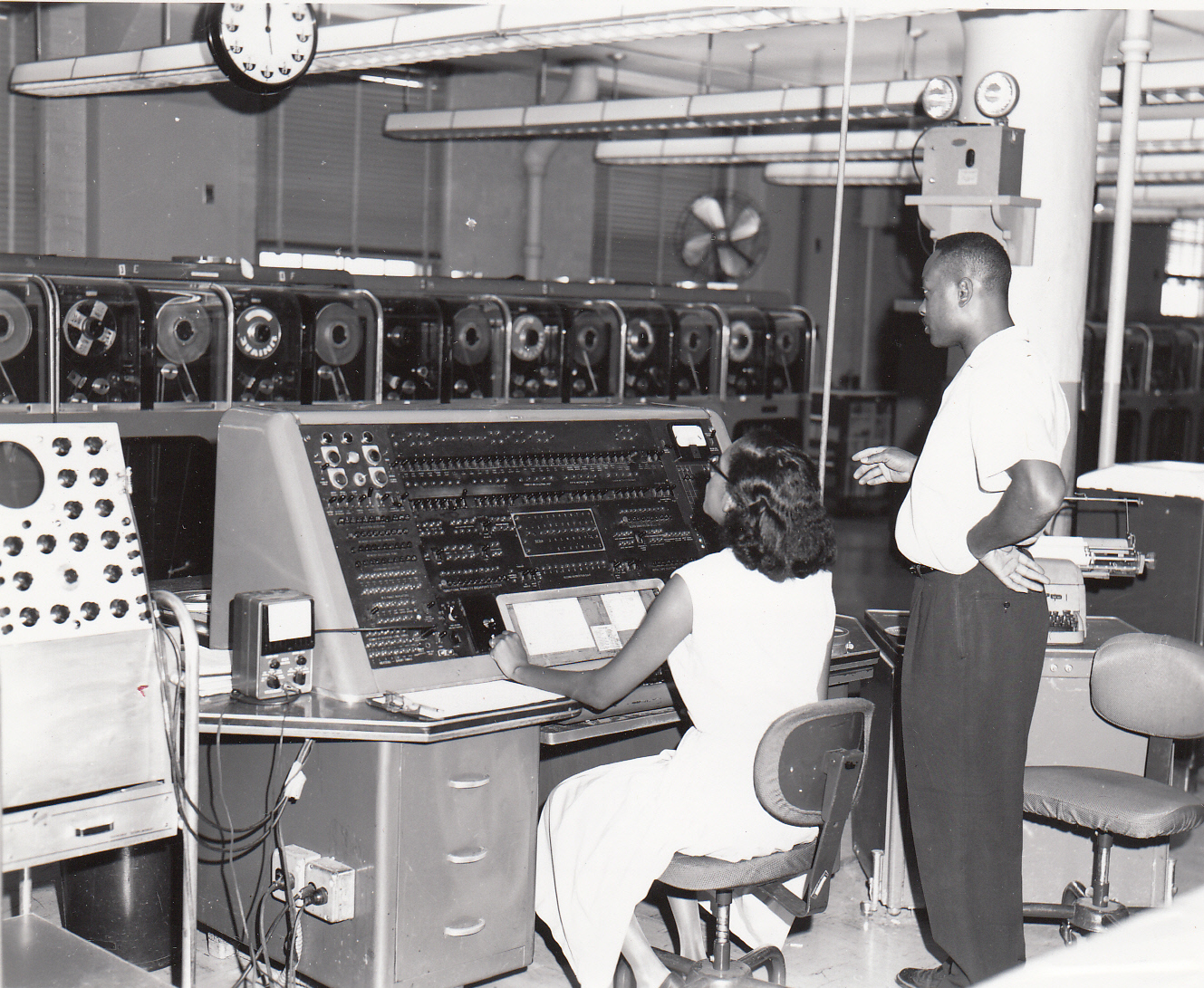
U.S. Census Bureau
The Six Questions of The First Census Form
- The name the head of the family
- The number of free white males over age 16
- The number of free white males under age 16
- The number of free white females
- The number of all other free persons
- The number of slaves
Census Tallies Since 1970
The Median Age of Americans
Our country is growing older ...

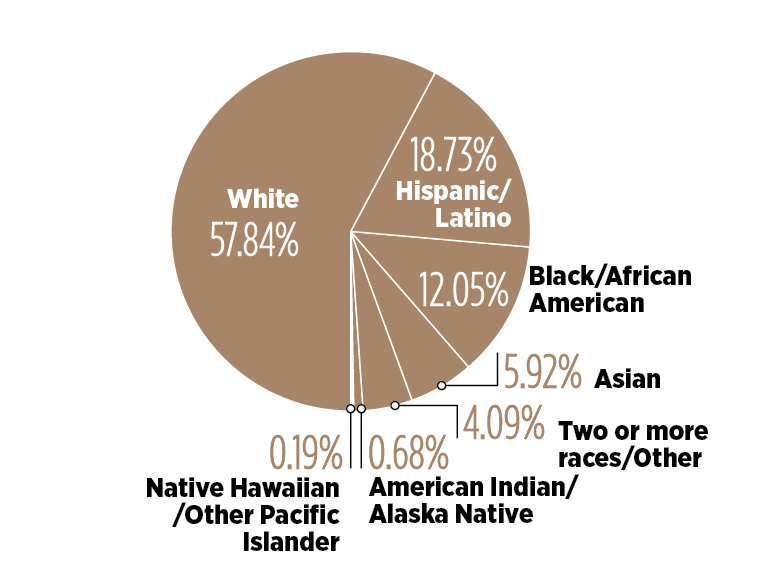
Americans By Race
... and more diverse
The Result of The Census Work
The net change in House seat apportionment in the 50 years between the 1970 census and the 2020 census: