
A few tactics in the war against wasps
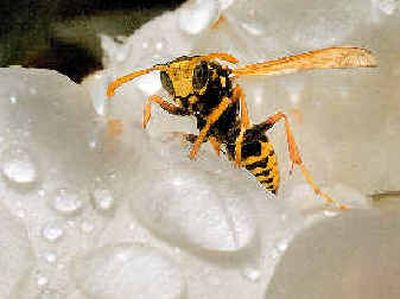
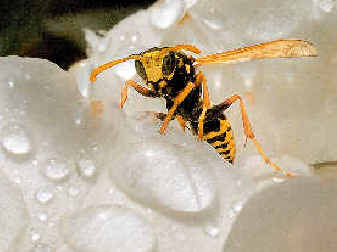
Watching people flail at the sight of yellow jackets is always amusing.
Every summer, these pesky critters go on the attack in search of food. Invariably, people who are allergic or just plain afraid go scurrying for cover.
It happened again on Sunday.
I drove to Rathdrum for a get-together, and I was just about to dig in when the yellow jackets, or wasps, descended on our quiet party. One of the diners decided to fight back with a fly swatter. He was deadly with his aim, but the big swat had consequences. Barbecue sauce splattered across the table – and into my wine glass.
This is when I realized that yellow jackets truly are a menace, and the problem required a more methodical approach.
I called Northern States Pest Control in Coeur d’Alene.
“A couple of my guys said it’s one of the worst years they’ve seen,” said the woman on the other end of the line.
She told me a story about one family whose kids were being held as virtual prisoners inside their house.
“They are nasty this year,” she said of the wasps, but she declined to divulge any company secrets.
Apparently, the mild weather in late March and April allowed yellow jacket queens to get busy early, so their colonies had extra time to grow.
Lucky for us, there are some effective weapons against the dreaded yellow jacket. Not all of them involve calling an exterminator, although an exterminator might be a good idea if you are being held prisoner by insects.
I subscribe to low-tech approaches. My first line of defense is to blow on them. This discourages them from bugging you and usually sends them on to someone else. A friend at the barbecue suggested placing dryer sheets on the table as a repellant. It seemed to work.
Certain foods, such as fish, meat, fruit and soda pop, act as magnets for yellow jackets this time of year. That’s because their natural food sources, i.e., other bugs, are declining as the summer wears on. It’s kind of disgusting to think about, but yellow jackets aren’t grabbing at protein snacks because it’s some new diet fad. No. They chew up the stuff and then feed it to the little ones back in the nest. If you watch them carefully enough you can find the nest by following their flight back to it, the origin of the word beeline, but I digress.
Anyway, the larvae get the chewed-up protein, and the adults get something they really crave – a sugary excretion given off by the larvae. The process is known as trophallaxis, which is Latin for ick. If there aren’t enough larvae in the nest, then the yellow jackets get hungry for sugary stuff, too.
Rick Safran, of Northwest Seed and Pet at Sprague and Arthur in Spokane, said he has ways to deal with the problem. The right choice depends on how you want to engage the enemy. He said he once used fish scraps placed across the yard to lure them away in what’s known as a diversionary tactic.
I was drawn to a device that looks like a miniature tennis racquet. But it is so much more. The Racquet Zapper, for $10.99, comes complete with batteries that send an electrical charge into a wire mesh. One flip of the wrist, and it’s sayonara, Mr. Yellow Jacket.
“It’s fun,” Safran said. No kidding. But isn’t it dangerous around people and pets? Safran pointed to the large print on the back of the package: “This shocking experience should be saved for the bugs.”
Yellow jacket traps are another option. Safran suggested that I put in a plug for the Rescue Yellow Jacket Trap because it’s being marketed by a Spokane Valley firm, Sterling International Inc., for $11.99. Just use common sense and don’t put the trap too close to the picnic, please.
If you find a nest, Safran’s got Red Circle foam that shoots a stream of insecticide up to 20 feet into the nest opening. Here, you’re crossing the line into exterminating, in which case you might be better off hiring a professional. If you must, wait until dusk when all the yellow jackets are home for the night.
Just don’t call me if they come screaming out seeking revenge.