
Terror alerts wear on workers
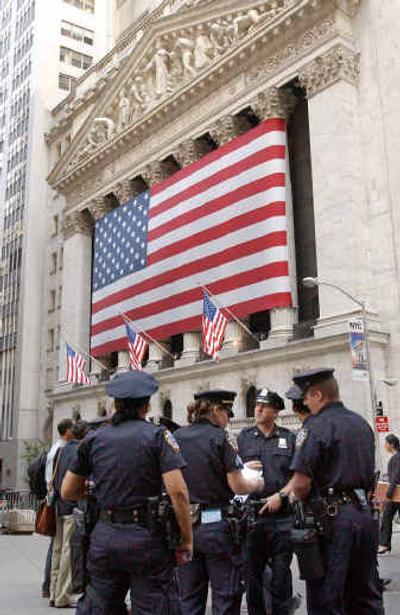
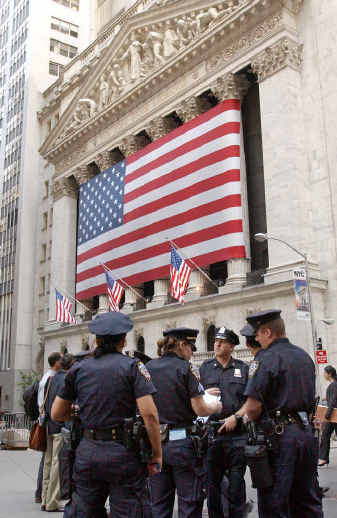
NEW YORK – When the government warned of a possible terrorist attack this week, it didn’t take long for the phones to start ringing at employee counseling firm EAP Consultants Inc.
Like the call from a woman with a job in lower Manhattan who asked to speak with one of EAP’s counselors but insisted on a session by phone rather than at her office. The alert had frightened her so much, the woman explained, that she was afraid to leave her house and was staying home from work.
“It’s been going on chronically since 9-11, and after the alert last weekend, it just raised the tension level,” says Sandy Rosenberg, director of EAP, a Marietta, Ga., company retained by employers to counsel workers under stress.
Heightened fear of terrorism is dialing up already high pressure levels in some U.S. offices and factories, further distracting people from their jobs and causing more friction between co-workers, counselors say.
Workers rarely specify or even know why they’re stressed. But on-the-job tensions appear to be rising, especially in New York and other cities that have been identified as terror threats, because of separate but increasingly connected events. As election year politics heat up, campaign rhetoric focuses increasingly on security that government alerts and inquiries highlight.
“Tempers are very short, patience is very poor, the anger level is there, and people just are very tense,” says Fran Galante, executive director of Managed Care Concepts, a Boca Raton, Fla., firm that runs employee assistance programs under contract with employers. “It doesn’t take much at all to get something going.”
The change, Galante says, is evident in a 50 percent jump in her company’s caseload during the past three months – nearly 1,900 more calls from troubled workers or their managers than in the same period a year ago.
Many companies have tightened security since the September 2001 terrorist attacks and drawn up plans for dealing with such a crisis, and those efforts do offer workers some reassurance. But most U.S. businesses are geared to react to actual problems. Few try to address the vague but potentially troubling changes that can be ignited by rumors and opinions, Galante says.
That’s understandable but also ironic because the emotions stirred by recent events are exactly the kind most likely to cause stress, said Henry Patterson, a professor of applied psychology at Pennsylvania State University’s Berks-Lehigh Valley College in Redding, Pa.
Stress is part of any job – the normal result of having demands placed on people over which they have limited control, he said. At some level, a degree of stress can be positive.
“But you add this whole thing of terrorism threats, which virtually no one has control over, and it adds a whole other level of stress,” Patterson said.
In some workplaces, tensions were already simmering. Summer is usually a time when job stress eases, with many people taking vacations and workers’ worries about life at home – particularly those centered around children and schools – temporarily put aside, counselors say.
But differences over presidential politics appear to have fueled strong opinions that some workers have difficulty keeping to themselves.
Galante cites a call her company received about a month ago from a Florida company. A pair of managers had been sitting at adjoining tables in the company cafeteria during lunch hour. The woman began expressing her support, quite loudly, for President Bush and tried to pull her colleague into the conversation. He resisted. She insisted. When he continued to resist, she suggested the co-worker’s reluctance to speak up was because he wasn’t a Christian. An argument exploded as colleagues watched nervously, capped only when more senior executives intervened.
“People are paying a whole lot more attention to the national election because there’s a lot more talk at the water cooler about it, and people are very, very polarized,” Galante said.
Those feelings are by no means universal. Rosenberg’s office in New York is busy counseling workers stressed out about terrorism. But an office in Pennsylvania has seen little change in reports of stress or conflict, about either terrorism or the politics that surround it.
The government’s raising and lowering of its terror alert levels has become so routine that it’s easy to assume that there is no longer any effect on workers.
But some employees may be so unsettled that they settle into a siege mentality, said George Martin, president of CorpCare Associates, which administers companies’ employee assistance programs.