
Prime peak
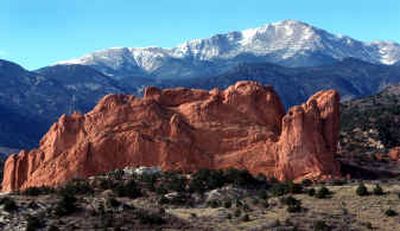
CASCADE, Colo. — Her eyes growing wide, Betty Wood said the family had enjoyed the drive up Pikes Peak, but …
“We’ll never do it again,” she vowed, as clouds rolled in like a cold fog that made it seem more like San Francisco than the summit of one of America’s tallest peaks.
Wood’s husband, David, chimed in: “I never thought I was afraid of heights. We have trees on our mountainsides so you won’t go too far if you go off the road.”
The reaction of the couple from Danbury, N.C., is not at all unusual for the 265,000 people each year who motor up to the 14,110-foot-high summit west of Colorado Springs.
The final 2,000 feet is above timberline with nothing but rocks and tundra on the mountainside. Along one stretch of the 20-mile highway is the so-called Bottomless Pit, a 2,000-foot drop. During storms, lightning is often seen bouncing from rock to rock in the Devil’s Playground.
Pikes Peak is named for explorer Zebulon Pike, who visited the area in 1806 and proclaimed the mountain unclimbable. It was the target for gold miners in 1859 who declared “Pikes Peak or bust.”
By the turn of the century, horse-drawn wagons were taking people to the top, including Katharine Lee Bates, who was inspired to write “America The Beautiful” after visiting the summit in 1893.
At Glen Cove, seven miles below the summit, rangers check the brakes of vehicles headed for home to make sure they aren’t too hot and in danger of failing. Cars with brake temperatures of 300 degrees are asked to wait until things cool off.
For those not wanting to drive, a cog railway winds its way to the summit from Manitou Springs. Officials say the combination of the road and train — plus a few hardy bikers, runners and auto racers — means more than 500,000 annual visits. That makes Pikes Peak the most-visited mountain in the nation and second only to Mount Fuji in the world.
At the Summit House, with gifts, snacks and spectacular views of the Plains and the towering spires of the Colorado Rockies, supervisor Jeff McMullen keeps an eye on new arrivals.
“If they look woozy we will escort them to a table,” said McMullen, whose staff includes trained EMTs. Oxygen is kept at the ready.
Summit House provides a welcome shelter from sun, wind and rain — and a break from driving the steep road that is open year-round, depending on the weather. But the road itself is changing.
In 1999, the city of Colorado Springs, which owns the road through the Pike National Forest, settled a lawsuit with the Sierra Club and agreed to pave the road to reduce erosion. Then, only the first seven miles were paved. The rest was gravel.
Project manager Jack Glavan said the Forest Service then decided that not only must erosion be controlled but the highway should be brought up to federal standards. That means the road must be 30 feet wide with guard rails in some of the more frightening stretches. Steep grades may be changed.
“It will lose its charm for some. Other people will feel safer,” said Glavan, who fears some drivers will speed up too much, despite the hairpin turns.
So far, about three additional miles have been paved. It costs about $1 million per mile to meet federal highway standards, with the project paid for in part out of tolls generated by the highway. Completion is scheduled for 2012.