
Farmers burn fields despite area wildfires
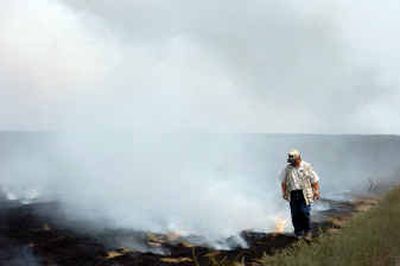
Idaho officials allowed farmers to burn more than 300 acres of bluegrass stubble on the Rathdrum Prairie on Tuesday despite deteriorating air quality from regional forest fires.
Idaho state Department of Agriculture officials later shut down the burn, the second this year on the Rathdrum Prairie.
Burning started shortly after noon. Sherm Takatori, manager of the state agricultural burn program, was on the scene.
“They shut down on the Rathdrum Prairie because of the impact of the forest fires,” said Linda Clovis, of the North Idaho Farmers’ Association.
A clean-air activist said the field burning should never have been allowed.
“It has not gone well. We are smelling smoke on Highway 95,” said Patti Gora, of Safe Air for Everyone, a clean-air group that monitors the burning and photographs the smoke clouds.
The Idaho Department of Environmental Quality started seeing rising particulate levels in western Kootenai County on Tuesday, said the agency’s Dan Redline. DEQ provides air quality information to the agriculture department for use in burn decisions.
The Spokane County Air Pollution Control Authority’s air quality index also registered moderately unhealthy air by Tuesday afternoon.
“Winds have brought in smoke from regional wildfires, impacting visibility and air quality … we expect the particulate (smoke) to continue to gradually increase,” the SCAPCA advisory said.
“We’re getting a lot of calls from people today asking where the smoke is coming from,” said SCAPCA director Eric Skelton.
The smoke is from several large forest fires burning between Wenatchee and Leavenworth and near Naches, said Kary Peterson of Ecology’s regional office in Spokane.
Some Eastern Washington counties were allowed to burn field stubble on Tuesday, including Adams, Grant, Lincoln, Walla Walla and Whitman. Other counties had burn bans due to fire danger.
But little field burning is actually occurring until after the forest fire burn bans are lifted or until the dryland burn season for wheat stubble in the Palouse and southeastern Washington begins, usually in mid-September, Ecology’s Web site says.