
Defense grant helps flip switch on for sleep research
Go home and take a nap.
Sleep research in Spokane and Pullman may lead to a saliva dipstick to detect fatigue chemicals and predict job errors before they happen. A negative reading on the dipstick could send a worker back to bed.
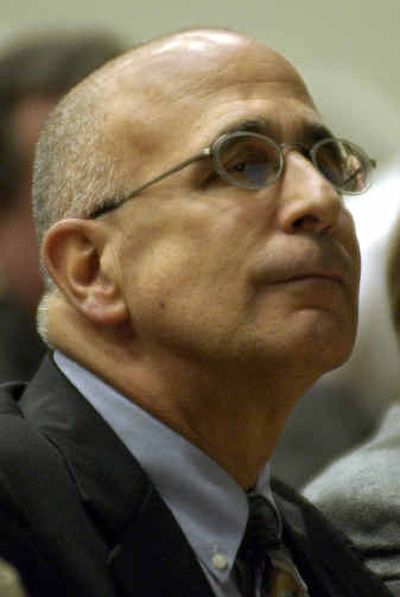
That prediction was made during an event welcoming Dr. Gregory Belenky, the new director for sleep studies at the Spokane Alliance for Medical Research. The event was held Wednesday at Washington State University Spokane’s Riverpoint campus.
Rep. George Nethercutt announced an additional $3.5 million grant from the U.S. Department of Defense to support Belenky’s work. The grant will link basic sleep research on WSU’s Pullman campus with clinical research in Spokane on real people in real-world situations.
“Sleep is a valuable commodity, not only in the military, but in the private sector as well,” Nethercutt said at the event. The alliance is “a partnership that not only produces a product for the taxpayer but also creates jobs.”
The funding is in addition to $50,000 in seed money from the U.S. Department of Labor, $20,000 from the Inland Northwest Technology and Education Center and an earlier $1.5 million grant from the Defense Department.
Belenky will make about $232,000 a year in the new post.
Speakers credited Nethercutt for his support of Spokane’s medical research initiative, which has united university researchers, the medical community and health-care businesses.
WSU Provost Robert Bates said the research alliance will bring 35 jobs to Spokane in the short term and “several hundred in the long term.” In addition, Bates said, the alliance will spark new business ventures.
In the future, the alliance may add centers for research in neuroscience, diabetes, cardiovascular disease and cancer, said its coordinator, Dennis Dyck, associate dean for research at WSU Spokane.
But first, it’s sleep.
“Sleep as a field is on the verge of an explosion of scientific and commercial exploration and exploitation,” Belenky said. “Spokane can be at the center of this, will be at the center of this.”
Belenky is a colonel in the U.S. Army Medical Corps. He previously directed the Division of Neuroscience at the Walter Reed Army Institute of Research, in Silver Spring, Md.
Dr. Jim Krueger, a sleep researcher from WSU’s Pullman campus, made the prediction about the saliva dipstick.
His research on the chemistry of sleep can be combined with Belenky’s work on how chronic sleep loss affects performance, he said.