
Afghanistan begins new chapter
KABUL, Afghanistan – Hamid Karzai’s inauguration as Afghanistan’s first popularly elected president opens a new chapter in the battle to rescue this impoverished country, which became a haven for international terrorism and now risks turning into a narco-state.
Karzai is to be sworn in today in the capital’s war-scarred former royal palace in front of 150 foreign guests, including Vice President Dick Cheney, the highest-ranking American official to visit Afghanistan since the fall of the Taliban in 2001. Defense Secretary Donald H. Rumsfeld also will be on hand.
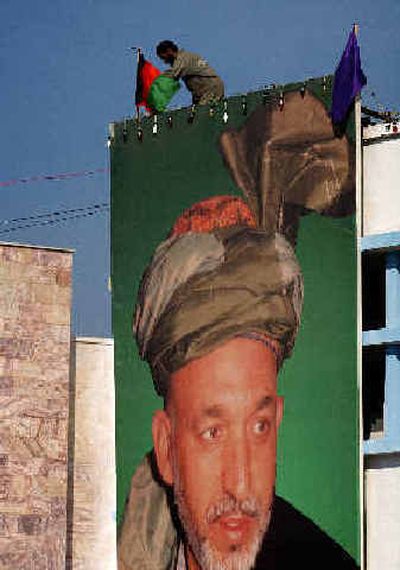
Afghanistan’s red, black and green flag has been hung from lampposts in downtown Kabul, a commemorative blue stamp featuring a triumphant-looking Karzai has been issued, and Tuesday’s proceedings will be shown live on national television — rickety power supplies permitting.
Fearful of attacks by Taliban or al Qaeda militants, Afghan and international forces have launched their biggest security operation since the Oct. 9 presidential election that gave Karzai a landslide victory.
Police have sealed off the 2 1/2 -mile route from Kabul’s airport to the palace, NATO armored vehicles have taken up position throughout the city, and U.S. helicopters have been patrolling the surrounding mountains.
Among the international dignitaries planning to attend are Vice President Dick Cheney and Secretary Rumsfeld. Lakhdar Brahimi, adviser to U.N. Secretary-General Kofi Annan, is attending for the world body.
Annan warned in a report given Monday to the Security Council that unless Karzai tackles the upsurge in opium production and the proliferation of arms, much of the country’s progress in recent years could be seriously undermined, Annan warned.
“Without substantial progress in addressing the sources of insecurity, reconstruction efforts and the establishment of viable state institutions will continue to falter, and the economy may well be subsumed by the illicit drugs industry,” he said.
Karzai’s inauguration offers the opportunity to select a Cabinet “that is able to extend government authority throughout the country and deliver the basic services,” he said.
The installation of the U.S.-backed Karzai is the culmination of a three-year drive to transform Afghanistan from a training ground for al Qaeda extremists into a moderate Islamic republic.
Under Karzai’s leadership, Afghans adopted a constitution described by the United States as the most progressive in the region and held their first Western-style vote despite militant attacks that killed at least 15 election workers.
Some 3 million Afghan refugees displaced by more than two decades of warfare have returned home, and women and girls are back in jobs and schools from which they were barred under the previous regime. The economy also shows signs of recovery.
But Karzai faces daunting challenges during a five-year term likely to determine whether billions of dollars spent maintaining foreign troops here and on painstaking relief and development programs have been in vain.
Insurgents continue to harass U.S. and Afghan forces across a broad swath of the south and east. American officials expect to keep their force strength at about 18,000 at least until after parliamentary elections slated for the spring.
Karzai has said the country’s booming drug economy, which now accounts for an estimated one-third of national income, is a bigger threat than insurgents and will be the top priority for the coming years.