
Tomato squeeze expected to ease

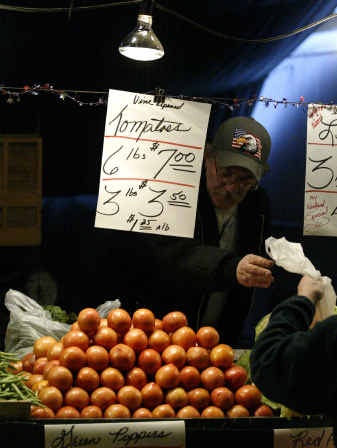
At supermarkets across the nation, shoppers are being confronted with a different kind of tomato dilemma: Pay premium prices or just call the whole thing off?
A triple whammy of rotten circumstances – a rash of Florida hurricanes, a nagging pest in Mexico and a bruised California harvest – has pushed prices skyward. And any way you slice it, consumers and businesses have been squeezed in recent weeks by the tomato shortage that still has suppliers playing catch-up.
Only now are prices easing in some areas as a new crop gets picked in Florida, supplier of about half the domestically produced fresh tomatoes in the nation, including nearly the entire supply from October through June.
The volume of shipments out of Florida in the past couple of weeks has reached about 75 percent of normal. November shipments fell sharply at Florida’s hurricane-raked farms, a spokeswoman for the federal regulator of the state’s tomato industry said.
“This thing has been an ordeal for all of us, but we’re turning the corner,” the Florida Tomato Committee’s Samantha Winters said.
In October, torrential downpours in California halted harvesting at times. That month is a crossover one for the nation’s top two tomato producers, with California dominating the market June through October.
Complicating matters: a pest outbreak that ruined up to 40 percent of production in the Baja region of Mexico, another top source of tomatoes.
True to the laws of supply and demand, the shortage sent prices up. During a typical year, a 25-pound case of tomatoes might cost less than $20; during the shortage, that price in some instances more than tripled. Businesses big and small got bruised.
Ohio-based Wendy’s reportedly delayed its promotion of a line of tomato-topped chicken sandwiches. On its Web site, the fast-food chain still notes that “recent hurricanes have severely impacted the quality and availability of tomatoes. As a result, your Wendy’s may have sporadic outages of tomatoes. We apologize and appreciate your understanding.”
Patrons’ pocketbooks were getting pasted as far away as the Hawaiian islands, where McDonalds was charging 30 cents for a tomato slice on a hamburger. At least for a while, pricey tomatoes made salsa-maker Jim Buddington stew. His Maine-based Sisters Salsa had to lay off its four-person crew when tomatoes shot up from $15 to $60 a case within a month.
Things got so bad that the operation — using 60 cases of tomatoes a day before the price skyrocketed — was forced to shut down for a month starting in mid-November.
Only recently has he managed to resume limited production, doing most of the slicing and dicing himself and still unable to absorb the expense of bringing back his crew.
But Buddington sees prices deflating, having just bought a 25-pound flat of tomatoes for $24. “Certainly the prices have come down,” he said. “I would say the worst is over.”