
Tariffs on Canadian lumber eased
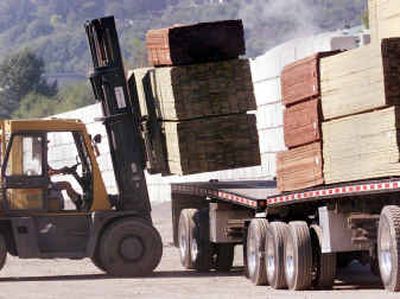
WASHINGTON – The government reduced punitive tariffs on imports of Canadian softwood lumber on Tuesday but by less than Canada had wanted, extending a heated cross-border trade dispute.
Canadian officials denounced the decision and said they would challenge it.
The Commerce Department decision would cut tariffs from an average of 27.2 percent to 21.2 percent. A preliminary U.S. decision had recommended that tariffs be cut in half for easy-to-saw pine, spruce and other softwood lumber used to build homes.
Commerce said the final decision accurately reflected subsidies by six Canadian provinces that allow their producers to sell lumber in the United States at below normal value — at prices that compete unfairly with U.S. producers.
“This is very good news for Idaho’s lumber producers, mill workers and their families who have felt the severe economic impact of the situation for years,” U.S. Sen. Mike Crapo, R-Idaho, said in a press release.
Inland Northwest mill owners point to the flow of cheap Canadian lumber across the border as one of the reasons their industry has struggled in recent years.
In October, local mill owners traveled to Washington, D.C., to stump for continuation of the tariffs. Duane Vaagen, who runs a family-owned sawmill in Colville, and Bill Mulligan, chief executive officer of Three Rivers Timber in Kamiah, Idaho, were part of the contingent.
At the time, the two mill owners said they’d welcome competition from Canadian producers, if the playing field was level. But when lumber prices fall, Canada snaps up more of the U.S. market, while U.S. producers are forced to cut production, Vaagen said in an October interview.
While the U.S. timber industry has generally applauded the tariffs, home builders on both sides of the border say they have driven up the cost of new homes in the United States.
The United States imported about $4.6 billion of softwood lumber from Canada in 2003, about a third of the American market.
“Canada categorically rejects the Department of Commerce determination,” said Jim Peterson, the nation’s international trade minister.
He said the decision differed from those issued by panels of the North American Free Trade Agreement and World Trade Organization. “Panel after panel have consistently said the Canadian softwood lumber producers are fair traders,” Peterson said.
Canada will “pursue every recourse available” through NAFTA and the WTO, Peterson said.
The Bush administration imposed the tariffs in 2002 after accusing Canada of subsidizing its lumber industry. Most U.S. timber is harvested from private land at market prices, while in Canada, the government owns 90 percent of timberlands and charges fees for logging. The fee is based on the cost of maintaining and restoring the forest.
Staff writer Becky Kramer and the Associated Press contributed to this report.