
M’s facing difficult decisions
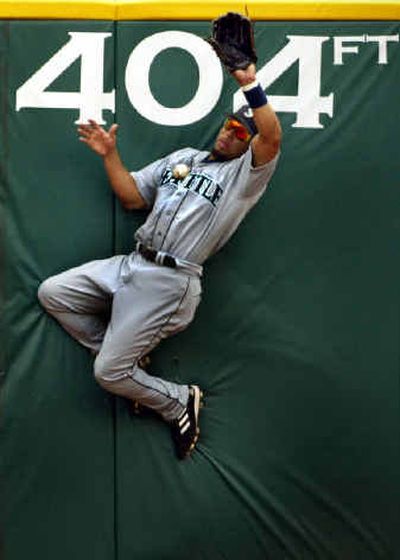

No one, from the occasional fan to the Seattle Mariners’ CEO, doubts that changes must be made. Posting the second-worst record in the American League isn’t what anyone had in mind for the 2004 Mariners.
Across the board failure not only isn’t acceptable, it must be reversed – that is the goal for the second half. It will be a busy off-season, a massive search for an infusion of impact offensive players and replacements for burned-out parts.
The issue facing Seattle isn’t next season – it’s how to get from here to there without an even more massive collapse. Is a massive collapse possible? You bet. How could it get worse?
Consider, for a moment, taking the most dramatic option – blowing this team up today and starting over. Fire Bob Melvin. Trade or release John Olerud, Edgar Martinez and Randy Winn. Bring up the kids: Bucky Jacobsen, Clint Nageotte, Bobby Madritsch, Matt Thornton, Jeremy Reed, Greg Dobbs, Jamal Strong, Jose Lopez. Let young catcher Miguel Olivo show what he’s got. Bring back Gil Meche.
What happens if those young players aren’t ready for prime time – or simply can’t cut it? How positive will the response from fans be if a new manager with a new roster turns in a worse record than the team had in the first half? And, worse yet, if the Mariners send their veterans packing and the kids don’t work out, what’s the fall-back position?
Change is coming. What everyone should accept is that sweeping changes to an underachieving roster may not translate into winning. The best position player in the minor league system – Lopez – is a potential shortstop of the future. Just now, he can’t play, laid low for another month by an injury.
What of the young pitching, the strength of the Seattle farm system? Travis Blackley remains in the Mariners’ rotation despite a 7.59 earned-run average, and the first looks at Thornton and Nageotte were far from overwhelming.
If you’re general manager Bill Bavasi, do you bump Jamie Moyer, Joel Pineiro or Ryan Franklin from the rotation for them? And what about young outfielders such as Strong and Reed? Where do they fit with a team that has Raul Ibanez, Winn and Ichiro Suzuki starting – and Hiram Bocachica and Cabrera serving as backups?
The easy answer is to trade to make room for the future. The reality is, that’s not much of an option for the Mariners.
Winn is one of the hottest Seattle hitters – .331 in his past 30 games – but that got him to the All-Star break batting .278. As contending teams shop before the July 31 trading deadline, few seem smitten with Winn. He is not a natural center fielder. A switch-hitter with speed, he’s considered by most scouts as a fourth outfielder. If the Mariners trade Winn this month, there won’t be much of a return. In fact, no one has asked for him, yet.
No one on the Mariners’ roster is a must-have for any contending team. What interest teams do have has largely been in players such as Dave Hansen, Cabrera or Meche, who’s currently in Tacoma. There would be little return for any of them – and certainly no one close to major league ready.
What the Mariners face, then, is having to trade veterans without getting value in return, or release them and pay their full salary for the year. Beyond that, they can do what they’ve done the past month. Bring up one young player at the expense of another.
Virtually every decision has complications now.
Leone needs to play regularly, but if he does, Olerud and Scott Spiezio cannot – and Spiezio has two years left on his Seattle contract.
As the Mariners look to retool for their future, they cannot ask veteran players to take a few months off, then come to spring training better players. At the same time, Seattle needs to find out what the farm system can provide – and it needs to know before the off-season.