
Plan drops protection for gray wolf
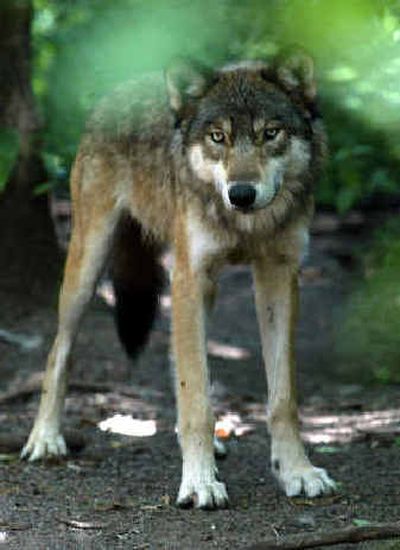
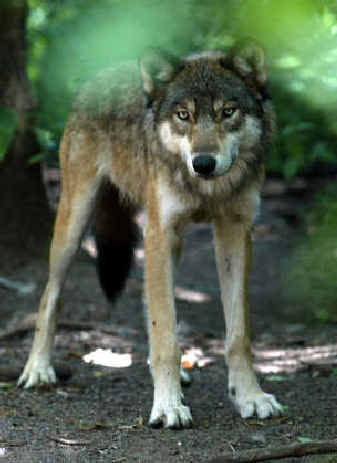
WASHINGTON – Once nearly extinct, the gray wolf now roams the Great Lakes region in abundant enough numbers that it can be removed from the endangered species lists for the eastern half of the United States, the Bush administration said Friday.
Wildlife groups decried the proposal, saying that the federal government is wrong to consider the wolf recovered throughout the eastern half of the country when the only vibrant populations are in Minnesota, Michigan and Wisconsin.
“This proposal puts the brakes on wolf recovery just as the species was starting to rebound,” said Barry Braden, managing director of the New York-based Wolf Conservation Center.
But Bush administration officials said that the population of the eastern timber wolf had exceeded the goals for recovery set when it was placed on the endangered list in 1972. That called for returning the numbers in Minnesota to earlier levels and reaching at least 100 animals in other areas for five consecutive years.
At last count in 1998, there were at least 2,450 wolves in Minnesota – exceeding the target – and additional populations in Michigan and Wisconsin of 360 and 373 wolves respectively.
“Thirty years ago, the future of the gray wolf in the United States outside of Alaska was anything but certain,” said Interior Secretary Gale A. Norton. “Today we celebrate not only the remarkable comeback of the gray wolf, but the partnerships, dedicated efforts and spirit of conservation that have made this success story possible.”
Neither the Endangered Species Act nor the recovery plan for the wolf requires the restoration of a species across its historical range, administration officials said. And they said the size and distribution of the Midwestern populations of wolves ensure that the gray wolf will survive in the eastern United States.
The administration’s proposal, which now begins a public-comment period, would not change the endangered status of the two other populations of gray wolves in the contiguous 48 states: the western population located in the Rocky Mountain states of Idaho, Wyoming and Montana, and the southwestern population of Mexican gray wolves.
Government wildlife experts said the return of the majestic predator has been good for the Great Lakes region.
“The north woods of Minnesota, Wisconsin and Michigan are healthier ecosystems because of the presence of wolves,” said Steve Williams, director of the U.S. Fish and Wildlife Service. “These animals provide a living laboratory to study how a top predator affects plants and animals within the entire ecosystem.”
But Peggy Struhsacker, coordinator for the National Wildlife Federation’s wolf recovery program in Montpelier, Vt., said the administration’s plan all but eliminates any hope that the wolf would return to the Northeast because it means there will be no government-sponsored reintroduction of the animals to the region.
“The northern woods of the eastern United States have had a remarkable recovery of forest and prey species,” she said. “We have basically all our indigenous species except for our predators.”
Bounty hunters flushed wolves out of the Northeast by the early 1800s.
“Ethically, we feel we need to right that wrong,” Struhsacker said. “Scientifically, we know that top predators add a lot to the integrity of our forest ecological systems.”
For instance, prey animals such as deer and moose start acting like wild animals again, moving around instead of grazing, she said.
Without protection of the Endangered Species Act, those wolves that do end up in the Northeast could face significant peril, wildlife advocates said.