
Valley Fire’s moving in

Millwood’s leaders have given up on the town’s fire department. Less than two years after building a brick fire station next to Town Hall, Millwood is poised to sell the building to the Spokane Valley Fire Department.
If the plan goes ahead, Valley Fire will move out of its 44-year-old station on Trent Avenue and into Millwood next month. Valley Fire will respond to the town’s fire and medical emergencies, buy Millwood’s fire equipment, and hire its three full-time firefighters and its chief Bill Clifford.
“So far, things are on track,” Valley Fire Chief Mark Grover said. “We haven’t hit any walls that could stop the process.”
Grover said the contract cost for Millwood would likely be around $150,000 for the rest of this year, approximately what the town had already budgeted for the rest of the year for fire protection.
Next year, the town would ask its citizens whether they want to become a permanent part of Valley Fire through annexation. Valley Fire would get more through annexation than it will through contracting. Under current levy rates Millwood would provide $600,000 in property taxes to Valley Fire each year if it annexed, Grover and Millwood councilman Dan Mork estimated.
Valley Fire, formally known as Spokane County Fire District 1, surrounds Millwood. The large, suburban department has 143 full-time firefighters, paramedics and support staff members and covers Spokane Valley and Liberty Lake, as well as unincorporated areas. Valley Fire would not need additional staff to cover Millwood, a town of 1,649 residents.
“There’s no turning back now,” Mork said recently. “I’m very supportive of bold and decisive moves even though they’re painful.”
The decision to disband Millwood’s fire department has outraged some residents who fear tax increases and a loss of local control. Millwood residents are still paying for the bond and levy. While proceeds from the sale of the station and equipment will likely go toward paying off those obligations, its unclear how Millwood residents’ property taxes will be affected, Grover said.
LaDonna DeMent recently moved to Millwood. DeMent said she wants to get more information, but right now opposes annexing to Valley Fire. It’s just the principle of the whole thing, she said.
“I’d rather pay more to have people employed in Millwood than to have Valley Fire do it for us,” DeMent said.
DeMent went to the recent council meeting and said she was surprised council members didn’t seem to have answers to citizens’ questions and were defensive. They held their public comment period at the tail end of the meeting, after an hour-long executive session. She got the feeling the council hoped “we’d all go away.”
Several Millwood residents said they also didn’t want to see the station they paid to build sold to Valley Fire.
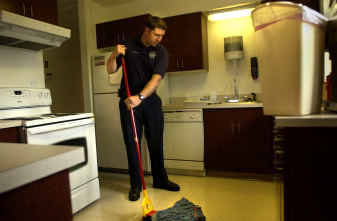
Grover said that the fire station will still be called the Millwood Fire Station, but will effectively become Valley Fire’s Station 2. The station on Trent Avenue, Valley Fire’s oldest, went through a $50,000 remodel last year. It will be left empty after Valley Fire moves into Millwood. Valley Fire had planned to replace the Trent Avenue station eventually, Grover said. The chance to move into the nearby Millwood station, which is larger and has everything Valley Fire needs except a dishwasher, was too good to pass up, Grover said.
In public meetings, Millwood officials have given few explanations for disbanding their fire department beyond that the town is short on money and wanted better coverage for its citizens. Personality conflicts and power struggles also helped doom the fire department, according to interviews, testimony in a recent labor dispute and documents obtained by The Spokesman-Review.
After the new station was built in 2002, town employees referred to it as the Taj Mahal, Clifford testified in a hearing before the state Public Employment Relations Commission on May 18. The hearing was held because Millwood firefighter Tony Perry alleged he was laid off in December because of his union organizing. Perry went back to work Tuesday.
Millwood’s attorney, Brian Werst, said that the town and Perry had come to an agreement to get him back on the job, but he did not disclose the terms. Ricky Walsh of the Washington State Council of Fire Fighters also would not divulge what it took to restore Perry’s job, saying the town and union had agreed to a confidentiality clause.
Perry is among the full-time Millwood firefighters who will be hired by Valley Fire.
Mayor Jeanne Batson did not grant an interview request last week, but provided a written statement in which she said that the town’s ability to provide fire protection and emergency services was compromised when 11 volunteer firefighters quit.
The new station ended up being more expensive than originally budgeted, causing friction between Clifford and Batson, both testified. After the three full-time firefighters decided to unionize in February 2003, the relationship between the firefighters and town further deteriorated, Clifford testified.
Volunteer firefighters began quitting because full-time firefighters said demeaning things to them, Batson testified. At one point Perry called them “volunqueers,” according to testimony by Perry and Clifford. Firefighters also reportedly went through a sexual harassment training class because of a remark Perry allegedly made about clerk-treasurer Eva Colomb.
Perry testified that he did say things to the volunteers out of ignorance, but that he didn’t think his words made anyone quit the fire department.
“We were doing just fine until you outsiders came along,” Batson reportedly said to Perry in February, after he had been laid off. None of the three full-time firefighters lives inside Millwood’s town limits. Clifford live inside Millwood.
Perry had visited the station after being laid off, which angered Batson, according to testimony by Perry and Clifford.
Batson testified she remembered the confrontation, but didn’t remember making the remark to Perry. She did concede that the relationship between the town hall and fire department was not good.
“I wouldn’t say it was rosy. We’re not very friendly,” Batson testified.
Exactly one week after the PERC hearing, Batson put Clifford on paid administrative leave. Clifford says he thinks it’s because he tried to maintain a balance between his support for the volunteer and full-time firefighters. Batson has never publicly said why she put Clifford on administrative leave, calling it a personnel matter.
Batson asked John Schoen, the Airway Heights fire chief, to act as interim chief. Millwood still has two full-time firefighters who work weekdays. Schoen brought in Airway Heights volunteers to fill in. Schoen is being paid $2,000 per month and works 20 hours per week, according to figures provided by Millwood. The Airway Heights volunteers were paid $500 a month to stay in the station at night as resident firefighters.
Valley Fire began its automatic aid agreement after Millwood’s June 7 council meeting.
Valley Fire will begin answering all calls when Millwood firefighters start Valley Fire’s recruit academy early next month. Valley Fire is expected to sign a formal contract with Millwood by midmonth. Until a formal contract is signed, Valley Fire will respond to Millwood calls from its station on Trent Avenue, Chief Grover said.
It will be the end of an era for Millwood. Valley Fire does not have volunteer firefighters.
Former Millwood volunteer Kevin Helt said he was upset that the mayor seemed not to care when he went in to announce he was quitting the same day Clifford was put on administrative leave.
“The council and the mayor don’t really show any appreciation toward the volunteers that protected the town for 75 years. We’re just thrown out with the trash as far as the council is concerned,” Helt said.
He said the volunteers wouldn’t have quit if the council had followed department procedures and placed the second-in-command, John Wiedmer, in charge. But when they heard Schoen would take over, they quit, Helt said.
Helt, who lives in Millwood, said he loved protecting the town, but felt he had to take a stand against what the mayor and council were doing. Helt said he felt Clifford did a good job as chief.
Batson blamed Clifford for not maintaining an acceptable level of volunteers, for allowing harassing behavior in the workplace and for not managing his budget properly, among other issues, according to a memorandum from Batson obtained by The Spokesman-Review.
Clifford denied the charges in a press conference.
He also bristles at comments made by Carl Durr, a former Millwood fire chief who works for American Medical Response, an ambulance company. Durr is an intermediate emergency medical technician for AMR. He blames Clifford for the low number of volunteers. Durr said Clifford couldn’t work well with more experienced people and nudged them out. “He almost made it too hard (to volunteer),” said Durr.
Councilman Mork said he doesn’t blame Clifford for the decline in volunteers. He felt regulations kept making it harder for volunteers to get in as much training as was required. And more and more firefighters were required at a scene before a fire could be fought.
Clifford said he was surprised to be put on leave after being with the department for 14 years. Clifford said he thought everything could be smoothed over with the mayor and council.
But Clifford says he’s looking forward to a future with Valley Fire and is concentrating on working to pass the department’s academy next month. He’s excited about becoming a Valley firefighter but said he’ll miss being chief.
“Definitely I’m emotional, sad about the whole thing. It’s the citizens I’m going to miss,” he said.