
Baking sweet memories of ‘I do’

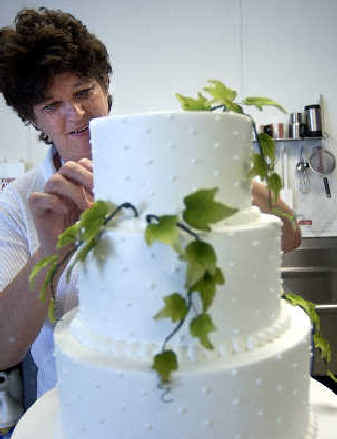
There’s a sweet flavor to the air in Diana Tesdal’s shop. It tastes like the towering expectations of matrimony and little girls’ dreams finally realized.
At this time of year, the sweetness hangs so heavy in Tesdal’s Argonne Road kitchen that it dusts lips with the taste of powdered doughnuts.
Tesdal bakes wedding cakes, which she’s done for more than 25 years, first at Rosauers Supermarkets and more recently at her own business, Happy Cake Co. The Otis Orchards woman swears she remembers every one she’s ever made and for whom she made it because wedding cakes are special. Guests who find themselves in the cake line of a summer wedding are participating in a ritual more than a thousand years old, but as simple as a kiss.
“It’s probably the cheapest part of the wedding, but it’s so big. It’s what people remember,” Tesdal said recently. “Women start dreaming of their wedding cakes when they’re little girls. I think what they pick out says something about them.”
As she speaks, Tesdal holds two heads of bearded wheat threaded through a silver buckle and tied with blue bows. The grain is the window dressing for a cowgirl wedding cake, three tiers tall and perched on a rusted, horseshoe pedestal. It doesn’t look traditional, but its ties to the roots of the confection are closer than most.
In ancient Rome, wheat bread was broken over the head of the bride to assure a plentiful life, Tesdal said. Wheat was considered a fertility symbol, which is the reason brides and grooms are pelted with everything from rice to birdseed today. The bride and groom ate the crumbs of the broken bread. Maidens would drop to the floor and gather pieces of the bread, which were considered lucky charms of fertility.
Another cake ritual calls for a single woman attending a wedding to take home a piece of cake to put beneath her pillow each night, Tesdal said. The tale suggests that the cake will give the sleeping woman a peek at her future husband, or at least improve her odds of finding one. The piece is supposed to be small enough to fit through the center of a ring, and wrapping it in a cloth is recommended.
Does the wedding cake charm still work in a society that recognizes 10 years of marriage as a substantial accomplishment? Roughly half of American brides and grooms saying “I do” these days eventually say “I don’t anymore,” according to the U.S. Census and the National Marriage Project of Rutgers University. Most of the “I don’ts” bail out within seven or eight years.
In Tesdal’s shop, there are both signs that the wedding cake spell still works and that it was never more than frosted flowers. She has baked the same wedding cake three times for the same couple, first for their wedding, later for their anniversary and last for their daughter’s marriage. She has baked cakes for three sisters, who completely covered the outside of their three-tiered cakes with love Scriptures. The last sister, Jen Watson, wrapped her cake in the lyrics of Elvis Presley’s “Love Me Tender.”
There is also a miniature cake volcano requested by a bride who came in this spring looking for something different. Tesdal remembers having a bad feeling about the request when it was made. She proposed, for starters, making a smaller version of the cake complete with ashen colored slopes and a molten-red cauldron. The wedding plans have cooled. The cake is chilling in the back of Tesdal’s stainless steel refrigerator.