
DEA agents building case against Aristide
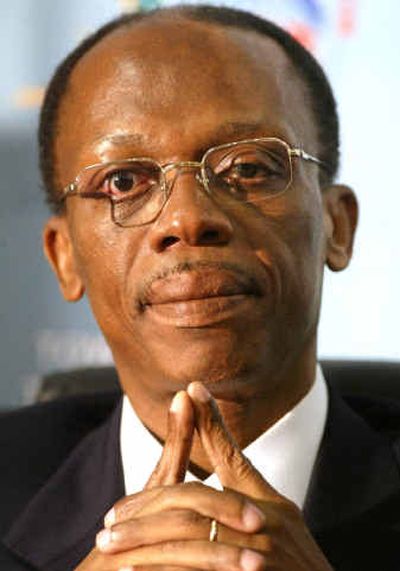
FORT LAUDERDALE, Fla. – Days before President Jean-Bertrand Aristide was forced out of Haiti, a notorious cocaine trafficker stood before a federal judge in Miami and said Aristide, once his friend, had turned Haiti into “a narco-country.”
“The man is a drug lord,” Beaudouin “Jacques” Ketant told U.S. District Judge Federico A. Moreno on Feb. 25. “He controlled the drug trade in Haiti.” His country in rebellion, Aristide left four days later aboard a plane provided by the U.S. government.
In recent weeks, it has become clear that federal law enforcement officials in South Florida are putting a lot of stock in what Ketant has to say. The high-living cocaine trafficker has emerged as a central figure in an investigation that has snagged five former Haitian officials and appears to have Aristide in its sights.
Four of them have hearings scheduled this week and next in federal court in Miami.
Observers of Haiti say a combination of forces conspired to increase the cocaine supply and deepen corruption after Aristide was elected in 2000. They include a decision to freeze millions in U.S. aid and a crackdown on Colombian smuggling routes through Mexico and at the U.S. border.
Affidavits filed in the cases paint a picture of a politically chaotic, chronically impoverished country thoroughly corrupted by drug money. The narco-dollars are alleged to have reached into the upper echelons of government, even into the presidential palace through Aristide’s trusted security chief.
According to the documents, some top Haitian officials took protection money and hid stashes of cocaine in their own homes. They steered DEA agents away from incoming loads and tipped off traffickers when the DEA was on to their plans. Such corruption was the result of declining conditions in the Western Hemisphere’s most impoverished nation, Haiti experts say. The question before a Miami federal grand jury is whether Aristide turned a blind eye to the graft or actively participated.
His lawyer, Ira Kurzban, has denied the former president had anything to do with drug traffickers. Instead, he said, the allegations are politically motivated. The United States is trying to discredit Aristide so that he will not be able to reclaim power in Haiti, Kurzban charges. “This is all about the political character assassination of Aristide,” he said.
Aristide disputed the drug-corruption allegations in a recent interview with CNN in South Africa, where he lives in exile. “They are wrong,” he said.
Haiti has served as a Caribbean cocaine crossroads for two decades, with scant notice. Rumors of Aristide’s involvement have swirled for years. “Once Aristide left, the case against him appeared to be developing rapidly,” observed Tom Cash, who headed the DEA’s offices in Miami and the Caribbean from the late 1980s to 1994.
During his tenure, Cash said, he and some of his agents stationed in Haiti watched as planes dropped bundles of cocaine offshore. No one in the United States or Haiti seemed concerned.
Through most of the 1990s, he said, other priorities prevailed, most notably U.S. immigration policy. The United States was counting on Aristide’s cooperation to keep down the numbers of Haitian migrants.
Aristide, a populist priest, was viewed as Haiti’s great hope when U.S. Marines ushered him back to power in 1994, but he never lived up to U.S. expectations. By the waning days of the Clinton administration, his relationship with the United States was so rocky that $500 million in U.S. aid was frozen. U.S. officials cited legislative election irregularities and corruption as reasons.
Drug traffickers’ money filled the void, experts say. Cash, for one, called it “white powder foreign aid.” In essence, Haiti’s government and political patronage system subsisted on a “cocaine tax” levied against traffickers, said Bruce Bagley, a University of Miami professor who studies the drug trade in Latin America and the Caribbean. Under such conditions, smuggling exploded in Haiti.
By some estimates, as many as 80 tons passed through the country during the Aristide years. At one time, about 5 percent of the cocaine that reaches the United States passed through Haiti. Now, that figure is closer to 20 percent, Bagley said.
U.S. investigators are trying to follow the money, according to former DEA head Cash. Of particular interest: reports that looters discovered $350,000 in cash in a safe in Aristide’s basement the day after he left. “I know there’s a sitting grand jury, and that grand jury is looking for money,” Cash said.
The inquiry, which dates to at least three years ago, received its first boost with the arrests last year of Ketant and another notorious drug trafficker, Colombian Carlos “Papi” Ovalle. Ketant was indicted by a Miami grand jury in 1997, and investigators now are looking into whether Aristide protected him until Haitian National Police put him on a DEA plane last year. Ketant is cooperating, trying to shave time off a 27-year sentence he received in February.
The Haitian official who put Ketant in handcuffs and delivered him to the DEA, national police commander Rudy Therassan, was indicted last month in Miami for his alleged role in cocaine corruption. Therassan’s lawyer, Lawrence Besser, specifically identified Ketant in court as an informant against his client.
Some of the Haitian officials now appear to be cooperating. They are precisely the type of witnesses prosecutors would use to corroborate the traffickers’ stories as they work their way up to Aristide, Cash said.
“Aristide has got to be feeling the heat.”