
Wal-Mart suit given class-action status
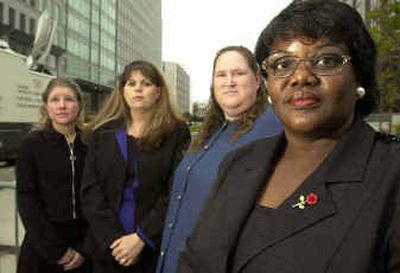

SAN FRANCISCO — A sex-discrimination lawsuit against Wal-Mart Stores Inc. won class-action status Tuesday, allowing it to include up to 1.6 million current and former female employees in the largest private civil rights case in U.S. history.
The suit alleges that the retail giant set up a system that frequently pays its female workers less than their male counterparts for comparable jobs and bypasses them for key promotions.
U.S. District Judge Martin Jenkins decided to expand the lawsuit to include virtually all women who work or have worked at Wal-Mart’s 3,500 stores nationwide since December 1998.
Wal-Mart, based in Bentonville, Ark., and the nation’s largest private employer, had sought to limit the scope of the lawsuit and said it would appeal the ruling.
No trial date has been set in the lawsuit, which initially covered six women.
The decision that the case merits class-action status was pivotal because it gives lawyers for the women tremendous leverage as they pursue punitive damages, as well as back pay and other compensation.
“I think it’s a terrific victory for the women who work at Wal-Mart who have labored for years under working conditions where they have been told repeatedly they have been unsuitable for management and not suitable to make as much as men,” said Joseph Sellers, one of the attorneys representing the women.
Betty Dukes, one of the women spearheading the suit, said she was paid just $8.44 per hour during her first nine years working at a variety of positions at Wal-Mart’s store in Pittsburg, Calif., while several men holding similar jobs but less seniority earned $9 per hour.
A company spokeswoman downplayed the significance of the ruling and promised an appeal.
“Today’s ruling has absolutely nothing to do with the merits of the case,” spokeswoman Mona Williams said. “Judge Jenkins is simply saying he thinks it meets the legal requirements necessary to move forward as a class action.”
In a daylong hearing last September, company attorneys urged Jenkins to allow so-called mini-class-action lawsuits targeting each outlet. Wal-Mart contends its stores, including Sam’s Club warehouse outlets, operate with so much autonomy that they are like independent businesses with different management styles that affect the way women are paid and promoted.
Pursuing the allegations as a single class action “is absolutely unmanageable on a nationwide basis,” Wal-Mart lawyer Paul Grossman told Jenkins. “It would require a mind-boggling number of individual determinations.”
Not so, argued Brad Seligman, a lawyer who sought the right to pursue a class action.
He told Jenkins that Wal-Mart stores are “virtually identical in structure and job duties” and that the case would only take a few months to litigate.
“There is a high emphasis on a common culture, which is the glue that holds the company together,” he said.
On Tuesday, Jenkins ruled that a congressional act passed during the civil rights movement in 1964 prohibits sex discrimination and that giant corporations are not immune.
In addition, the judge said lawyers for the women put on enough anecdotal evidence to warrant a class-action trial.
Jenkins found that the evidence so far “raises an inference that Wal-Mart engages in discriminatory practices in compensation and promotion that affect all plaintiffs in a common manner.”
Wal-Mart contends the suit ignores the thousands of women who earn more than their male counterparts. The retailer also says the lawsuit’s allegations are flawed because they don’t consider the factors that cause one job to pay more than another.