
A gift beyond thanks
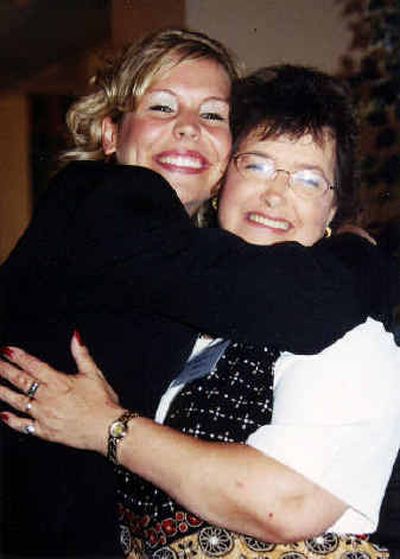
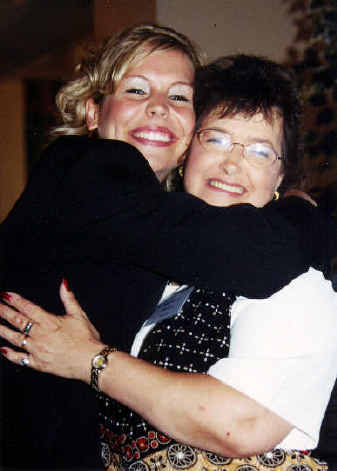
It was her first standing ovation and she’ll never forget it. One year after donating some of her bone marrow, Kassi Hays, 21, got to meet the Kentucky woman whose life she saved from leukemia.
“Oh, my gosh, I was shocked,” Hays said by phone this week as she recalled the applause that greeted her at the banquet event on May 20 in St. Petersburg, Fla. “I guess I didn’t understand how many people’s lives are touched when someone has cancer.”
Hays, a Navy medic stationed with a Marine helicopter squadron at Camp Pendleton, Calif., went to high school in Wilbur, Wash., and Spokane. Her brother, Sgt. Nathan Hays, was the 21-year-old Marine from Wilbur who died in January 2002 when a military refueling plane crashed in the mountains near Afghanistan.
She was 19 when her brother died. The loss deepened her appreciation for others’ grief.
But she already had a giving spirit. When Kassi was 16, she registered as a bone marrow donor at Inland Northwest Blood Center in Spokane. She re-registered through the military in May 2002.
Only 30 percent of patients in need of donated bone marrow can find suitable matches within their families. The rest turn to generous strangers, such as Hays, who have registered with the National Marrow Donor Program.
A few months after Kassi Hays re-registered as a donor, Deborah Mahan of Bowling Green, Ky., was diagnosed with chronic myelocytic leukemia. She was 45 at the time, the mother of two and grandmother of six.
CML kills about 20 percent of people within two years of diagnosis and another 15 percent to 20 percent each year after that.
When drug therapy didn’t destroy all the cancer cells, Mahan started asking family members if they would donate bone marrow for a stem cell transplant – her last hope. Her three brothers went in for testing. None matched.
Hays’ name turned up as a potential match on the registry. She got the call in January of 2003. The surgery to extract bone marrow from her pelvic bone was March 6, 2003, at the Lombardi Cancer Center in Washington, D.C.
Mahan was at the same hospital that day to receive the transfusion. Her own bone marrow had been destroyed by chemotherapy in anticipation of receiving Hays’ cells.
The transplant was a huge success. Today, Mahan has no sign of cancer. She recently started volunteering to help abused children as a court-appointed special advocate.
“I love children anyways,” she said by phone, a taste of Kentucky in her voice. “This way I’m giving something back also.”
When they met at the May 20 banquet, Hays was surprised to learn that Mahan’s blood type had changed.
“She was A positive and now she’s O positive, which is my blood type,” Hays said. Tissue matching for bone marrow donation does not require a blood type match.
Another odd thing: Mahan recently acquired a taste for one of Hays’ favorite snacks, Cheetos and Coke.
But that kind of small talk happened after their first dramatic encounter, in front of a crowd of more than 100 who had come to the banquet sponsored by the donor registry program.
Mahan was called to the front of the room. Then Hays. At first, they couldn’t see each other very well. The standing ovation blocked their views as Hays, dressed in her Navy uniform, walked forward.
“She went to shake my hand,” Mahan said. “I said, ‘No, I want a hug.’ I grabbed ahold of her and gave her a big hug. ‘Thank you’ just wasn’t enough.”