
Cominco says it’s beyond EPA’s reach
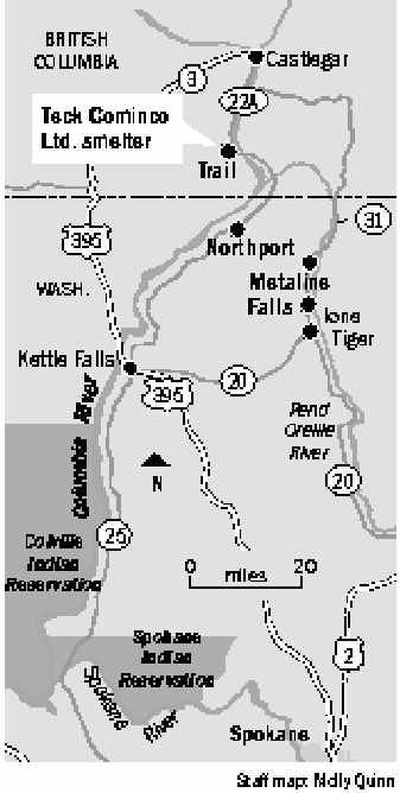
YAKIMA – A Canadian company operating the world’s largest lead-zinc smelter 10 miles north of the U.S.-Canada border at Trail, B.C., argued Thursday in federal court that it isn’t subject to an American order to clean up millions of tons of slag and other toxic metals it dumped into the Columbia River for decades.
In oral arguments before U.S. District Court Judge Alan McDonald, lawyers for Teck Cominco Ltd., of Vancouver, B.C., didn’t dispute that the company had polluted the river for nearly a century. But they said its location in Canada puts it beyond the reach of a U.S. Environmental Protection Agency cleanup order.
They asked McDonald to dismiss the citizens suit brought by two leaders of the Confederated Tribes of the Colville Reservation last July. The tribe filed suit in an effort to push EPA into enforcing its December 2003 cleanup order and to protect the 9,000-member tribe’s fisheries and other resources along Lake Roosevelt.
“This case is unique … for the first time in the 24 years (Superfund) has been in effect, the EPA has issued a unilateral administrative order to a Canadian company,” said Teck Cominco attorney Gerald George.
Paul Dayton, attorney for Colville tribal leaders Joseph Pakootas and D.R. Michel, said McDonald clearly has jurisdiction in the case and Teck Cominco is responsible under Superfund for its pollution. Its smelter has dumped 15 million tons of slag and many other toxic chemicals into the river and the ultimate cleanup will cost hundreds of millions of dollars, Dayton added.
The EPA cleanup order “doesn’t seek to regulate anything done in Canada – only in the United States. The court should deny the motion,” Dayton said.
Assistant Attorney General Steven Thiele appeared for Washington state, which joined the Colvilles’ lawsuit in September. Thiele also urged McDonald to allow the case to continue, saying it is “of great importance to the state of Washington and to the health and welfare of its citizens.”
McDonald peppered the Teck Cominco lawyers with questions, saying he was troubled by their definition of the issues. “We have an agency of the U.S. government (EPA) whose primary duty is to clean up messes, and this happens to be one of them. Is the fact that one of the polluters is a Canadian company reason they should be spared responsibility?” McDonald asked.
Teck Cominco was operating under a valid Canadian discharge permit and would only be liable under Superfund if it had deliberately hauled its slag and other waste into the United States for disposal, George replied.
McDonald asked how there could be a difference between dumping millions of tons of slag in the river at Trail or hauling it into the United States, noting that the company had used the river as its preferred disposal method for decades. The company stopped dumping slag into the Columbia in 1994.
Hauling is deliberate and would qualify the company as a “transporter” under Superfund, whereas the “action of nature” moved the slag from Canada downstream to Lake Roosevelt, George replied, arguing that Superfund doesn’t regulate this conduct.
McDonald pointed out that Teck Cominco does substantial business in the United States, mentioning its Red Dog mine in Alaska and the new Pend Oreille Mine at Metaline Falls. “Why should Teck Cominco enjoy doing business in the United States yet hide from enforcement over the border?”
If Congress intended Superfund to apply to Canada, “you’d have EPA issuing orders to towns in Canada” for wastewater treatment and other permitted facilities, George said.
McDonald also said he’s puzzled as to why private citizens – the Colville tribal members – were compelled to force the issue with a Superfund citizens suit.
“Why has EPA not enforced its order?” he asked Dayton.
“I can’t answer that,” Dayton replied.
George, the lawyer for Teck Cominco, jumped on that issue. “It’s unusual for an agency to issue an order like this – and it’s unprecedented that the government isn’t here to defend its order. It speaks volumes,” George said. He argued that the transboundary pollution battle should be resolved through bilateral diplomatic negotiations, not a unilateral EPA order.
After the hearing, Tom Eaton, of the EPA’s regional office in Seattle, said he couldn’t address why the U.S. Department of Justice hadn’t appeared. Dave Croxton, an EPA cleanup manager in Seattle, said the Justice Department approved EPA’s cleanup order to Teck Cominco before it was issued last December.
Flora Goldstein, regional toxics program manager for the Washington Department of Ecology, said progress is being made on Lake Roosevelt. EPA is moving ahead with plans to identify cleanup priorities, and a U.S. State Department delegation involved in diplomatic discussions with Canada over Teck Cominco’s pollution will come to Spokane for talks and a tour of Lake Roosevelt at the end of November, she said.
McDonald said he’d issue a written ruling, probably within two weeks.