
Holy places may be filled with pollutants
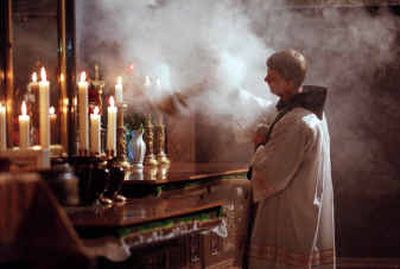
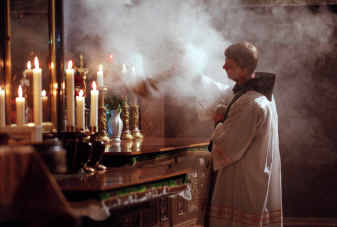
Going to church may be good for the soul, but some Dutch researchers say it may not be so healthy for the lungs.
The candles and incense regularly burned during religious services emit high levels of particulate matter, tiny airborne flecks that are considered one of the most harmful forms of air pollution, according to a new study by scientists at Maastricht University in the Netherlands.
The researchers measured air quality at a small chapel and a large basilica in Maastricht, and found the air in both places contained particulate matter at levels up to 20 times higher than what is considered safe to breathe under European air pollution standards. The levels were similar to those found in the air beside roads driven by 45,000 cars a day, according to the findings published in the December issue of the European Respiratory Journal.
The researchers cautioned that the pollutants should not affect the well-being of most churchgoers, but that priests and especially devout congregants who spend long periods inside poorly ventilated chapels could be endangering their health.
“It cannot be excluded that regular exposure to candle- or incense-derived particulate matter results in increased risk of lung cancer or other pulmonary diseases,” wrote Theo de Kok, the leader of the Maastricht University team. The paper, titled “Radicals in the Church,” also noted that the air monitoring detected high levels of free radicals, or molecules that can aggravate asthma or bronchitis.
The researchers studied churches because of growing interest in the health risks posed by indoor air pollution.
Many scientists have begun more detailed inquiries into the health dangers found in the air people breathe indoors, where they spend most of their time. But scientific knowledge on indoor air pollution still lags behind research on outdoor air pollution from sources such as factory smokestacks and motor vehicles.
The U.S. Environmental Protection Agency released research in 2001 concluding that burning candles and incense can be a source of particulate matter. The report also concluded that burning candles with lead-core wicks can raise indoor lead levels above what the EPA recommends as safe.