
Mixed signals

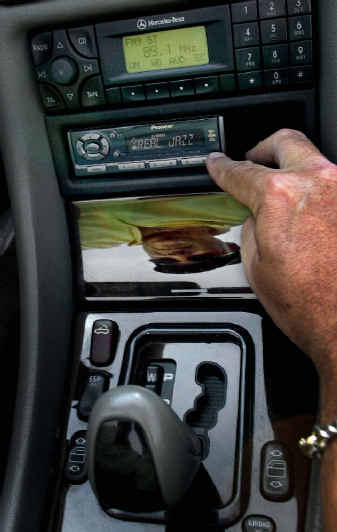
NEW YORK — Sirius Satellite Radio Inc. is betting $500 million that Howard Stern is its ticket to the mainstream.
The company said Wednesday it would spend at least $100 million a year on a five-year deal that would move Stern’s talk show from traditional radio to one of its satellite channels.
It’s a risky proposition: Sirius, which has never been profitable, has lost more than $1 billion in the last five years. It has far fewer subscribers than its only satellite competitor, XM Satellite Radio, which also loses money.
The two are now in an expensive frenzy of hiring talent. The question is whether their audience can reach critical mass before their lenders and shareholders lose patience.
“I think it’s a pretty good bet to take,” said Joe Clayton, Sirius’ president and CEO. “All we have to do to get our bait back is attract the first million subscribers.”
Analysts estimated it would take closer to 1.3 million subscribers, and some components of the deal are unclear. The announcement didn’t specify Stern’s salary or detail extra payments he could get for attracting advertisers or more subscribers than expected.
Until now, Sirius has poured money into its business without earth-shattering results. It has spent millions to air National Football League, National Basketball League and National Hockey League games, but it has only 600,000 subscribers.
Yet, “if any one program is going to get people to stand up and say, ‘I want satellite radio,’ Howard is the one,” said Matt Feinberg, the head buyer of national radio advertising time for Zenith Media.
Sirius and XM are the aural equivalent of cable TV. To hear their stations, listeners must buy satellite radios and pay a monthly fee.
Like cable companies, XM and Sirius also must persuade customers to pay for a service they’re used to getting for free. And like cable, the satellite broadcasters aren’t subject to decency standards governing traditional radio.
Both companies bounce their signals off satellites. Because they don’t have to buy space on the broadcast spectrum, as traditional broadcasters do, the companies are able to send out more than 100 different channels. Sirius has one station for Christian rock and another for 1980s hair bands. XM has a station devoted to unsigned acts, a trucker’s channel and a station that plays only European hits.
To win subscribers, who spend between $9.99 and $12.95 a month, the two companies are trying to sign familiar names.
XM debuted a show this week hosted by shock jocks Opie and Anthony, who were fired by Viacom Inc. subsidiary Infinity Broadcasting after airing a play-by-play of a couple having sex at New York’s St. Patrick’s Cathedral in 2002.
XM also launched a show this week hosted by former National Public Radio “Morning Edition” anchor Bob Edwards, whom XM scooped up after public radio bounced him from his slot as host of “Morning Edition.”
“We’ve gotten more than 50,000 e-mails and letters from fans of Bob Edwards,” said XM spokesman Chance Patterson.
Sirius, for its part, has hired football commentator John Madden and is developing a channel programmed by rapper Eminem.
XM has 2.5 million subscribers to Sirius’ 600,000.