
Researchers developing robot ‘thinking’ programs
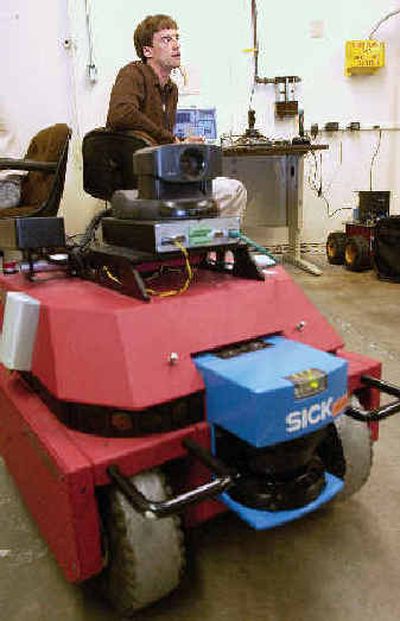
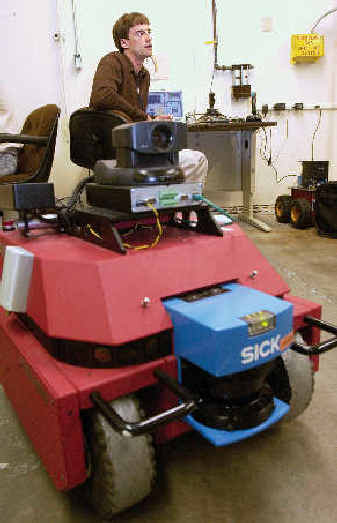
IDAHO FALLS, Idaho – Researchers at the Idaho National Engineering and Environmental Laboratory are trying to put some thought into the mechanical robots that have been taking over many of the world’s routine tasks.
Their effort could help reduce the numbers of soldiers and civilians killed or wounded by improvised explosive devices.
Robotics researcher David Bruemmer and his colleagues are developing programs that would increase the intelligence behind the robotic ability to mechanically reproduce the actions dictated by human operators.
“We’re not trying to create humanlike intelligence, but a robot that’s more like a dog,” Bruemmer said.
He wants robots, like police dogs, to be able to follow someone, sniff out items and alert a person when it finds something like a land mine or bomb.
Previous attempts to use robots in military settings failed miserably because they were not intelligent enough to be reliable, he said.
The Defense Department has given the project $3 million as part of its Future Combat System program to merge soldiers and high-tech equipment.
Other research institutions are collaborating on the project, and Bruemmer said a smart robot could be field ready in a few years.
To make robots more effective in the hands of their human controllers, the robotics team has developed a program that creates a 3-D map of the robot’s surroundings from data collected by its lasers.
Walls and other obstacles are quickly filled in on a remote computer screen as the robot surveys a room or terrain. It replaces the mounted camera, that researchers said has been difficult for human controllers to use.
“We’re very interested in how people interact with robots, especially if they’re not trained,” Bruemmer said.
Bruemmer contended that robots are only useful if they are easy to work with and their users know what robots are capable of doing.