
New cracks developing
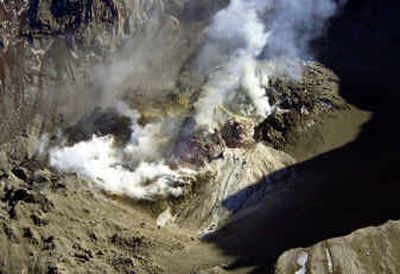
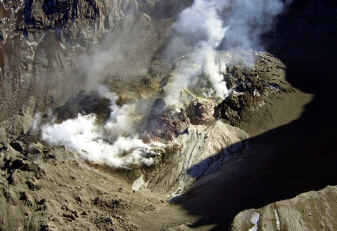
SEATTLE – The stone “fin” on the new lava lobe inside the crater at Mount St. Helens seems to be starting to split, scientists reported Friday.
The fin, which is about 200 feet tall and 300 feet wide, is building on the new lava dome, which is about 1,600 feet in diameter and 400 feet high, according to geologist Tina Neal of the U.S. Geological Survey.
The exact dimensions of the new structures have not been determined because of steam and fumes. The fin’s precise makeup also cannot be known until scientists can find a way to pick up a sample for analysis, said Carolyn Bell, a USGS spokeswoman.
Scientists are working on a way to safely get samples of the fin, which apparently was on the surface before the new lava flows, and the new lava slowly extruding from the volcano, Bell said.
The mountain was shrouded in fog and clouds Friday, but brief views inside the crater from aircraft showed bright red lava glowing in spots on the gray lava dome.
Scientists continue to warn that the eruption could intensify at any time, but the USGS said earthquake activity remained low Friday, and levels of gas found above the crater, which could indicate a stronger eruption was in the works, were unchanged.
The latest dome-building began with intense seismic activity Sept. 23, apparently from magma breaking through rock as it rose toward the surface. Several steam bursts followed, and geologists detected lava at the surface late Monday.
The last round of dome-building began in the months after St. Helens’ devastating May 18, 1980, eruption, in which 57 people died, and lasted six years.
Gas-rich magma can cause explosive eruptions, but samples taken this week have detected little carbon dioxide or hydrogen sulfide at the surface, Neal said.
As the dome-building continues, it could produce small explosions with little warning, Neal said. A large explosion is still possible but is among the least likely scenarios, she added.