
Drivers trade privacy for savings
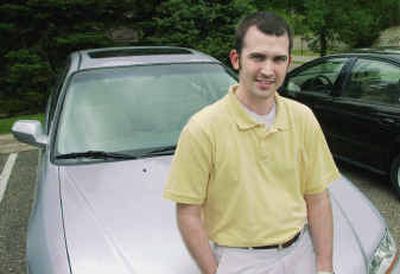
For two months, Jacob Sevlie’s insurance company tagged along whenever he slid behind the wheel of his Honda Accord.
An electronic monitor the size of a matchbook closely tracked Sevlie’s driving time and behavior. If he had a heavy foot or was a sudden braker, the auto data recorder would betray him.
Disconnected from the car and hooked to a PC, the device relayed Sevlie’s digital driving diary to his auto insurer, Progressive Corp., with the click of a mouse during a pilot program earlier this year.
Although privacy advocates say the gadget smacks of Big Brother, Sevlie signed up and sent monthly data in hopes of saving money on his insurance bill. In return, he got a $25 stipend and the promise of a 15 percent rate cut when the program launches.
Mayfield Village, Ohio-based Progressive is now promising discounts of up to 25 percent as it expands the so-called TripSense pilot program to 5,000 Minnesota customers. Sevlie, of Bloomington, Minn., is among them.
Progressive says it will use the data only for potential discounts and not to penalize customers whose devices reveal risky driving habits.
The monitoring has the potential to cascade through the insurance industry, said Charles Samuelson, executive director of the American Civil Liberties Union in Minnesota.
“What happens is Progressive does this and gets a little bit of market share growth because they’ve lowered prices. Then it gets copied by other insurance companies,” he said. “Pretty soon you don’t have any choice.
“You have to surrender all that data to insurance companies or they won’t insure you,” he said.
Company spokesman William Perry says use of the auto data recorder will not be mandatory for Progressive customers.
“The key thing for us regarding the privacy aspect is the program is completely voluntary. It’s not imposed on anybody,” he said.
Julie Rochman, spokeswoman of the American Insurance Association, denied suggestions that the entire industry would adopt the monitors.
Most companies are comfortable with their current systems for measuring risk, which typically lump drivers into groups based on a variety of factors, she said.
“The bottom line is this is interesting, and they’ll watch it,” she said. “I’m not aware of any rush to do this kind of thing.”
Drivers are under increased surveillance, by insurance companies and others. For example, cameras at intersections in many urban areas snap license-plate pictures of vehicles running red lights.
Many automakers already install so-called black boxes that record information for investigations into a crash or malfunction, although the data are not routinely transmitted. Last month, federal safety officials called on all automakers to install such devices.
From 1998 to 2001, Progressive ran a trial program in Texas that included a satellite tracking device to monitor where participants drove so they paid only for the insurance they used. The program was canceled because the gear was too expensive, the company said.
Insurers abroad are trying the data recorders, too.
In August, Norwich Union, the United Kingdom’s largest auto insurer, announced it was testing a “pay as you drive” program involving 5,000 customers, under an agreement with Progressive. It tracks via satellite, like the Progressive program in Texas.
Robert Ledger, the U.K. program’s director, says interest has been phenomenal: “We could have filled the pilot twice over with the amount of requests we’ve had from interested motorists.”
Progressive’s latest test in Minnesota, however, doesn’t track where people drive. Sevlie said that would have been a show-stopper for him.
“That would scare me,” he said. “If they were to do something like that, I would probably not want to be involved.”