
Armed men execute Sunni activists publicly
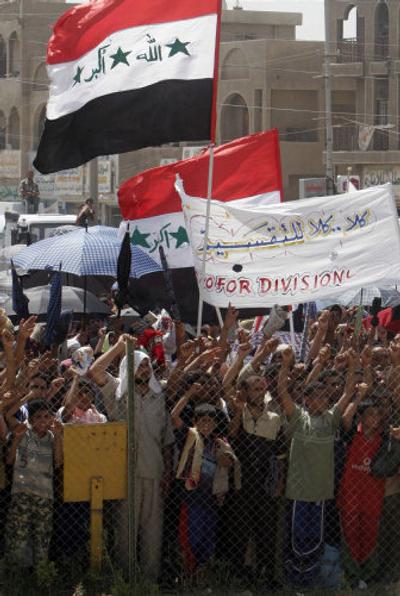
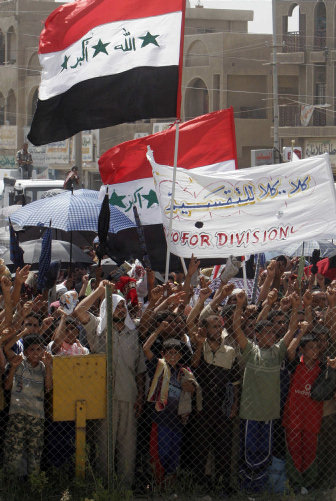
MOSUL, Iraq – Gunmen in this northern city Friday abducted and publicly executed three Sunni Arab activists who’d been working to draw the disgruntled Sunni minority into Iraq’s political mainstream, and then draped their bodies in a get-out-the-vote banner, officials and witnesses said.
The killings, before a horrified crowd, were the latest episode in the accelerating violence between suspected insurgents and the Sunni minority that has been their base of support.
One witness, Muhammed Khalid, said armed men traveling in eight cars kidnapped the activists as they were hanging banners encouraging voter participation. An hour later, gunmen appeared in another neighborhood. They blocked off side roads, stopped people from fleeing and forbade frightened shopkeepers to close their establishments, witnesses said.
“Then they took three men out of their cars and killed them in front of us,” said a witness, Harith Saleem. He quoted one of the killers as saying, “This is the punishment for those who promote the elections.”
In the western city of Ramadi, meanwhile, Sunni tribal members shot and killed a Saudi and three other members of the country’s main insurgent group, al-Qaida in Iraq, headed by Abu Musab al-Zarqawi, witnesses and sources said. Killings there, too, marked rapidly escalating tensions between foreign-led fighters and Sunnis.
The political violence came as all Iraq’s factions jostled for position in the reshaping of their nation, more than two years after the fall of Saddam Hussein.
In Baghdad, debate over the role of Islamic law deadlocked the drafting of Iraq’s new constitution, with more-secular Iraqis balking at terms they say would subjugate Iraq to the rule of clerics, negotiators said.
Iraqis are due to vote in October on a new constitution and then in December for their first full-term government, which will determine how the constitution is interpreted and enforced.
Iraq’s political leaders and constitution committee members face a Monday deadline – already postponed by a week – to put a draft constitution before parliament ahead of the October vote. U.S. and Iraqi leaders have insisted that completing the constitution will calm political violence. Friday’s attacks, however, suggested that the bloodletting would persist at least through the scheduled December elections.
Negotiators said Friday that all sides had reached accord on the critical issue of federalism, which will determine how much independent say the largely Kurdish north and predominantly Shiite south will have in running their affairs. The accord reached Friday would recognize a northern federal state for the Kurds and give other regions the same option if approved by local voters and by parliament, Shiite and Kurdish officials said.
Those terms leave the way open for the Supreme Council for the Islamic Revolution in Iraq – now the dominant party in Iraq’s interim government – to make a separate federal state in the Shiite south out of as many as half of Iraq’s 18 provinces.
Members of the constitution committee said they are still divided on how Iraq’s oil wealth should be allocated. But the bigger dispute, emerging early today, was over the role of Islam. The current rough draft stipulates that Iraq is an Islamic state and that no law can contradict the basic principles of Islam.
More-secular Sunnis and Kurds have backed changing that wording to the “agreed-upon” principles of Islam – thereby greatly limiting the myriad Islamic rules that could be applied to laws. Those groups had appeared sanguine about prospects of winning that concession, but early today they said they had failed.
“You try and put these phrases in, it creates a theocracy, and people don’t want this,” one negotiator said, speaking by telephone and on condition of anonymity. “Nobody could bring a beer here, nobody could go in the streets without a scarf. Did America want that?”
In Washington, an administration official said, “There clearly continues to be disagreement, but talks have not collapsed. They’re clearly at a critical stage. I would expect intensive negotiations to continue among everybody tomorrow and through the weekend.”
The attack in Mosul targeted members of the Iraq Islamic Party, which had been lobbying for Sunnis to take part in the coming elections. Iraq’s Sunni minority largely boycotted the January elections that seated the current transitional government, led by Shiites and Kurds. Threats from insurgents also contributed to the boycott. The resulting small turnout left Sunnis with comparatively little clout in the government and in the constitutional talks.
Al-Zarqawi’s forces, sheltering in Sunni areas of central and western Iraq, are challenging the Sunni move into the political process with fierce determination.