
New big ships create new problems
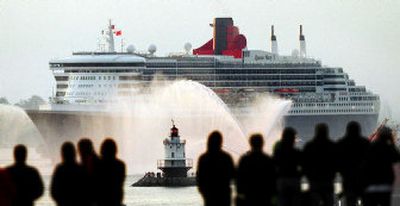
MIAMI — Cruise lines have been battling for decades to outclass their competitors’ ships by making vessels longer, bigger and full of amenities like mall-size promenades and ice skating rinks. What started as small refurbished ferries with little to do onboard have turned into vessels bigger than aircraft carriers.
Carnival Corp. & plc, the top cruise operator, launched the world’s largest passenger ship last year: The luxury liner Queen Mary 2 stretches nearly four football fields.
But the monarch’s reign isn’t lasting long. Rival Royal Caribbean Cruises Ltd. will start sailing an even bigger ship next year, the Freedom of the Seas.
As the industry builds ships that keep getting bigger to meet growing demand, these megaships also create new problems. The lines have to balance the preferences of passengers who want flashy new amenities with those who are looking for quiet vacations. Many ports say these vessels make it tough to process thousands of people in just a few hours. Environmental groups also complain that bigger ships mean more pollution.
Cruise executives say they have worked to relieve those problems. For example, passengers can now check in online to reduce congestion at the port.
Nevertheless, most passengers are clearly happy with the massive ships. Passenger numbers have risen an average of about 8 percent a year for more than a decade.
“A cruise on the big new ships is primarily what people want to buy. People are clearly voting with their wallets,” said Adam Goldstein, president of the Royal Caribbean International brand. “We would be very happy to operate smaller ships if they could generate greater profitability than the big ships, but they don’t.”
The industry also isn’t shunning smaller ships altogether, said Micky Arison, chairman and chief executive of Carnival. He noted that Carnival’s 79 ships can hold anywhere from 150 to 3,800 passengers.
“We’ve got ships for all different types of people and all different sizes, just like the hotel industry. There’s some people that love hotels like Bellagio, and others — I’m staying in a hotel right now with I think six rooms,” Arison said.
The first modern cruise ship in the 1960s held just 560 passengers and in the 1980s, the Carnival Cruise Lines brand got three new ships that could hold nearly 1,800 each. At the time, many observers wondered if there were enough travelers to fill them and even Arison has said the move was “a little bit crazy.”
Royal Caribbean’s Freedom of the Seas will be able to hold 4,370 passengers. Carnival is kicking around the idea of building a ship to take the title back, but it doesn’t have any firm plans.
Frequent cruiser Lee Schwartzberg hopes the companies don’t get too caught up in the race to outsize one another. She is turned off by megaships’ long buffet lines and fights over deck chairs.
“I can go to a mall at home. I go cruising to relax,” said the 42-year-old catalog director for a mail-order company from Warwick, N.Y.
But Miriam Romain loves giant vessels because she’s able to play miniature golf and people-watch. Romain, a 45-year-old from Chicago who hosts an online forum on CruiseCritic.com, gets excited just talking about these ships. She says there’s a never-ending list of activities — art auctions, bar hopping, people watching.
“If you get bored, you’re not looking in the right places,” she said.