
A time for healing
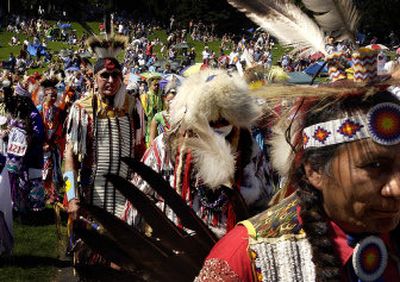
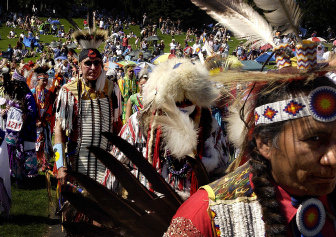
The steady beat of drums and the colorful wave of regalia brought comfort to Bonnie Joseph.
“This is absolute healing for me,” said Joseph, a Flathead Indian whose family members were attacked and threatened last week, allegedly by two men accused of targeting them because of their skin color.
Hugs and handshakes, phone calls from old friends and words of kindness from strangers have bolstered her spirits, she said. And as she stood among tribal members at the annual powwow in Riverfront Park on Saturday, Joseph found the strength to forge on.
“I’m not scared,” said Joseph, the powwow’s lead organizer. “I’ve lived here for eight years, and Spokane has always been an excellent place for us.”
The will to survive – a determination to drum and dance and celebrate the traditions of their ancestors – has always been apparent among the thousands of Indians who gather every summer for the powwow at Riverfront Park, a sacred place that was once the traditional fishing grounds of area tribes.
“We have to keep going,” said Steven Small Salmon, a Pend d’Oreille Indian who acknowledged another recent tragedy in the Native American community – a car accident that killed members of the Abrahamson family, a well-known clan of champion dancers. “We’re Indian people, and we’re proud of who we are. It’s hard for all of us to lose a loved one, but we have to keep dancing for our elders and for everybody.”
Small Salmon then prayed to the Creator in Salish, asking him to watch over those gathered at Saturday’s powwow. His invocation came shortly after Saturday’s dazzling grand entry, which brought more than 100 dancers together on the field.
Everyone at the Lilac Bowl immediately stood up to show their respect. Wearing their finest regalia made of buckskins, beads and leather, the dancers lined up in twos behind two men in traditional clothing – one waving the American flag and another holding up a staff wrapped in furs and adorned with eagle feathers. Many of the men who wore feathered headdresses tapped their feet against the ground to the rhythm of the drum. Some of the girls skipped playfully, jumping as though they had springs beneath their moccasin-clad feet. Older women, with long braids and shawls that looked like wings, moved with a more subtle elegance, waving fans fashioned from eagle feathers.
The straight line quickly morphed into a swirl of color as the drums got louder, and the dancers formed a circle near the river.
“Seeing all our old friends makes me feel good to be alive,” said Spokane tribal member, Pat Moses, as he recited the names of all the tribes who traveled many miles to come here. “We’re one big family.”
Like many who were alarmed by the attack against Joseph’s family, Moses attached two paper clips to one of his braids to express his solidarity. Last week, members of the Peace and Justice Action of League of Spokane encouraged people to show their support for the Josephs by attending the powwow and also by wearing two paper clips – a form of protest against the Nazis used by Norwegians during World War II.
Several college students from the area also responded by raising more than $1,600 to help repair Joseph’s Chevy Astro, which was heavily damaged after the assailants slashed the seats and shattered a window.
Joseph said she was touched by all the support she has received – from people at the NATIVE Project and the Human Rights Commission to Spokane Police, which provided additional security at the powwow, and the Spokane City Council, which passed a resolution last week condemning the incident.
“Any kind of hate crime is poison to our society,” U.S. Attorney Jim McDevitt told the crowd at the powwow. He was dismayed to hear that it happened, he said, and was relieved to see that it didn’t take away from the powwow’s festivities.
“Everyone’s been helping me out,” said Joseph, 35 and the mother of six children. “With all the smiles and support, it’s been a healing experience for me and for a lot of other people.”